A standard drill handles shallow holes without complaint, but deep hole drilling plays by different rules. In CNC machining, deep hole drilling usually means any bore deeper than about five times its diameter. Beyond that point, however, chip evacuation, heat, and tool deflection start to control the result rather than the drill geometry. This guide explains why deep bores wander, compares peck drilling, gun drilling, and through-coolant tooling, and lists design choices that keep deep holes affordable.
What Counts as Deep Hole Drilling: Depth-to-Diameter Ratios
The depth-to-diameter ratio, or L:D, defines difficulty. For example, a 5 mm hole that is 15 mm deep sits at 3:1 and behaves like a routine job. At 5:1 to 10:1, chips start to pack and standard drills need peck cycles. Beyond 10:1, dedicated deep hole drilling methods take over. Gun drills routinely reach 50:1 on the right machine, and specialized systems push past 100:1.
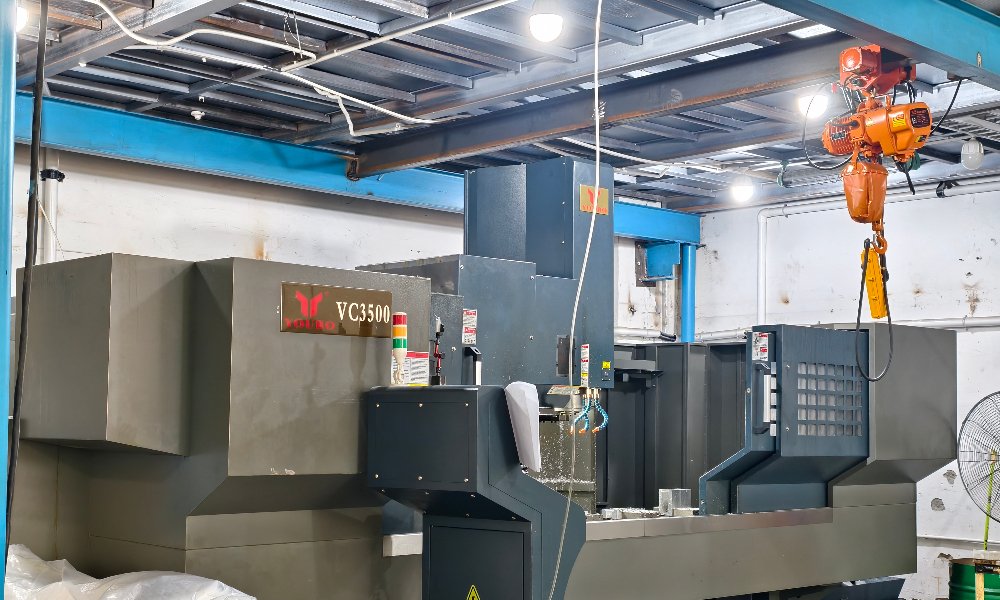
Notably, these thresholds shift with material and equipment. A through-coolant carbide drill on a rigid machining center can exceed 12:1 in one stroke. In contrast, an older machine with weak coolant pressure may struggle past 6:1. That is why quoting deep bores requires knowing the shop’s machine tool list. Checking a supplier’s CNC machining equipment early reveals which ratios are realistic for your part.
Why Deep Bores Wander: Deflection, Chips, and Heat
Three failure modes drive most deep hole drilling problems. First, deflection. A long drill behaves like a slender spring, and its tip follows the path of least resistance. Any hardness variation in the workpiece steers it off axis. Consequently, the hole walks away from the programmed position, sometimes by tenths of a millimeter over long depths.
Second, chip evacuation. Inside a deep flute channel, chips must travel the full hole length to escape. When they jam, they score the wall, raise thrust force, and can snap the drill instantly. Third, heat. Cutting fluid struggles to reach the cutting edges at depth, so temperatures climb and the tip softens or welds a chip onto itself. Ultimately, these effects ruin finish, size, and straightness.
The symptoms show up at inspection. A wandering bore misses its position tolerance at the exit, leaves a bellmouth at entry, and shows a rough, scored finish along the wall. Tool life collapses at the same time, since a packed flute rubs instead of cutting. In short, deep holes fail in slow motion, and the process design decides the outcome before the first chip forms.
Deep Hole Drilling Techniques: Peck Drilling, Gun Drilling, and Through-Coolant Tools
Three techniques dominate production deep hole drilling, and each attacks the same three enemies from a different angle.
Peck Drilling
Peck drilling attacks the hole in stages. The drill advances a short distance, retracts to clear chips, and plunges again. Modern controls shorten the retract into chip-break pecks, which cuts air time. As a result, this approach handles ratios up to roughly 8:1 or 10:1 on most machining centers. However, each retract leaves a witness mark on the wall, and cycle time grows steeply with depth.
Through-Coolant Carbide Drills
Through-coolant drills pump high-pressure fluid through internal channels straight to the cutting edges. The pressure breaks chips and flushes them up the flutes, so the drill can run much deeper in one stroke. For example, bores of 15:1 to 20:1 are realistic when coolant runs at 20 to 70 bar. In addition, many turning centers use these tools for shaft center holes and crossover passages.
Gun Drilling
Gun drilling is a single-flute process built for extreme depth. A V-shaped cutting head rides on guide pads that burnish the wall and keep the bore straight. High-pressure oil feeds through the drill body and exits along the V-flute, carrying chips out continuously. As a result, gun drilling holds tight straightness and fine surface finish at ratios above 20:1. However, it needs dedicated machines and careful startup, so cost per hole runs higher.
BTA Drilling for Large Bores
For bores above roughly 20 mm, BTA and ejector systems pump coolant down the outside of the drill and eject chips through its center. Moreover, they move metal fast and hold strong straightness at depth. However, the tooling and high-pressure coolant systems cost heavily, so most job shops reserve them for long production runs.
If your part includes deep bores, send the drawing to XAP Precision for free DFM feedback on your deep hole drilling features before you lock in a method.
Deep Hole Drilling on Lathes vs. Machining Centers
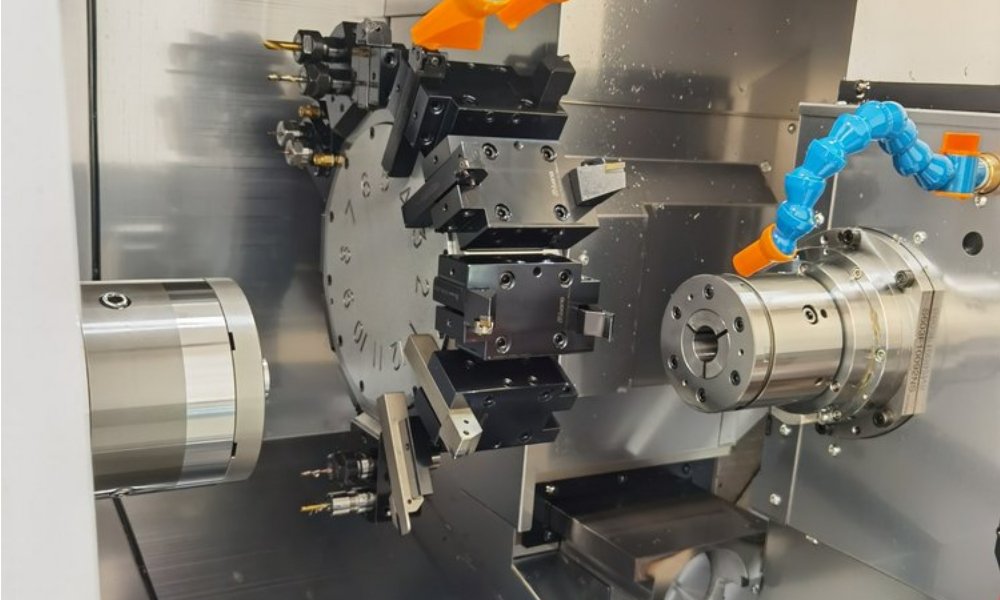
Machine selection shapes the outcome. On a CNC lathe, the part rotates while a stationary gun drill feeds in, and that rotation averages out material variation for better concentricity. Meanwhile, a machining center rotates the tool while the part stays fixed, which suits cross-holes and intersecting passages. For long shafts and cylinder bodies, therefore, turning remains the natural home of deep hole drilling. Our CNC turning service handles shaft work from prototype to production.
Design Tips That Make Deep Holes Cheaper and More Reliable
In fact, every design decision either helps or hurts the drill. The rules below reflect what machine operators ask for most often.
- Relax tolerances where function allows. A 10:1 bore held to H7 with a fine finish demands secondary reaming or honing, while an H11 hole may ship as drilled.
- Specify straightness or runout only where it matters. For most fluid passages, exit position beats perfect straightness.
- Allow relief features. A counterbore or stepped bore shortens the deep section and gives chips a place to escape.
- Consider drilling from both ends. Meeting in the middle halves the effective L:D, although a small witness offset may remain.
- Pick realistic surface finishes. Honing adds cost, so reserve it for sealing surfaces only.
Sometimes the drilled hole still needs work. Reaming brings size and roundness, honing adds finish and straightness for hydraulic spools, and gun reaming polishes long bores. Therefore, spec these steps only where function demands them, since each adds a setup.
These choices compound. One relaxed tolerance can eliminate an entire secondary operation, and one relief groove can halve cycle time. Reviewing the design with your machine shop before quoting is the cheapest step in the whole project.
Frequently Asked Questions About Deep Hole Drilling
What does deep hole drilling cost compared with standard drilling?
Cycle time drives the price. Peck drilling adds retract seconds on every stroke, and gun drilling consumes dedicated machine time with high-pressure coolant. As a result, a 20:1 bore can cost several times a shallow hole of the same diameter. Relaxing straightness and finish callouts is the fastest way to bring that number down.
How do I specify a deep hole on my drawing?
Give diameter, depth, and position first. Then add straightness or runout only where function demands it, and note any allowable witness mark when drilling from both ends. XAP Precision reviews these callouts during free DFM feedback, so you learn which deep hole drilling constraints truly matter before you pay for them.
Which materials are hardest to deep hole drill?
Stringy, gummy materials cause the most trouble. Stainless steels and soft aluminum form long chips that clog flutes, while titanium concentrates heat at the tip. Cast iron, in contrast, produces short chips and drills more easily. Consequently, shops adjust speeds, feeds, and peck cycles per material to keep chip evacuation safe.
Get a Free Quote for Deep Hole Work
Deep bores punish guesswork. XAP Precision drills and machines deep-hole features in aluminum, carbon steel, stainless, brass, and engineering plastics, from one-off prototypes to low-volume batches. Our ISO 9001 quality system keeps diameter, depth, and position traceable on every part. Send drawings or STEP files through the contact page for a free quote and free DFM feedback.