Screws, studs, and fittings only work when their threads are accurate. CNC thread machining is the family of processes that produces them on programmed machine tools. In practice, CNC thread machining covers tapping, thread milling, and single-point threading, and each has distinct strengths. The method you choose affects assembly fit, cycle time, and unit price. This guide compares all three approaches, explains thread class callouts (for example, 6H and 6g), and shares design rules that keep threads clean and inspectable.
What CNC Thread Machining Includes: Tapping, Thread Milling, and Single-Point Threading
CNC thread machining splits into three cutting methods, and each forms the helix differently. Tapping drives a multi-flute tool into a drilled hole in one synchronized move. Thread milling interpolates a rotating cutter along a helical path. Single-point threading traces the same helix with one cutting edge, usually on a lathe. Ultimately, understanding the differences pays off at the design stage.
Tapping: Speed for Standard Internal Threads
Tapping remains the fastest way to cut internal threads. The machine synchronizes spindle rotation with Z-axis feed, so the tap advances exactly one pitch per revolution. Standard taps handle holes from roughly M2 upward. Spiral-point taps push chips ahead of the cut, while spiral-flute taps pull them out of blind holes. However, the main weakness is tap breakage, especially in deep holes and hard materials.
Thread Milling: Flexibility Under Programmed Control
Thread milling cuts the helix with a rotating cutter that follows a circular, helical path. One solid carbide thread mill can produce many diameters at the same pitch, which reduces tooling cost in low-volume work. Moreover, the interrupted cut keeps chips small and cutting forces low. As a result, thread mills excel in hardened steels, stainless alloys, and large or deep blind holes. In contrast, the trade-off is a longer cycle per thread. Our CNC milling service runs these operations on 3, 4, and 5-axis machines.
Single-Point Threading: Precision Without Dedicated Tooling
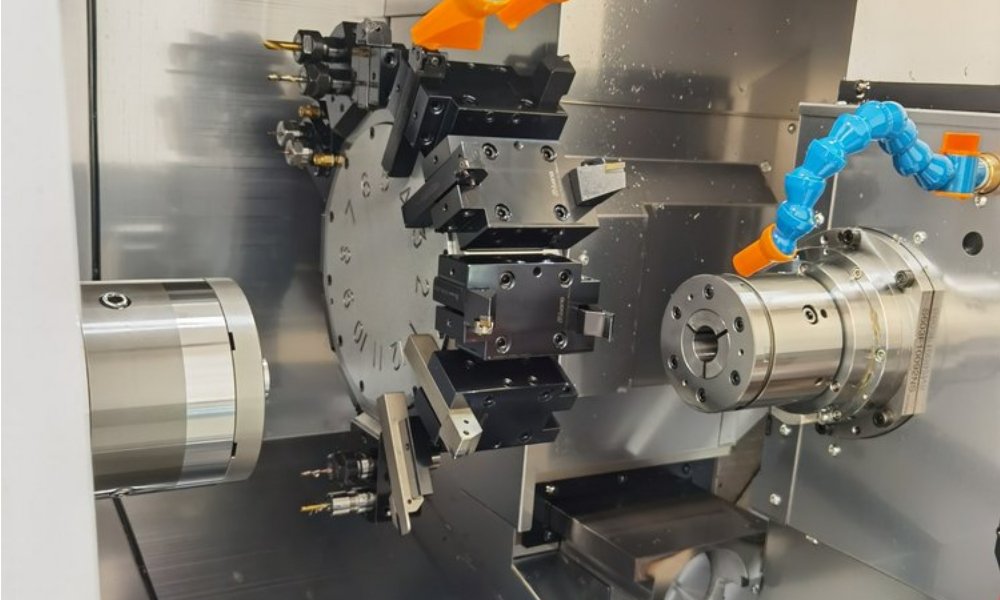
Single-point threading uses one ground insert that traces the helix pass after pass, typically on a CNC lathe. Because the insert profile is simple, shops need no dedicated tool per pitch. Therefore the method suits prototypes, Acme and trapezoidal forms, and very large external threads. However, each thread takes many passes, so cycle times run longer than tapping. Consequently, most shops reserve single-point threading for CNC thread machining jobs that taps and thread mills cannot handle well.
Tapping vs. Thread Milling vs. Single-Point Threading: When Each Method Wins
No single method dominates every callout on a part. Instead, the best CNC thread machining choice depends on hole size, thread depth, material, and order volume. The rules below cover most jobs.
- Hole size: Tapping wins below roughly M6 or 1/4 in., because small thread mills lack room for the helical entry. In contrast, thread milling handles holes above 25 mm with ease.
- Thread depth: Threads deeper than three diameters raise tap breakage risk sharply. Therefore, deep threads favor thread milling or single-point threading.
- Material: Gummy or hardened materials reward thread milling, since small chips and light radial forces limit galling. Tapping stainless steel, for example, demands sharp taps, low speeds, and generous lubrication.
- Volume: High-volume runs of standard threads favor tapping for raw speed. Meanwhile, mixed low-volume work favors one thread mill covering many callouts.
Similarly, external threads follow the same logic. A CNC lathe single-points most external threads quickly and accurately, and Swiss-type machines repeat tiny threads all day long. When a thread sits beside milled flats or on an odd face, however, a thread mill becomes the practical option.
If you are unsure which CNC thread machining method fits your design, send your drawings to XAP Precision for free DFM feedback alongside your quote.
Thread Classes and Pitch Callouts: What 6H and 6g Mean
Metric threads are defined by nominal diameter and pitch, for example M8 x 1.25. The tolerance class then controls fit. Internal threads normally carry class 6H, and external threads carry 6g. These classes set allowable deviations on the pitch diameter, which decides how tight the assembly feels. In addition, Unified inch threads use parallel classes such as 2B for nuts and 2A for bolts.
Tighter classes like 4H or 5g demand slower machining and gauge inspection, so they cost more. Looser classes speed assembly in dirty environments, but they feel sloppy. Notably, plating can make a 6g thread bind, so engineers often call out a looser class before coating. If your drawing omits a class entirely, most shops default to 6H/6g, which suits the majority of assemblies.
Design Tips That Make CNC Thread Machining Reliable and Affordable
Small drawing details decide whether threads cut cleanly. Notably, the rules below prevent the most common failures in CNC thread machining.
- Never thread to the bottom of a blind hole. Drill at least two pitches past the last full thread, and call out full-thread depth separately. As a result, the relief gives chips room and keeps gauges off the bottom.
- Add a chamfer or countersink at the entry. A 0.5 to 1 mm chamfer guides taps and protects the first threads during assembly.
- Keep threads clear of shoulders. A close shoulder needs an undercut, or the tool cannot finish the last full thread.
- Prefer standard pitches. An M8 x 1.25 tap sits on every shop shelf, while exotic pitches add tooling cost and lead time.
- In soft materials, consider inserts. A helical coil turns a strip-prone aluminum or plastic thread into a durable steel one.
These rules interact with wall thickness, feature spacing, and tolerances. Our DFM guidelines for outsourced CNC machining projects cover those interactions in detail. Reviewing them before quoting catches problems while changes are still free.
Material Notes for Threaded Parts
Material choice changes the CNC thread machining strategy. Aluminum threads gall easily, so shops use sharp taps, higher speeds, and non-chlorinated lubricants. Stainless steel work hardens under the cut; consequently, thread milling often replaces tapping there. Brass forms crisp, clean threads at high speed, which is why it remains popular for fittings. In plastics, threads strip under modest torque, so designers specify coarse pitches or metal inserts. Finally, titanium and superalloys need rigid setups and low speeds to protect both the tool and the thread form.
Frequently Asked Questions About CNC Thread Machining
How much does CNC thread machining add to part cost?
A standard tapped hole often adds only seconds of cycle time, so its cost stays small. Thread milling and single-point threading take longer to program and run, especially on deep or coarse threads. The biggest cost drivers are tight tolerance classes, threads deep in blind holes, and hard or gummy materials. In fact, asking your shop to review callouts before quoting usually saves money.
How should I specify threads on my drawing?
State diameter, pitch, and class, for example M8 x 1.25-6g for an external thread. Then add thread depth and, for blind holes, the drill depth beyond the thread runout. If you leave off the class, most shops default to 6H internal or 6g external. During DFM review, XAP Precision can confirm every CNC thread machining callout against your assembly requirements.
Which threading method works best for small, deep holes?
Tapping generally wins below M6, because small thread mills lack room for the helical entry path. However, deep small holes raise tap breakage risk, so shops often peck drill first and then rigid tap with careful reversal. For micro threads on slender parts, single-point threading on a Swiss-type lathe offers another reliable route.
Get a Free Quote for Your Threaded Parts
Ultimately, threads look simple on paper, but they reward careful planning. XAP Precision machines threaded parts in aluminum, stainless steel, brass, titanium, and engineering plastics, from rapid prototypes to low-volume production. Our ISO 9001-certified quality system keeps every thread class and pitch callout traceable from first article to final lot. Send your 2D drawings or 3D files through our contact page to receive a free quote plus free DFM feedback on your CNC thread machining project.