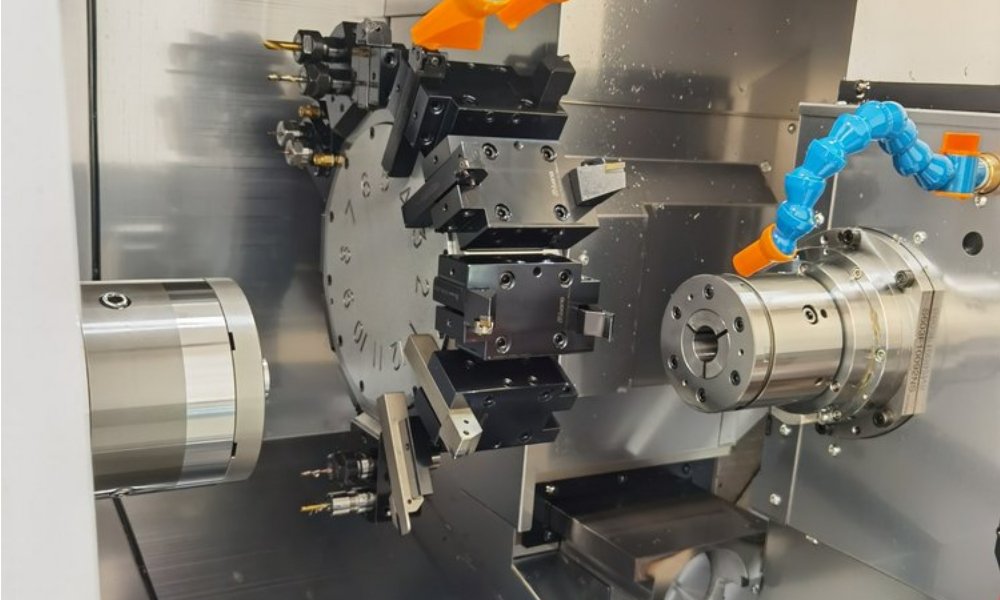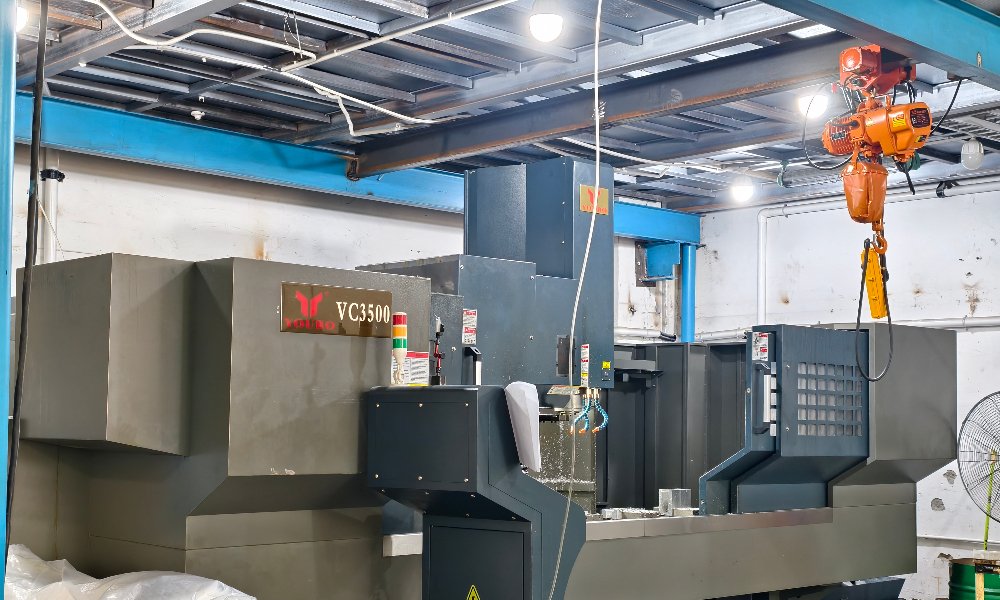
A short hole is easy to make. A hole that is many times deeper than its diameter is a different challenge entirely, because the tool wanders, chips clog, and heat concentrates at the cutting edge where it cannot be cleared. Gun drilling exists specifically to solve that problem. At XAP Precision we run gun drilling for hydraulic manifolds, mold cooling lines, oil and gas components, and shaft bores where a twist drill simply cannot reach the depth or hold the straightness the design calls for. The method turns a task that looks impossible with standard tooling into a routine, repeatable operation. Here is how it works and what to design around before you place an order.
What Gun Drilling Actually Is
The name comes from the historical need to bore the barrels of firearms, but today the technique applies to any deep, straight hole in a solid or pre-cored workpiece. The tool is a single-flute, self-piloting drill made of solid carbide or a carbide-tipped steel body. It carries an internal coolant channel and a V-shaped chip-flushing groove along one side. The cutting tip has a guiding pad that rides against the wall of the hole it just created, which pilots the tool and resists deflection as it advances. Only the outer portion of the tip actually cuts, while the pad burnishes and steadies the bore. This is the same family of work we describe on our deep hole drilling CNC page, where this method is one of the core ways we reach extreme depths while keeping the hole true.
Why It Handles High Length-to-Diameter Ratios
A standard twist drill starts to drift once the hole reaches about three or four times its diameter. Its flutes are too long to clear chips reliably, the point walks sideways on entry, and the slender body bends under load. The single-flute approach reaches depth-to-diameter ratios of one hundred or more because the self-piloting head keeps the bore tracking straight and because coolant under high pressure flushes chips out through the groove instead of up through long, congested flutes. That means you can place a genuinely deep, round, straight hole where a twist drill would leave you with a wandering, out-of-round result that is unusable. If you are comparing methods across a whole component, our CNC machining cost guide shows how depth and tolerance affect the price of a bore.
Internal Coolant and Chip Evacuation
Heat and trapped chips are the two things that destroy a deep hole. Pumping cutting fluid down the internal channel of the tool delivers coolant directly to the cutting edge, a place a twist drill can never effectively reach, and the fluid then reverses direction in the flush groove and drags the chips back out of the hole. Continuous evacuation keeps the bore clean so the tool never recuts broken chips, which is a common cause of edge chipping on deep work. It also keeps the wall surface smooth and protects the cutting edge from the abrasive scouring that shortens tool life on dry or poorly cooled holes. The combined effect is a bore that is round, straight, and finished to a good surface, often without any downstream reaming on common engineering materials. This clean, cool cutting zone is what separates gun drilling from a flooded twist-drill hole that stalls halfway down.
Accuracy, Straightness, and Surface Quality
Because the pilot pad bears on the freshly cut wall, the bore holds a tight diameter and a straight axis over remarkable depth. Roundness and cylindricity are strong points compared with other deep-hole techniques, and the resulting surface finish is frequently good enough that a separate finishing pass is unnecessary. This is precisely what engineers need in hydraulic passages, where a rough or out-of-round bore can cause leakage, turbulence, or premature wear inside a valve or cylinder. Straightness matters as much as size in these applications, and the self-piloting nature of the tool keeps the hole on its intended axis from entry to exit. For round parts that combine a turned body with a deep axial bore, we pair this work with our CNC turning service for custom round parts so both features share one accurate datum. For those reasons gun drilling has become a staple of hydraulic, oil and gas, and mold production.
Setup and Machine Requirements
The process wants a rigid machine with a through-spindle coolant system capable of high pressure and very clean fluid. Filtration is essential, because a single chip circulating back through the narrow internal channel can score the tool body or plug the flow. Workholding must keep the part stable and the entry square to the spindle, since the first fraction of a millimeter sets the direction of the entire hole. We start with a pilot or center drill to establish a true entry, then feed at a controlled rate tuned to the material and diameter. The guiding pads wear with use and are replaced on a schedule, because a worn pad lets the bore start to wander. For many shops this equipment is specialized, but at XAP it is a standard part of our catalog.
When to Choose This Method Over a Twist Drill
The rule of thumb is straightforward. If the hole depth is under three to five diameters, a twist drill is faster and cheaper, and there is no reason to complicate the job. As depth climbs and straightness, roundness, or finish become genuine requirements, this method takes over and quickly becomes the only practical option. It also wins when a bore must pass close to other features and cannot be allowed to drift into them. Mold makers rely on it for long cooling lines, and oil and gas shops use it for deep bores in heavy-wall components. Send us the depth, diameter, material, and tolerance of your hole, and we will confirm whether this is the right approach, how it fits your budget, and how it integrates with the rest of the part in our CNC milling service guide.
What is the deepest hole you can produce with gun drilling?
Depth is limited less by the method than by the machine stroke, the tool length available, and how straight the hole must remain. We routinely produce bores at very high length-to-diameter ratios, often well beyond what a twist drill can attempt without deflection. The practical maximum depends on your part size, entry conditions, and tolerance, so we evaluate each request and give you a realistic achievable depth before we quote.
Which materials can you gun drill?
Carbon and alloy steels, stainless steels, mold tool steels, aluminum, brass, and many nickel alloys respond well. Hardness and machinability influence the feedrate and tool selection far more than the basic feasibility of the operation. Gummy materials are managed through strong coolant delivery and disciplined chip control. Very hard or abrasive grades need a special tip geometry and tighter process control, which we set up on the first article.
Does a gun drilled hole need reaming or finishing afterward?
Not usually for most hydraulic and cooling-line applications, because the pilot pad produces a round, smooth bore directly during the cut. When a drawing calls for an extremely tight diameter tolerance or a near-mirror finish, we can follow the bore with a light finishing pass. In many cases the as-drilled hole already meets the specification. We confirm this against the tolerance and surface callout on your drawing so you never pay for unnecessary secondary work.