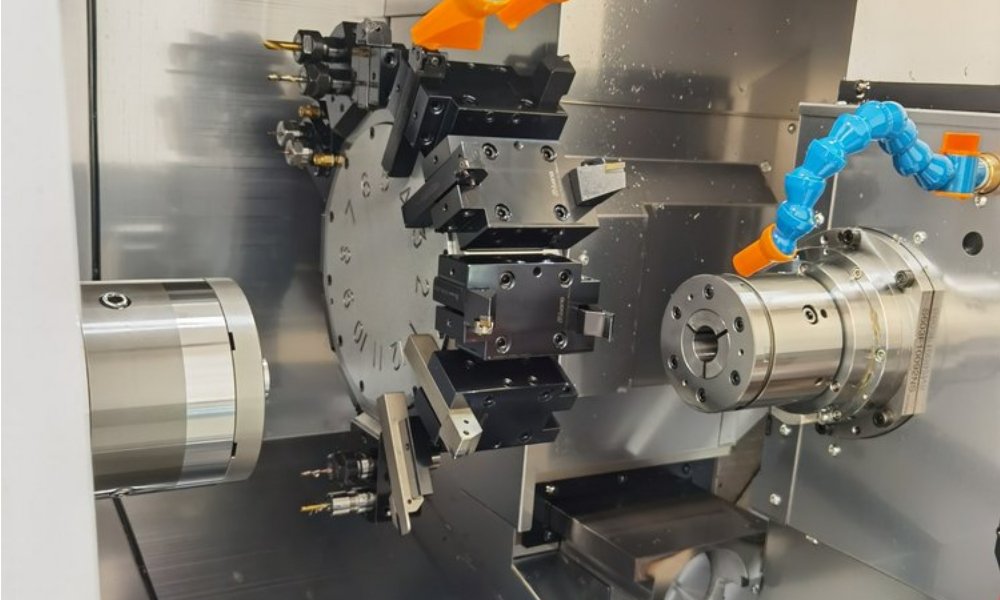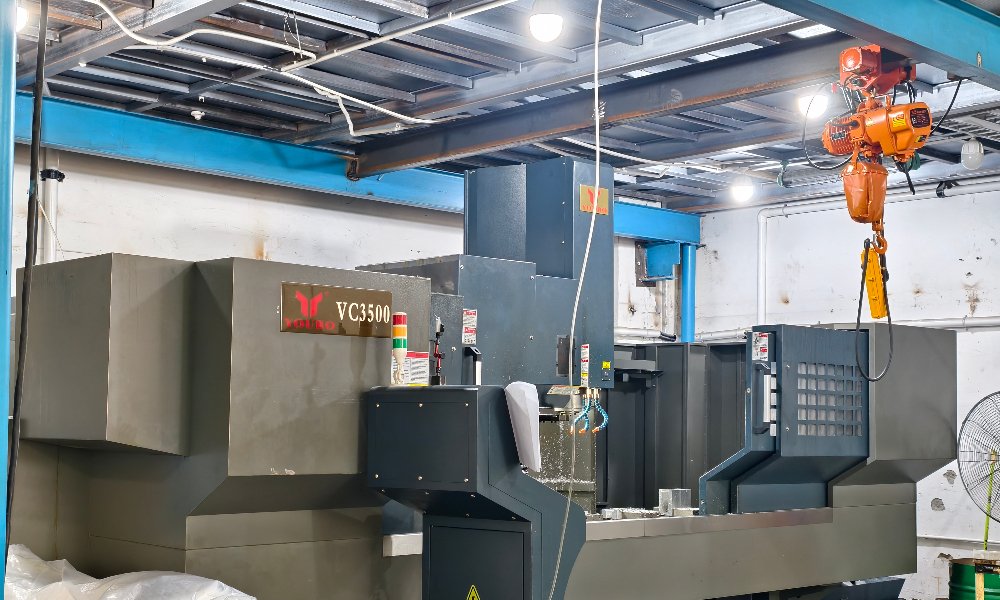
Deburring CNC parts is the finishing step that separates good machining from great. Every milling and turning operation leaves burrs, thin ridges of displaced metal raised at cut edges. Left in place, they cut hands, leak seals, and ruin coatings. Removing them takes method rather than muscle, because the right deburring process depends on material, geometry, and how clean the edges must be.
This guide covers why burrs form, the main deburring methods, and how to specify edge requirements on your drawings.
Why Burrs Form When Machining Metal
Burrs form where the cutting tool exits, and sometimes enters, the material. As the cutter shears the last fibers of metal, the unsupported edge deforms instead of cutting cleanly. Material tears and smears sideways, leaving a thin raised lip along the edge. Ductile materials such as aluminum and 303 stainless tend to raise larger burrs than brittle ones like cast iron. As a result, the same tool path can burr one material heavily and barely mark another.
Several factors influence burr size. Dull tooling increases tearing. High feed rates and deep cuts push more material ahead of the tool. Exit edges usually burr worse than entry edges, because the material can deflect outward at breakthrough. Skilled machinists minimize burrs with sharp tools, climb milling, and careful finishing passes. But nobody eliminates burrs entirely, so deburring CNC parts remains a standard final operation.
Common Burr Types on Machined Parts
Not all burrs behave the same. Shops classify them by how they form, and the burr type guides the method for deburring CNC parts:
- Poisson burr. The most common type, raised when material bulges sideways under the tool’s pressure. It is thin, continuous, and usually the easiest to remove.
- Rollover burr. Material bends over the edge rather than breaking away, which is common in ductile metals.
- Tear burr. Torn, irregular metal remains when the cut rips instead of shearing, often near exit edges.
- Cut burr. A sharp sliver stands up from the edge, typical of drilling breakthrough.
In practice, a thin Poisson burr falls off with light abrasion. Meanwhile, a thick rollover burr may need a cutter or file first. Therefore, naming the burr type in your quality notes helps the shop pick the right method for deburring CNC parts.
Methods for Deburring CNC Parts
In general, choose the method to match part size, quantity, and edge quality targets.
Hand deburring. Technicians work edges with scrapers, files, and abrasive pads. The approach is flexible and gentle, ideal for prototypes and complex one-offs, but slow and operator-dependent.
Tumbling and vibratory finishing. Parts rotate in a drum or vibrate in a tub with abrasive media. The media rounds every reachable edge at once, which makes this the workhorse for batches of small parts. It suits aluminum and steel hardware in the hundreds.
Brushing. Nylon abrasive brushes, run by hand or machine, sweep burrs off edges and can target specific faces. Brushing works well for sheet parts and plates with many holes.
Edge milling. A small end mill or chamfer tool machines the edge to a defined size. This is the most precise option and the only one that produces a dimensioned chamfer.
Thermal energy method. Parts sit in a chamber of combustible gas that ignites for a fraction of a second, burning off thin burrs everywhere at once. It excels for hydraulic fittings and small parts with internal passages, though the heat-affected zone rules out some materials.
For most orders, shops combine steps. Critical features get edge milling in the machine, and then deburring CNC parts continues by hand or tumbling for the rest. XAP Precision plans that sequence into every quote, so edge quality arrives as a controlled step rather than an afterthought.
Specifying Edge Break on Your Drawings
The clearest way to control deburring CNC parts is to specify the edges. Vague notes produce inconsistent results, so give explicit instructions:
- “Break all sharp edges 0.1 to 0.3 mm” works as the standard default for general parts.
- Call out a dimensioned chamfer, such as 0.5 mm by 45 degrees, where edges must measure.
- Mark sealing faces and bearing seats with tighter edge requirements.
- Note cosmetic faces if visible media marks or scratches are unacceptable.
If your drawing carries no edge note, most shops apply a light hand break by default. That keeps parts safe to handle, but it is not a controlled dimension. When edges matter functionally, for gaskets, threads, or assembly, say so. The DFM stage is the cheapest moment to fix this, and our guide to DFM guidelines for outsourced CNC machining projects covers edge callouts in context.
Why Burr-Free Parts Matter Beyond Looks
Deburring CNC parts is not cosmetic housekeeping. Burrs cause real failures.
In addition, burr fragments can travel. A piece that breaks off inside a hydraulic valve can lodge in a downstream orifice and cause a field failure.
Sealing. A gasket or O-ring seals against a smooth face. As a result, one raised burr becomes a leak path, and it can slice the seal during assembly.
Safety. Fresh metal burrs are razor sharp. Technicians assembling your parts, and end users handling them, can suffer cuts. Many industries treat sharp edges as a quality defect for exactly this reason.
Coating adhesion. Burrs are loosely attached. When a coated part flexes or gets handled, the burr breaks off and takes the coating with it, exposing bare metal to corrosion. Consequently, anodized, plated, and painted finishes all perform better on deburred edges. For the full menu of options, see our guide to CNC machining surface finishing options.
Assembly and fit. Burrs at hole entrances interfere with pins, screws, and bearings. For example, a 0.1 mm burr can be the difference between a clean press fit and a rejected housing. Deburring CNC parts eliminates this class of defect at the source.
Frequently Asked Questions About Deburring CNC Parts
How much does deburring CNC parts cost?
In general, a standard edge break adds little, and shops often include it in the part price. Cost rises when edges need dimensioned chamfers, masking, or full inspection. Tumbling spreads cost well across batches, while hand work scales with part count. Specify only the edges that truly need control.
Which method works best for aluminum parts?
For batches of small aluminum parts, vibratory tumbling is usually the best balance of speed and consistency. One-off or large parts are hand deburred, while critical edges get a machined chamfer. Aluminum’s soft burrs respond well to all three approaches.
How do I specify deburring requirements to my supplier?
Add an edge note to the drawing, such as break all sharp edges 0.1 to 0.3 mm, and dimension any chamfers that must measure. For complex parts, mark critical faces and mention assembly or sealing needs. Clear callouts keep deburring CNC parts consistent across every batch.
Get Clean, Burr-Free Parts With Every Order
Edge quality deserves the same attention as tolerances. Send XAP Precision your drawings, and we will quote machining and finishing together, with deburring CNC parts, surface finishing, and inspection included in one plan. Ask us which edge treatment fits your function and volume. Contact us today for a free quote and free DFM feedback.