Many complex parts have features on several faces but never need the cutter to move continuously around the workpiece. That is exactly the situation 3+2 machining was built for. At XAP Precision we reach for this method often because it gives us multi-face access with the stiffness and simplicity of ordinary three-axis cutting. The result is fewer setups, better alignment across faces, and a lower price than full simultaneous work on the right geometry. This guide explains what the term really means, how it differs from continuous five-axis movement, and how to decide which approach fits your design, tolerances, and budget.
What the Term 3+2 Machining Means
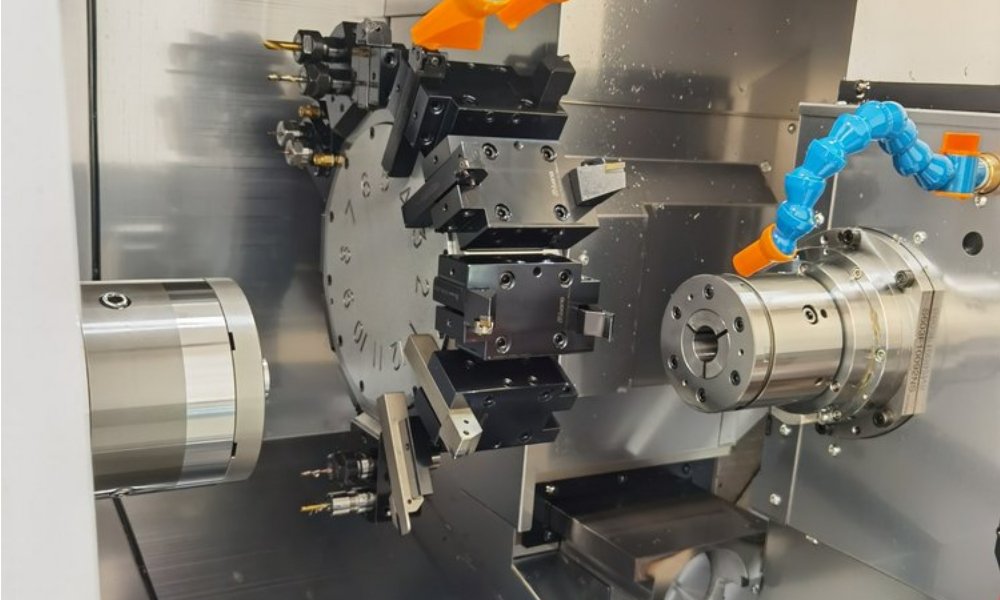
A five-axis machine has two rotary axes in addition to the usual X, Y, and Z linear axes. During 3+2 machining those two rotaries, often called tilt and turn, are positioned at fixed angles and then locked in place. The cutter then machines a face using only linear motion while the part stays tilted out of the way. To cut the next face, the machine repositions the rotaries and locks them again. Only three axes move at once during cutting, which is where the name comes from. It is genuine five-axis hardware used in a three-axis way, and while that sounds simple, it changes what you can reach in a single clamping. To understand the baseline, our article on what is 3 axis CNC machining describes how standard three-axis milling behaves and where it runs out of access.
Reach Multiple Faces in One Setup
The biggest advantage is consolidation. A part that would normally need three or four separate fixturing operations, each with its own datum and its own chance for accumulated error, can be finished with a single clamping. Tilt the table, machine the top and one side, rotate to the next face, and cut again. Because the part never leaves the fixture, features on opposite faces stay aligned to one another, and positional tolerance across faces improves noticeably. You also save the setup time that would otherwise be spent re-indicating and re-sighting between operations. Fewer handling steps mean fewer opportunities to mar a finished surface or drop a delicate part. For components that mix milled and turned features, see how we combine methods in our CNC milling vs turning overview before committing to a routing.
Superior Rigidity and Shorter Tools
Because the part can be tilted toward the spindle, we often use a shorter, stubbier tool to reach a feature that would demand a long, slender cutter on a plain three-axis machine. Short tools deflect less, chatter less, and hold both tighter tolerance and a better surface finish. This rigidity is one of the main reasons shops prefer the positional method over simultaneous work for prismatic geometry. The locked rotary axes also remove the dynamic errors that creep in when several axes must coordinate perfectly during a cut. On tough materials such as titanium or hardened steel, that extra stiffness translates directly into a calmer, more predictable process and a longer, more consistent tool life across the whole batch. That stiffness is a defining advantage of 3+2 machining over reaching the same feature with a long, floppy three-axis tool.
How It Compares to Simultaneous Five-Axis
Simultaneous five-axis keeps the rotary and linear axes moving together throughout the cut. That continuous coordination is essential for impellers, turbine blades, sculptured molds, and any flowing curved surface that must stay tangent as it sweeps around the part. It also demands more programming skill and careful collision avoidance. Our 5-axis CNC machining service covers those full-contour applications in detail. The positional approach, by contrast, is more affordable, easier to verify, and much closer to standard three-axis programming. An intermediate option also exists: our guide to what is 4 axis CNC machining explains the single-rotary middle ground. If your part has flat angled faces rather than continuous curves, the positional method usually delivers the same accuracy with less risk and less cost.
Programming and Collision Checks
Even though the cut itself is three-axis, planning the setup still requires care. We define the tilt angles so each face is square to the tool, then verify that the holder and shank clear the part and the fixture at every position. Because the tool only moves in straight lines during a cut, simulation is simpler and faster than for continuous paths, yet we still run it to catch clamps or columns in the way before metal is touched. We also sequence the operations so a face is fully finished before the part is re-tilted, which avoids leaving a witness line where two positions overlap. This disciplined approach keeps first-article inspection predictable and repeatable across production runs. Because each face is machined from a locked, known position, the same angles can be recalled on every part in the batch, which removes the human variability that re-fixturing introduces. We also keep a record of each tilt position so a reorder can be reloaded quickly without a fresh programming cycle, an efficiency that matters on repeat orders.
Choosing the Right Approach for Your Part
We look at geometry first. Flat faces, drilled patterns, pockets, and bosses spread across several sides point strongly toward the positional method. Free-form surfaces that must stay smooth across a curve point toward simultaneous work instead. We then weigh volume and tolerance. High-mix, low-volume parts that need several faces gain the most from one-setup consolidation, and extremely tight angular tolerances between features benefit from never re-fixturing the part. Tool access matters as well: a deep pocket that needs a short cutter held at an angle is solved cleanly by tilting the work. If you share your drawing, we will tell you plainly whether this method, a full five-axis route, or a simpler setup gives you the best balance of accuracy, lead time, and cost.
Is 3+2 machining the same as five-axis machining?
It runs on the same five-axis machine, but the axes do not move together during cutting. The two rotary axes position and lock, and then only the three linear axes cut the face. This distinction matters for programming, cost, and cycle time. Many people ask for five-axis when the positional approach would produce the part faster and at a lower price, so we clarify the goal and the geometry before we quote.
Can you cut curved surfaces with this method?
Only in stepped form. Because the part stays fixed while a face is cut, a sculptured surface must be approximated by many small tilted planes, which can leave fine witness marks between them. For genuinely smooth contours, simultaneous five-axis is the better tool. If your part mixes flat angled faces with one curved surface, we can sometimes split the work and use each method where it fits best.
Does 3+2 machining reduce the cost of my parts?
Frequently, yes. Fewer setups mean less labor and less custom fixturing. Shorter tools cost less and last longer than the long cutters a three-axis machine would need for the same reach. Programming is simpler than full five-axis, so engineering time drops as well. The exact saving depends on your design and volume, but consolidating several operations into one locked setup is one of the most dependable ways to trim cost without giving up accuracy on multi-face prismatic parts.