Small batch manufacturing means producing tens, hundreds, or a few thousand parts without betting your budget on tooling. For teams launching products, running pilot builds, or serving niche markets, it is often the fastest route to real revenue. However, the process you choose at low volumes decides whether that route stays profitable.
This guide explains why tooling hurts at low volumes. It also shows why CNC machining dominates small batch manufacturing, and when it finally makes sense to switch. Along the way, it covers the design habits that keep every batch affordable.
Why Tooling-Based Processes Hurt at Low Volumes
Injection molds, die-casting dies, and stamping tools are expensive to build and slow to finish. Even a simple mold consumes weeks of design, cutting, and sampling before the first saleable part. Moreover, tooling is single-purpose. Once cut, a mold only makes one design. At volumes in the tens of thousands, that cost spreads thin. For fifty or five hundred parts, it dominates everything. That is why small batch manufacturing rarely starts with tooling.
Design changes make the problem worse. A revision that takes minutes in CAD can require welding, re-cutting, or even scrapping hardened tool steel. In addition, molds need storage, maintenance, and eventual refurbishment. Cash flow feels the delay as well. Capital sits in steel while the tool gets built. Consequently, tooling locks in both money and geometry long before the market has voted.
Consider what that means per part. Spread across a handful of batches, the tooling can cost more than all the machining it replaces. The math only flips once volume climbs high enough.
CNC Machining: The Backbone of Small Batch Manufacturing
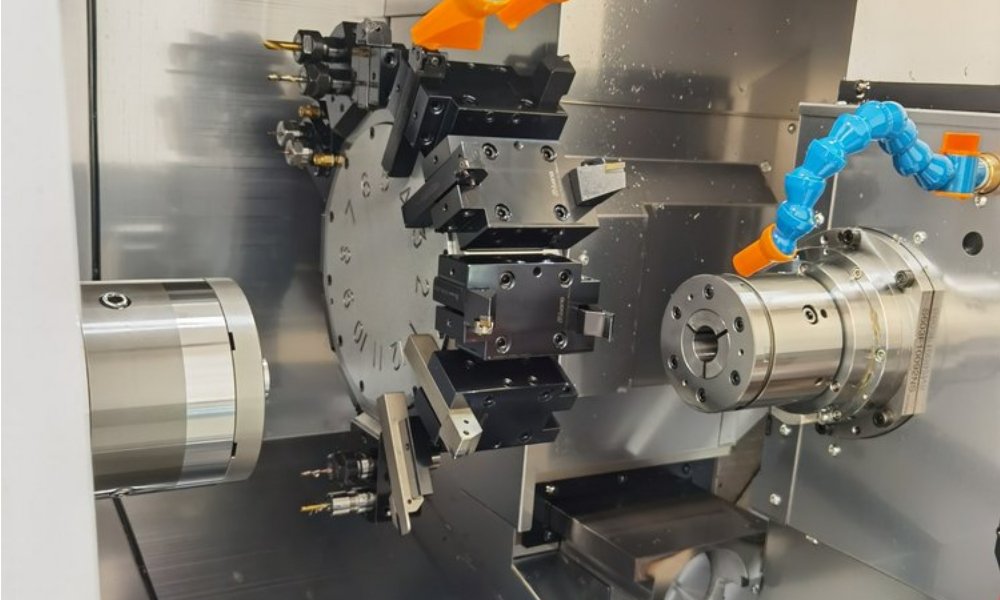
CNC machining removes the tooling problem entirely. Parts come straight from CAD, so a small batch manufacturing run can start as soon as material arrives. Setup means fixturing and programming, nothing more. In other words, your CAD file is the only tooling you need.
The advantages compound:
- No dedicated tooling. Standard cutters and fixtures replace custom molds. As a result, setup stays affordable at any quantity.
- Design changes between batches. Update the file, adjust the program, and the next batch reflects the improvement. In fact, many teams use each batch as a chance to refine the part. That flexibility defines small batch manufacturing done right.
- Real materials. Aluminum, stainless steel, carbon steel, brass, titanium, and engineering plastics like POM, PEEK, and PTFE all machine on demand.
- Production-grade accuracy. 3, 4, and 5-axis milling, turning, and Swiss-type lathes hold tight tolerances without form-specific tools.
Lead times benefit too. With no mold fabrication ahead of you, many shops can turn machined batches around quickly. Timing still depends on queue and material, so always ask for current availability.
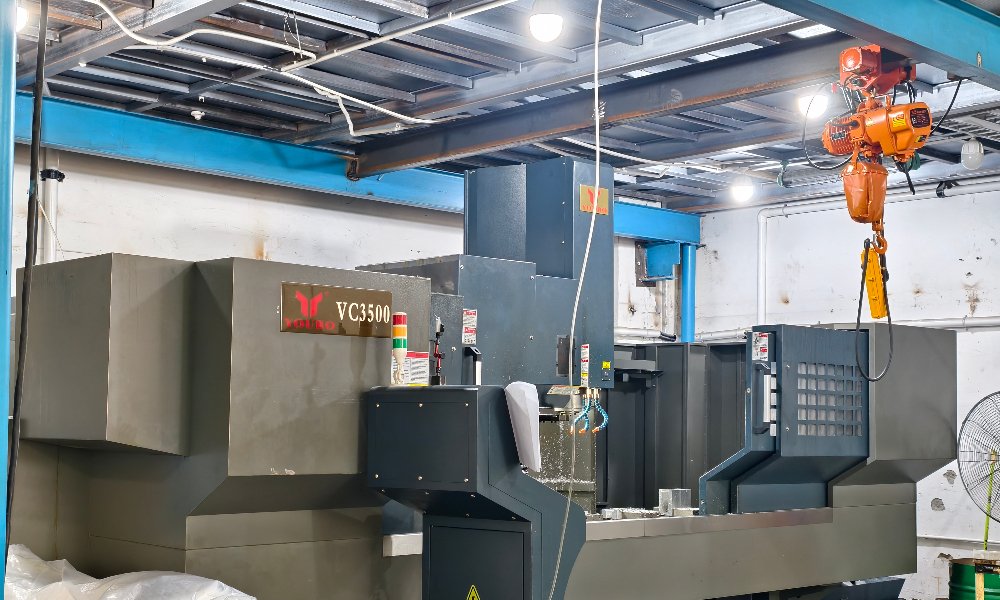
Repeatability is the quieter advantage. Once a program proves itself, each repeat batch starts from known-good code, fixtures, and inspection data. As a result, batch ten behaves like batch one. Gantry machining extends the same logic to large parts, so panels, frames, and fixtures stay tooling-free too.
XAP Precision runs all of these processes under one ISO 9001 quality system, from single prototypes to recurring production batches. That continuity matters. The same programs, fixtures, and inspection data carry over from your first order to your tenth. Learn more on our low-volume CNC machining and rapid prototyping page.
How Cost Behaves Across Quantities
CNC pricing follows a predictable curve. Each batch carries a fixed share of setup, programming, and inspection. Therefore, the per-part price drops as quantity spreads that fixed work across more units. Beyond a certain size, though, savings flatten out, because machining time per part stays roughly constant. For small batch manufacturing, that flat region is usually home.
Tooling processes behave differently. They start expensive and fall steeply as volume rises. As a result, the two cost curves cross somewhere. The exact point depends on part size, complexity, and material, so treat any generic crossover claim with care. Ask your shop to quote several quantity breaks. Comparing two or three points reveals the real curve for your exact part. That visibility helps you choose order sizes deliberately instead of guessing. Our CNC machining cost guide explains the drivers in detail.
One more economics point matters at low volumes: iteration cost. With CNC, a design tweak costs minutes of programming. Under tooling, the same tweak can cost a mold rework. Ultimately, cheap iteration often beats cheap unit price while your design is still settling.
Weigh carrying cost too. Large tooled orders tie up cash in inventory before demand is proven. In contrast, small machined batches let you sell, learn, and reorder.
Want a real figure for your small batch manufacturing quantity? Send drawings to XAP Precision for a free quote and current lead time.
When to Move to Casting or Molding
Eventually, success changes the math. Consider tooling when three signals appear together: a frozen design, steady high-volume demand, and real pressure on unit cost. A stable part number with few change requests is the strongest signal of all. Until all three align, small batch manufacturing by machining keeps your options open.
Meanwhile, vacuum casting can bridge the middle ground. It produces urethane copies from a machined master for bridge runs before any mold investment. Similarly, finishes like anodizing, powder coating, or plating scale with either route. See our surface finishing options for the full menu.
Some teams split the difference. They machine critical metal features while tooling only simple, stable components. That hybrid approach keeps risk low until volumes justify full tooling. If you do move to molding later, keep machined batches as a fallback while the tool is built.
Design Choices That Keep Small Batch Manufacturing Affordable
A few habits keep every batch lean:
- Tolerate tightly only where function demands it
- Design around standard bar and plate stock
- Use standard thread sizes and tooling radii
- Keep deep pockets and thin walls to a minimum
- Freeze the design between batches so programs stay valid
Each habit trims machining time, and the savings multiply across every repeat order. Share your full assembly context too. A supplier who sees how parts fit together can spot machining shortcuts a single drawing hides. Communicate your end use as well. Knowing whether a part faces static loads, wear, or chemicals helps your shop pick the right material and finish. Start these conversations at the quoting stage.
Frequently Asked Questions About Small Batch Manufacturing
What quantities count as small batch manufacturing?
Roughly ten to ten thousand parts per run fits the definition. In this window, CNC machining usually beats tooling-based processes on cost and speed.
Why is CNC better than molding for small batches?
CNC skips expensive molds and long tooling lead times. Design changes also cost almost nothing between batches. Therefore, small batches stay flexible and affordable.
When should I switch from CNC to molding or casting?
Switch when your annual volume justifies tooling amortization. Compare the per-part molding price plus tooling against the CNC price. A good supplier will run that math with you.
Launch Your Small Batch Manufacturing Run with a Free Quote
Small batch manufacturing rewards teams that skip tooling until the data justifies it. CNC machining delivers real materials, fast iteration, and honest per-part economics from the very first order. The same files that produced your pilot batch produce your thousandth part without retooling. It also keeps engineering in control, since every batch ships with measurable data. Ultimately, that keeps cash in your pocket while the market decides.
Send your CAD files for a free quote and free DFM feedback. Our engineers will confirm the fastest route, suggest material or tolerance tweaks, and confirm current availability. Request your small batch manufacturing quote today.