A machining quote is really two quotes in one. Part of it covers work you pay for once, and the rest repeats with every piece. The one-time line, the CNC setup cost, usually decides whether a small order looks reasonable or shocking. This guide separates the two families of charges, shows how they interact across quantities, and explains where real savings come from on actual projects.
What Is CNC Setup Cost?
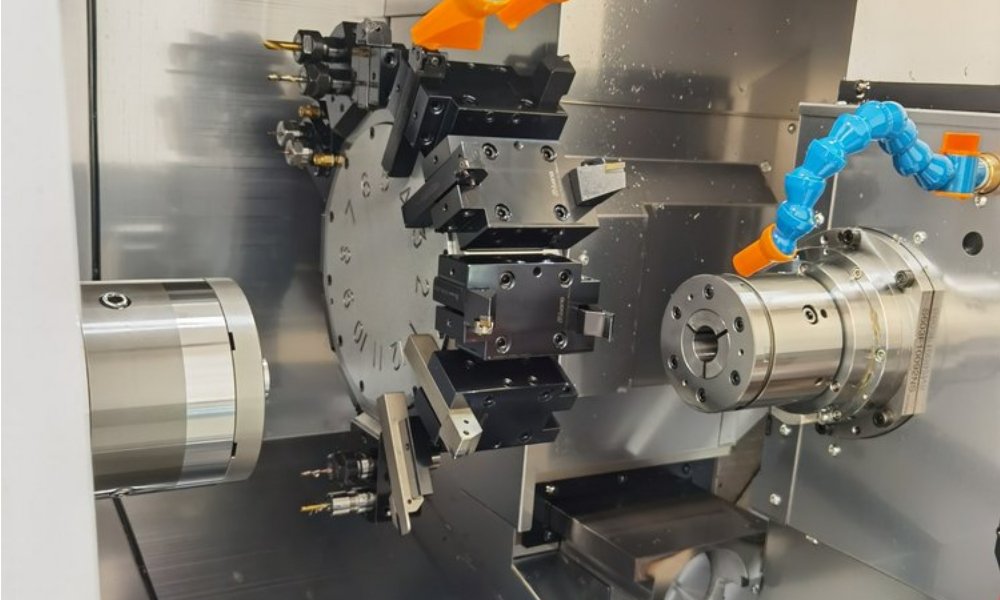
CNC setup cost covers everything required to take a machine from idle to cutting your first accepted part. That includes workholding design or selection, fixture build or kitting, tool assembly and presetting, program transfer to the control, offsets, and a proving run to confirm the process before unattended cutting begins. Each machine involved adds its own setup event, so a part that needs milling, turning, and finishing carries multiple setup entries on one quote. Shops may quote setup as a flat line item per part number or as an hourly rate based on machine type and complexity. Either method is legitimate; what matters is that the split stays visible. When setup appears separately from piece price, you can model different quantities honestly and see how the same work behaves across ten, one hundred, or one thousand pieces. If a quote hides it inside the unit price, request the breakdown before you compare suppliers, because two identical totals can hide completely different economics.
One-Time Charges Beyond the Machine Setup
Setup sits alongside other non-recurring work that also bills once per part number. Programming converts your model and drawing into machine instructions, proves the tool path, and usually includes one revision cycle. First article inspection measures and documents the initial parts against every drawing requirement. Some suppliers add process documentation, gauge planning, or packaging engineering for tight tolerance or cosmetic parts. Treat programming, setup, and first article work as a single one-time family when you evaluate a quote, because together they set the floor that small orders pay. This family also rewards preparation more than any other line. A clean, well-toleranced drawing with a complete specification reduces all three charges at once: fewer questions during programming, simpler workholding, and faster inspection sign-off. Investment you make in drawing quality before the RFQ lowers the one-time side of the invoice more reliably than price negotiation after the quote arrives.
Per-Piece Costs That Never Go Away
The variable side of the quote grows with quantity. Cycle time at the machine drives labor and overhead allocation, so every unnecessary tenth of a minute repeats on all parts. Material cost per piece depends on stock size, nesting, and waste. Final inspection may sample each lot, adding recurring quality cost. Surface finishing, plating, anodizing, and heat treat bill per piece or per batch load, often through a subcontractor whose minimums you inherit. These charges form the true steady-state price of your part. Once one-time work is absorbed, larger orders approach this number, which is why the price curve flattens after a few hundred pieces. Direct your engineering effort here when volumes are meaningful. A tolerance relaxed where function allows, a finish requirement scoped to cosmetic surfaces only, or a standard thread instead of a custom profile can shorten cycle time and inspection load across the entire life of the program.
Amortization: Why Quantity Moves Unit Price
Amortization is simple arithmetic with a big effect. If one-time work totals a fixed amount and you order ten pieces, every piece carries one-tenth of that amount. At one hundred pieces, one-hundredth remains. This is why unit price drops steeply between small and mid quantities, then flattens. The practical implication: a CNC setup cost that feels heavy at prototype stage becomes nearly invisible at production scale, because the same CNC setup cost is now divided across far more parts, and the same math explains why two suppliers with identical piece prices can show very different totals at low quantities. When you request pricing, ask for setup and piece price separately at several quantity bands so you can model your own forecast instead of accepting a single number. Our machining cost guide shows how these bands behave in real quotes, and the CNC machining quote guide explains what to submit so suppliers price the same scope on the same basis.
Five Ways Buyers Actually Save
First, group parts. Components sharing stock size, machine, and workholding can run in one setup family, so a consolidated release pays fewer setup events than scattered orders placed weeks apart. Second, freeze the design before production quotes. Every material revision can reopen programming and inspection work. Third, buy reorders smartly: ask the supplier to confirm whether stored programs and fixtures transfer to the next lot, because a second run should not repay first-run development. Fourth, relax non-critical requirements. Standard tolerances and finishes reduce proving time and sampling effort for both shop and inspection lab. Fifth, share forecasts. A supplier who sees your annual usage may hold standing material or schedule batches to cut per-lot handling. None of these tactics depends on squeezing the supplier’s margin, and each one preserves the documentation that keeps your parts traceable and repeatable across orders.
Questions to Ask Before You Accept a Price
Send three short questions with every quote review. Request the one-time and per-piece split in writing. Ask which specific activities the setup covers and whether programming is inside that figure or listed separately. Confirm exactly how reorders are priced when programs and fixtures already exist. These questions surface hidden structure quickly, and they also reveal how transparent a supplier is when you ask; that transparency matters more over a year than a slightly lower first number. If the answers come back as clear line items, you can compare suppliers honestly, model quantities, and plan reorders with confidence. If they come back vague, treat the quote as incomplete rather than cheap, and give the specific scope in writing before awarding anything. Our custom CNC machining services publish this structure by default, so buyers can weigh the fixed and variable sides before committing to a program.
Can the setup charge be reduced?
Partially, through preparation rather than pressure. Standard workholding, common materials, sensible tolerances, and complete drawings all shrink proving time and inspection effort. Grouping parts onto one machine platform reduces the number of setup events across an order. The remaining figure reflects real labor at the shop, and a supplier quoting an unusually low setup is often recovering it somewhere else, such as longer lead time, thinner inspection, or a higher piece price that hides the same work.
Will I pay setup again on a reorder?
A reorder of the same revision should cost less than the first order, because programming and first article work are already complete. You may still see a smaller setup line for loading the program, checking offsets, and verifying the first parts of that batch. Ask for the reorder price policy in writing when you approve the first order, so expectations stay clear across batches and nothing gets re-billed by habit.
Does a higher quantity always lower the price per piece?
Within reason, yes, because fixed charges spread further. Beyond a certain volume the curve flattens and the piece price approaches its steady state, so ordering far beyond your usage adds storage and obsolescence cost that outweighs the small price difference. Match quantity to realistic consumption, and use scheduled releases rather than one large buy when demand is uncertain or the design could still change.