When standard parts fall short, custom CNC machining services make your design real. Machined parts follow your drawing exactly, tolerances and all. Moreover, they scale from one prototype to thousands of pieces without new tooling. That flexibility is why OEMs, startups, and R&D teams rely on machining for critical components.
This guide explains what custom CNC machining services include, who benefits most, and what a smooth order looks like. It also highlights the quality signals worth checking before you spend a dollar. Along the way, you will see how a single supplier can carry a part from concept to shipment. By the end, you will know which details separate strong quotes from risky ones.
What Custom CNC Machining Services Cover
Custom CNC machining services remove material from solid stock under computer control. Because the toolpaths come from your CAD model, every part matches the same digital definition. Specifically, one shop can offer several complementary processes:
- 3-axis and 4-axis CNC milling for brackets, housings, plates, and manifolds
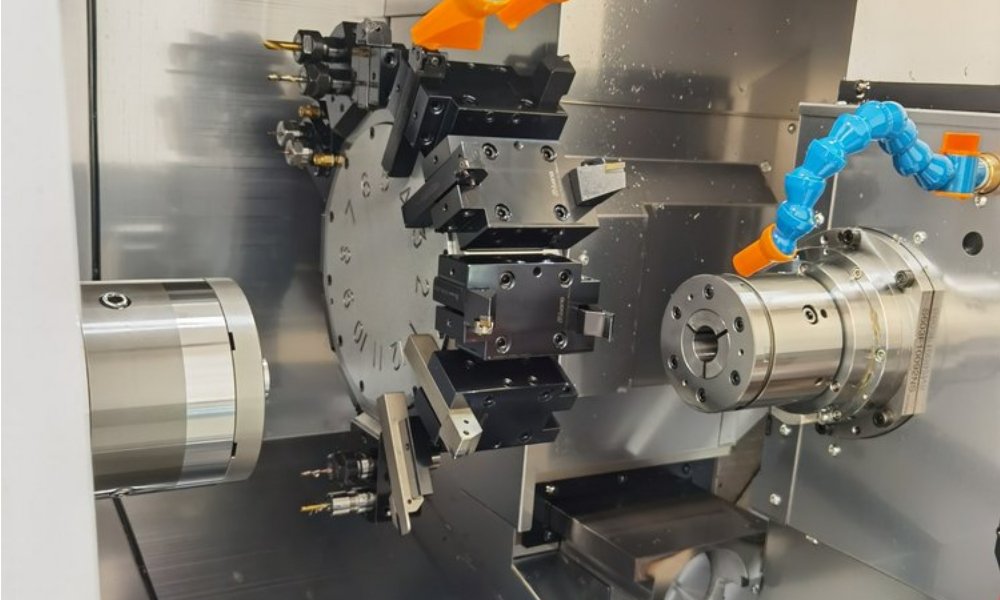
- CNC turning for shafts, bushings, nozzles, and other rotational parts
- 5-axis machining for complex contours that would otherwise need multiple setups
- Swiss-type turning for small, high-precision components
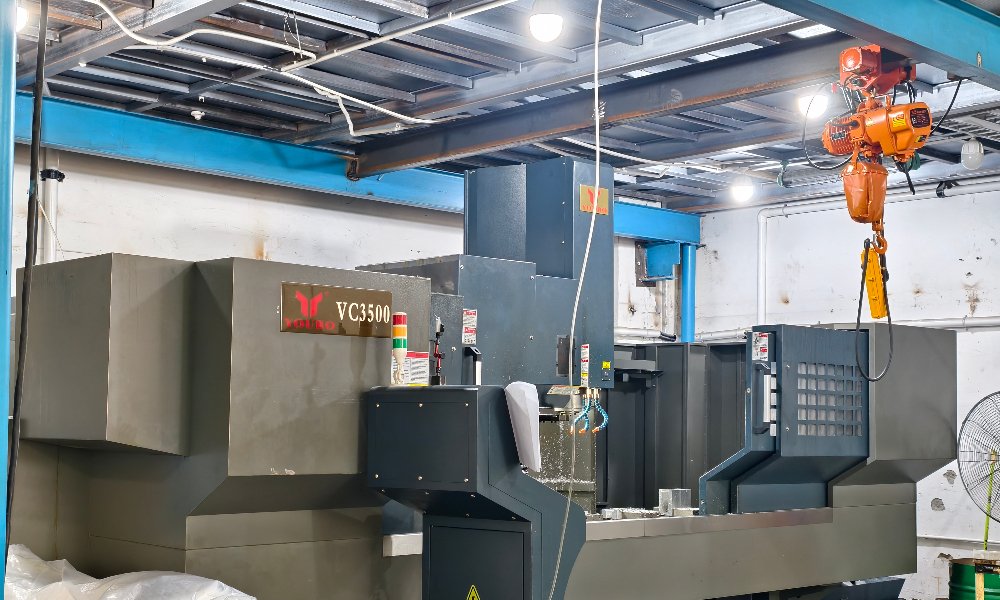
- Gantry machining for large plates and structural pieces
In addition, capable shops combine processes within a single order. For example, a housing may start on a mill, then move to a lathe for bore features. Meanwhile, rapid prototyping and low-volume production share the same machines. As a result, you manage one supplier instead of several.
Precision is the other half of the story. Standard milling tolerances land around ±0.005 in, while grinding and fine turning hold tighter bands. However, only critical dimensions deserve tight tolerances. Our CNC machining tolerances guide explains where to invest and where to relax.
Ship Prototypes to Production Without Tooling Costs
OEMs use custom CNC machining services for production parts that must fit every time. Startups use them to validate designs before paying for molds or dies. In fact, machining often beats tooling below a few thousand pieces, because no upfront tool cost exists. As a result, teams keep capital free for design work instead of locking it into tooling.
R&D teams benefit too. They change a dimension in CAD, then order revised parts within days. Similarly, bridge production keeps assembly lines running while hard tooling is built. Ultimately, the cycle repeats itself: design, order, test, refine.
Low-volume high-mix work suits custom CNC machining services especially well. One order can carry five part numbers in three materials. Consequently, product teams consolidate purchasing, cut paperwork, and simplify quality records.
Vacuum casting extends the model further. Once a master pattern exists, urethane copies follow at low cost. Therefore, teams bridge the gap between prototype and production tooling without waiting.
Metals and Plastics Under One Roof
A strong custom CNC machining services partner machines metals and engineering plastics alike. Common metals include aluminum, stainless steel, carbon steel, brass, and titanium. Each behaves differently. Aluminum machines fast and suits lightweight brackets. Stainless steel resists corrosion but demands rigid setups. Brass delivers fine finishes for fittings and cosmetic parts. Titanium rounds out the list, serving aerospace and medical roles where strength-to-weight ratio matters, although it machines slowly.
On the plastics side, shops machine POM, ABS, PEEK, PTFE, and acrylic. PEEK handles heat and chemicals in demanding roles. PTFE, by contrast, seals and insulates. Acrylic serves optical and display applications. Choosing the right material early saves money later. Our material selection guide for CNC machined parts walks through the trade-offs.
A Clear Path from Drawing to Delivery
A well-run custom CNC machining services order follows a clear path. First, you send a 2D drawing plus a STEP or IGES file. Second, an engineer reviews the files and flags risks like deep pockets or thin walls. Third, you receive an engineer-reviewed quote covering tolerances and lead time. Finally, production starts only after you approve.
After that, inspection closes the loop. In-house inspection checks critical dimensions against your drawing. Consequently, problems surface at the machine, not at your receiving dock. Then parts move to packing and shipping, with material and inspection documents attached on request.
How long does the whole path take? That depends on part size, quantity, and finish. Many shops quote prototypes in a few days and production runs in one to four weeks. Air freight can compress the schedule for urgent prototypes, though it adds cost. Therefore, ask for current lead times before you commit.
The same path works in reverse for revisions. If a dimension changes mid-program, a quick DFM recheck keeps cost and schedule honest. Meanwhile, updated drawings replace old ones, so the shop never machines from stale data.
Sending complete files up front is the fastest way to price custom CNC machining services accurately. Missing tolerances or units force email rounds that add days.
Quality Signals to Check Before You Order Custom CNC Machining Services
Not every shop is equal. Look for an ISO 9001 quality system first, because it signals documented processes and traceable records. The ISO 9001 overview from ISO explains what the standard requires. In addition, ask who inspects parts, which instruments they use, and how material traceability works.
Document flow matters as much as hardware. Ask which reports ship with your parts: dimensional inspection, material certificates, or surface finish records. In-house inspection keeps that paperwork under one roof, which speeds resolutions when questions arise.
Before you sign, run a short checklist:
- Confirm the ISO 9001 certificate and its scope
- Order a sample part and measure it yourself
- Request the inspection reports that shipped with previous orders
- Test communication speed with a few technical questions
- Check real part photos or a product case page
References close the loop. Ask for one or two current customers you can contact. A confident shop will say yes, or at least share detailed case studies.
Finally, look at proof. Real photos of shipped parts say more than polished marketing copy. XAP Precision holds ISO 9001 certification and inspects every order in-house before shipment. We also publish examples on our CNC machining product case page. Material traceability follows each order, so you know the exact bar or plate your parts came from. That is how dependable custom CNC machining services should behave.
Why Teams Choose XAP Precision
XAP Precision runs 3-axis, 4-axis, and 5-axis milling, CNC turning, Swiss-type lathes, and gantry machining under one roof. In other words, we cover the full scope of custom CNC machining services. Moreover, we support rapid prototyping, low-volume high-mix production, and vacuum casting for urethane parts. That mix follows a product through its whole life, from first prototype to steady supply.
Communication stays direct as well. Your questions reach engineers who read drawings, not a call center. Meanwhile, every quote gets an engineer review before it reaches you. Your files stay confidential too, with access limited to the project team and NDAs signed on request. Finally, we flag schedule risks early instead of hiding them. You can also start small. Many buyers place a pilot order first, then scale once quality is proven in hand.
Frequently Asked Questions About Custom CNC Machining Services
What files do you need for a custom CNC machining services quote?
Send a 2D drawing in PDF plus a 3D model in STEP or IGES format. Also list the material, quantity, tolerances, and any surface finish. Complete files bring a faster and more accurate quote.
What is the minimum order for custom CNC machined parts?
CNC machining has no real minimum. One prototype and ten thousand parts both make sense, because there is no tooling to pay for. In fact, single one-off parts are common.
Can one shop handle both metal and plastic custom parts?
Yes. XAP Precision machines metals such as aluminum, steel, and brass plus plastics such as POM, ABS, and PEEK. Therefore, you can consolidate your whole bill of materials with one supplier.
Get a Free Quote for Custom CNC Machining Services
Ready to move? Send your drawing or STEP file today, and you will receive an engineer-reviewed quote plus free DFM feedback. There is no cost and no commitment, and your files stay confidential. If you still have questions about custom CNC machining services, ask them in the same message. Real engineers answer, and the advice is free. Visit our contact page to request your free quote, and our team will reply promptly.