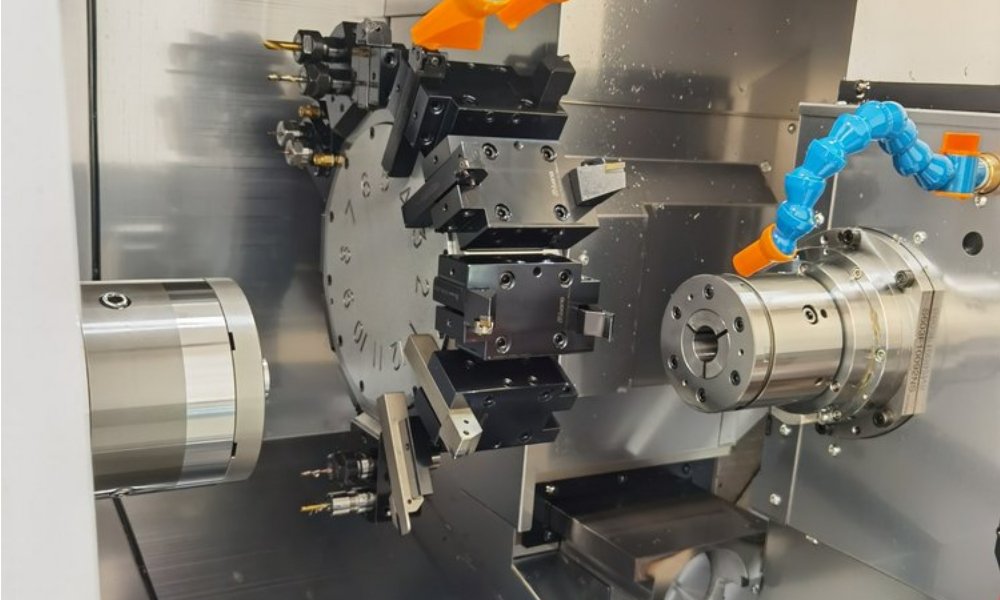
Inconel machining has a reputation, and the reputation is earned. Inconel alloys are nickel-based superalloys built to hold strength at temperatures that soften ordinary steel. The same property that makes them valuable in a turbine makes them stubborn at the spindle. Cycles run longer, tooling costs more, and process discipline matters more than on almost any common alloy.
XAP Precision machines Inconel alongside titanium, stainless steel, and other difficult alloys on rigid 3-, 4-, and 5-axis machining centers. This guide covers what Inconel actually is, why it fights back, and the strategies that keep it profitable to cut. It also explains what buyers should expect on price and lead time.
What Inconel Is, and Why 718 and 625 Dominate
Inconel is a family of nickel-chromium superalloys developed for high-temperature strength and oxidation resistance. The name started as a brand, but shops now use it as shorthand for the whole nickel-superalloy family. Two grades account for most of the machining work we see:
- Inconel 718 is the aerospace workhorse. It is precipitation-hardenable and strong to roughly 700 degrees C, so it appears in turbine hardware, rocket components, and downhole tools.
- Inconel 625 relies on solid-solution strengthening instead of heat treatment. It resists corrosion aggressively and shows up in chemical processing, marine, and exhaust applications.
Both grades weld well and survive hostile service environments. That is precisely the problem for the machinist. These alloys were engineered to resist deformation, heat, and chemical attack, and a cutting tool tries to force all three on them at once.
Why Inconel Machining Fights Back
Three mechanisms do most of the damage. The first is work hardening. Inconel deforms rather than shears cleanly, and the rubbing near the cut edge hardens the surface layer. If the next pass cuts too shallow, the tool works against an already hardened skin and dulls quickly.
The second is heat concentration. The alloy’s low thermal conductivity traps heat at the tool tip instead of carrying it away in chips. Cutting temperatures concentrate right at the edge. That is why Inconel machining eats tool life even at modest surface speeds.
The third is abrasive carbides. Hard particles in the microstructure saw at the tool coating, and the alloy’s tendency to weld to the edge forms built-up edge. When that weld breaks, it can pull carbide grains away with it. The result is short, predictable tool life that must be priced into every quote.
Chip control deserves mention as well. Inconel produces tough, continuous chips that can bird-nest around the tool and scratch finished surfaces. Chip breakers, steady feeds, and high-pressure coolant keep them manageable.
Strategies That Make Inconel Machining Work
Shops that succeed with superalloys follow a consistent playbook:
- Rigid setups. Vibration is punishing in these alloys, so we favor short tools, strong holders, and aggressive clamping.
- Sharp, consistent tooling. Fresh edges cut below the work-hardened layer. We budget for regular inserts rather than stretching tool life.
- Constant feed with no dwell. Stopping the feed while the tool spins lets the edge rub and work-harden the surface. Programmed moves keep the cutter engaged and moving at all times.
- Generous coolant, often high-pressure. Coolant manages the concentrated heat and helps break chips. Through-tool high-pressure coolant is common on deeper features.
- Conservative speeds, committed feeds. Lower surface speeds protect the edge, while firm feeds keep the cut below the hardened skin. That combination beats running fast and retreating.
Done consistently, these habits keep Inconel machining predictable. Done loosely, it becomes a scrap lottery.
Where Inconel Parts Are Used
Inconel earns its keep where temperature and corrosion rule out cheaper alloys. Turbine components see the alloy in combustor hardware, seals, and afterburner parts. Exhaust systems in racing and aerospace use it for heat resistance at low wall thickness. Downhole oil-and-gas tools rely on 718’s strength under pressure, while sour-service grades resist corrosive well fluids. Medical devices, chemical processing equipment, and heat-treat fixtures round out the demand. That breadth keeps Inconel machining in steady demand across aerospace, energy, and defense.
These parts are often thin-walled, deeply featured, and tolerance-critical. That reality reinforces why shop experience matters as much as machine capability. A five-axis center helps, but the cutting strategy decides the outcome.
The Real Cost of Inconel Machining
Buyers should expect Inconel parts to cost multiples of equivalent steel parts. Material is expensive, and cycles are slow. A part that takes one hour in 4140 can take several hours in 718 at conservative parameters, with fresh inserts along the way. Scrap risk also prices in. A scrapped Inconel forging loses both the material and the machining hours already invested.
Lead time follows cost. Material sourcing for thick plate or large bar can add weeks before the first chip, so plan long-lead stock early on critical programs.
If you are weighing Inconel against a substitute alloy, XAP Precision offers free DFM feedback with every quote, so the true cost of Inconel machining is visible before you commit.
Sometimes honest engineering moves a part off the superalloy entirely. Where service temperatures stay moderate, stainless or precipitation-hardening steels may do the job for a fraction of the cost. Our steel CNC machining guide covers those options, and our material selection guide walks through the trade-offs systematically. Where the environment truly demands a superalloy, though, Inconel machining remains the right call, with the full metal range available for honest comparison.
Quoting and Design Tips for Inconel Parts
A few habits smooth the quoting process. Specify tolerances only where function demands them, because each tight call in Inconel machining adds cycle time and cost. Avoid deep thin walls where geometry allows. Consider near-net stock shapes to reduce material removal. And share the service environment up front, since it decides the grade. 625 for corrosion, 718 for strength.
Expect lead times longer than ordinary alloys. Not because shops queue the work, but because the cutting itself is slow. Tooling must also be on hand before the first chip, which adds setup time to first articles. Finally, approve first articles carefully, because correcting a feature after hours of hard cutting is expensive.
Frequently Asked Questions About Inconel Machining
Why is Inconel so much more expensive to machine than steel?
Inconel work-hardens, traps heat at the tool edge, and contains abrasive carbides, so cycles run slowly and tooling dies young. Material also costs several times more per kilogram than steel. Together those factors make Inconel machining meaningfully more expensive per finished part.
What is the difference between Inconel 718 and 625?
Inconel 718 is precipitation-hardenable and chosen for high strength in turbine and downhole service. Inconel 625 is solid-solution strengthened, cannot be heat treated, and is chosen for aggressive corrosion environments such as chemical processing, marine exhaust systems, and sour-service well hardware.
Can Inconel parts be machined from solid bar?
Yes. Many Inconel parts are machined from bar or plate, though near-net forgings can reduce cost at higher volumes. Removing less material shortens cycles and limits exposure to the alloy’s machining penalty. Stock selection is part of the DFM conversation we run on every quote.
Send Us Your Inconel Drawings for a Free Quote
XAP Precision machines Inconel 718, 625, and other superalloys on rigid multi-axis machining centers, backed by ISO 9001 quality processes. Send us your drawings or step files and we will return pricing with free DFM feedback. Request your free Inconel machining quote today.