A bearing only performs as well as the bore that holds it. Even slightly out-of-round, oversized, or misaligned bores shorten bearing life, no matter how good the bearing itself is. That is why bearing housing machining earns its own discipline: fit class, roundness, and concentricity all ride on the housing, and the housing is the part your shop can control. This guide covers bore requirements, design rules, materials, and the failure modes that bad bores cause.
Why Bearing Bores Deserve Special Treatment
Rolling-element bearings are engineered around interference. The outer ring needs a controlled press fit in the housing bore to prevent creep, yet too much interference crushes internal clearance and overheats the bearing. Standard fit classes capture this balance. A common housing bore runs at H7 tolerance, paired with the bearing maker’s recommended shaft fit. The bore must also stay round and cylindrical, since an oval bore deforms the outer ring and transmits that distortion to the rolling elements. Bearing housing machining lives and dies on holding that balance.
Concentricity between bores matters just as much. When a shaft rides two bearings, both housing bores must sit on a common axis. Misalignment deflects the shaft, converts pure rotation into a bending load, and shows up as heat, noise, and early failure. For this reason, bearing housing machining treats the pair of bores as one feature, ideally boring both in a single setup or along one machine axis.
Design Rules That Guide Bearing Housing Machining
Good housings give the bore room to work. Shoulders provide axial location for the bearing, and they must sit square to the bore axis. A relief or undercut at the shoulder corner lets the bearing seat fully against the face. Seal grooves need controlled depth and finish so lips seal without drag. Snap-ring grooves, where used, must hold width and location so axial play stays within spec.
Tolerance bands deserve explicit callouts. Specifying the bore as H7, or the class your bearing engineer selects, removes ambiguity, and adding roundness and concentricity symbols closes the remaining gaps. State the surface finish too, since bearing bores typically want Ra around 1.6 µm or better. If you are unsure how much interference to specify, our DFM guidelines for outsourced CNC machining projects cover press-fit practice. Complete callouts make bearing housing machining predictable, because the shop can plan its bore sequence around them.
Think about assembly order as well. Bores cut before surrounding features risk distortion from later clamping. Conversely, thin-walled housings can oval under clamp force, so fixturing strategy belongs in the DFM conversation. Where two housings share a shaft, document which bore pairs with which, so field service reproduces factory alignment. The same logic applies to fasteners: cap bolts torqued in the wrong sequence can pull a split housing bore out of round.
Materials: Aluminum Housings, Steel Inserts, and Machined Castings
Aluminum housings dominate where weight matters. They machine fast, shed heat well, and suit robotics, conveyors, and light machinery. The trade-off is wear: aluminum galls against a spinning outer ring if the fit ever loosens. Bearing housing machining addresses this with steel or cast-iron inserts, which take the press fit in hardened steel while the aluminum body carries structure. Many designs also specify hard anodize around the bore for extra protection.
Machined castings form the second family. Gearboxes and pump cases arrive as castings with bearing bosses, and finish machining brings those bores to size, roundness, and position. Welded steel fabrications sometimes need machined bores added to plate assemblies too. XAP Precision handles all three routes: aluminum housings from bar or plate, castings finish-machined, and turned bearing components from our CNC turning service. Bearing housing machining in the same shop as the shafts keeps both halves of every fit under one quality system.
How Shops Hold Bearing-Bore Tolerances
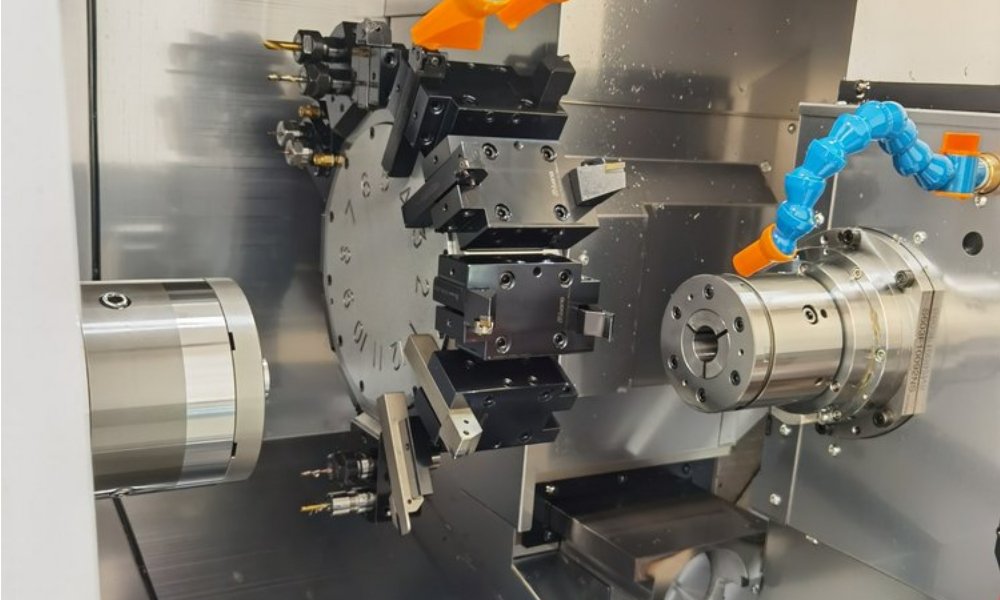
The process sequence does most of the work. Housings get rough-machined first, then rested or stress-relieved before finish cutting. Finish boring runs as a light final pass with the part at stable temperature, because a few degrees of heat can push a bore out of its band. Honing then corrects any remaining lobing and brings the finish to spec. Bearing housing machining shops verify each step with bore gauges or air gauging, not just at final inspection.
Fixturing deserves equal attention. Thin housings oval when clamped hard, so shops use soft jaws, ring clamps, or wax fixtures to hold parts without distortion. When a housing carries two bores, both finish in one setup whenever possible. If that is impossible, a shared datum and a boring bar referenced to the first bore keep the pair coaxial.
The Failure Modes Behind Bad Bores
Outer-ring spin, or creep, tops the list. It happens when interference runs light and the ring rotates inside the bore, polishing the seat and loosening further over time. The bore ends up oversized, the bearing wanders axially, and the whole assembly loses its location. Noise follows as running clearances drift. In extreme cases the bearing frets through the housing wall entirely, scrapping the part. Nearly every one of these symptoms traces back to bearing housing machining that missed its tolerance band.
Oversized or off-center bores create a different signature. Excess interference squeezes internal clearance away, so the bearing runs hot and grease life collapses. Misalignment between two bores loads the rolling elements unevenly, producing tone and vibration that grows with speed. Both failures look like bearing defects at teardown, even though the bearing was innocent. The real root cause sits in the housing, which is why bore quality deserves the budget.
Frequently Asked Questions About Bearing Housing Machining
What tolerance should I specify for a bearing housing bore?
For most ball and roller bearings, an H7 bore covers the standard press-fit range. The bearing maker’s catalog lists the exact band for your load and rotation conditions. State the class, plus roundness and concentricity limits, on the drawing. That gives the machine shop a clear target and gives inspection a clear gauge.
How do shops hold roundness and concentricity between bores?
Sequence and setup discipline do the work. Boring both bores in one clamping keeps them on a common axis. Finish passes run light, with the part at stable temperature, and honing cleans up any remaining lobing. Air gauging or bore gauges verify size and roundness between operations so nothing drifts unnoticed. That measurement discipline is the heart of bearing housing machining.
Can aluminum housings hold press-fit bearings without an insert?
Yes, at moderate loads. The keys are correct interference, good bore finish, and attention to thermal expansion differences. For high loads, reversing loads, or high temperatures, a steel insert or a hard-anodized bore adds insurance. Tell your shop the load case, and bearing housing machining can be planned around the right fit.
Get a Free Quote for Bearing Housing Machining
Bore quality decides bearing life. XAP Precision machines bearing housings in aluminum, steel, stainless, and cast materials under ISO 9001 quality control, with turning and milling under one roof. Send your drawing today for a free quote and free DFM feedback on fits, tolerances, and bore callouts. Contact us to start.