Magnesium machining lets engineers cut weight where every gram matters, from aerospace brackets to handheld tool housings. Magnesium is the lightest structural metal in common use, so parts come off the spindle with high stiffness for their mass and excellent vibration damping. It also machines quickly, which shortens cycle times on thin-wall and geometry-heavy components. The catch is safety: fine chips and powders are highly flammable, so the process needs controlled dust handling and the right cutting strategy. At XAP Precision we run it in isolated cells with strict chip discipline to protect operators while capturing the speed and weight benefits. This guide explains how the metal behaves under the cutter, where it beats aluminum, and how to design parts that stay light and safe.
Magnesium Machining Basics: Speeds, Feeds, and Feel at the Spindle
Magnesium machining is among the fastest of any metal we cut. Low shear strength means small forces, so thin ribs and deep pockets finish without the deflection that plagues softer aluminum. You can push high spindle speeds and generous feeds while a sharp positive rake shears clean chips. The alloy does not like heat or dwell; it is soft near its melting point and can smear or, at a hot edge, ignite. Keep the cut brisk and the tool sharp. Tool wear stays low because the material is non-abrasive. The real constraint is not the cutter but the flying chips, which must be cleared quickly and collected safely, so we manage feed rate and enclosure airflow together rather than chasing raw speed alone.
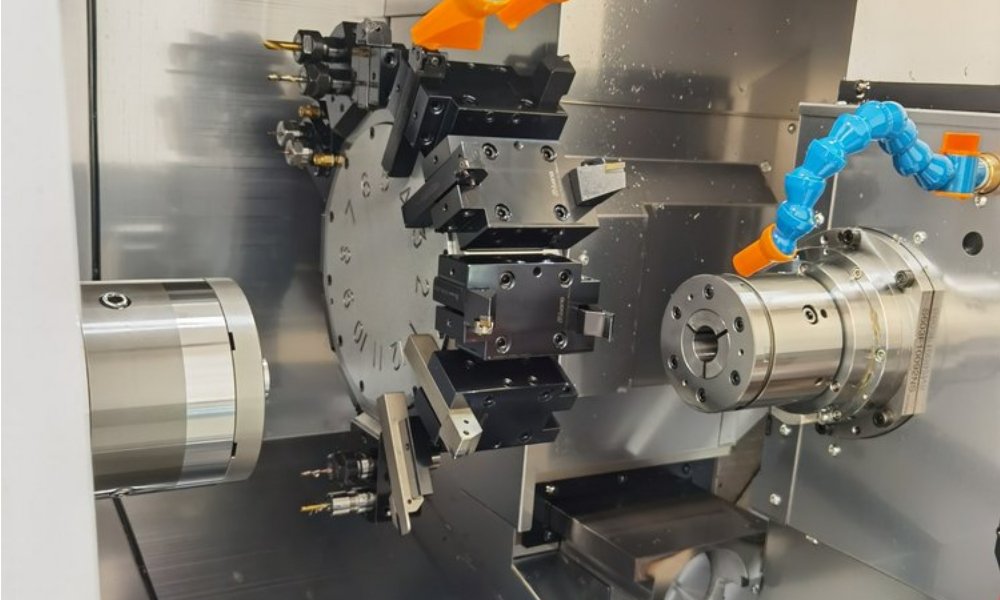
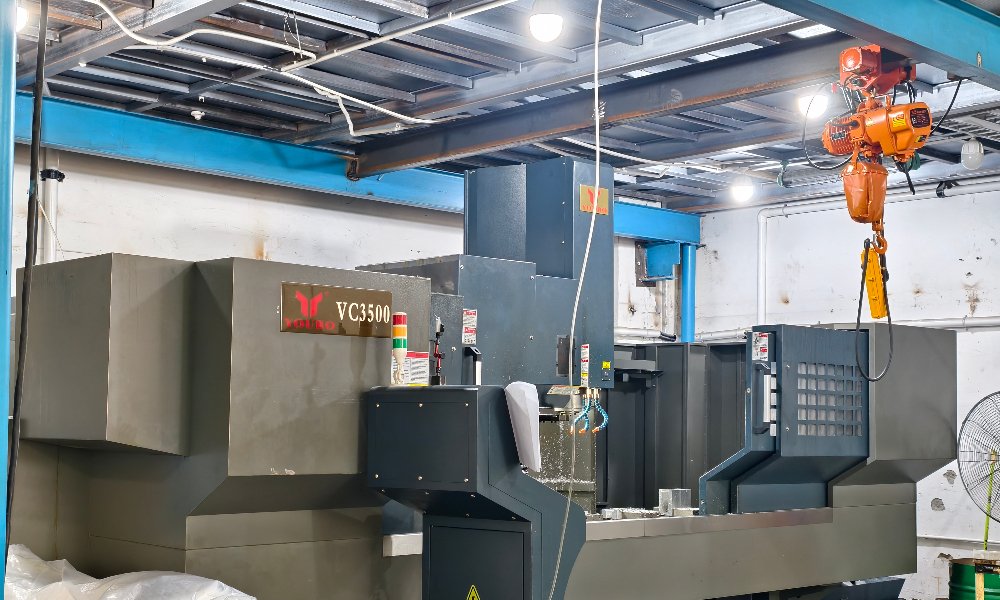
The machine itself should be built for the task. A fully enclosed mill with smooth chip pans, good airflow, and a fast rapids rate keeps hot fines moving away from the cut before they can accumulate. Because the metal is so easy to shear, cycle time often drops well below an equivalent aluminum part, which is a real advantage at volume. High-pressure air, not coolant, frequently does the best job of clearing pockets between passes. The goal is to finish the cut and get the chips into a bin, never to let them pile up in the work zone where they can smolder.
Why Choose Magnesium: Weight, Stiffness, and Damping
At roughly two-thirds the weight of aluminum, this metal wins any comparison where mass drives performance, and in magnesium machining that advantage shows up immediately. Handheld tools feel lighter, drone and aircraft brackets carry more payload, and laptop or camera chassis shed grams without buckling. Its damping capacity runs well above aluminum, so housings quiet motor vibration and cutting chatter. The material also shields electromagnetic interference naturally, which helps electronics enclosures pass testing. When you weigh options, our titanium vs aluminum breakdown frames how common metals rank on strength and mass, with this alloy at the light end. Pairing those numbers with the material selection guide keeps the choice honest for the load at hand.
Designers should also remember that the metal needs surface protection. Bare magnesium corrodes in the presence of moisture and salt, so parts usually receive a conversion coating and a seal or paint before service. Electrically isolate it from more noble metals to avoid galvanic attack, especially in mixed assemblies. Cast and wrought forms both machine well, with wrought bar giving slightly more uniform properties for loaded parts. When you factor in the light mass, the natural damping, and the EMI shielding, the alloy solves several design problems at once, provided the finish and isolation are engineered from the start.
Fire and Dust: Managing the Real Hazard
The defining caution in magnesium machining is flammability. Small chips, ribbons, and especially fine dust burn intensely and react with water, so a common water extinguisher feeds the fire rather than stopping it. Keep chips short and cool, never let them pile in the enclosure, and empty swarf bins on a schedule into sealed, labeled containers. Store a Class D extinguishing agent within reach. Cutting strategy follows the same logic: many shops run dry or near-dry to avoid oil-soaked fines that trap heat, and when lubrication is needed they choose fire-inhibited, non-water fluids in a controlled flood. Grinding and deburring demand equal care, because airborne fines carry the highest ignition risk. Strict housekeeping turns a dramatic material into a routine one.
Personal and facility controls complete the picture. Operators wear eye and respiratory protection, work areas stay free of combustible dust elsewhere, and ventilation routes fines through suitable filtration rather than into a general system. Never grind over an accumulation of chips, and keep ignition sources away from the enclosure. Store billets and swarf apart, and label containers so handling never surprises the next shift. These are ordinary industrial-hygiene habits, applied consistently, that let a highly reactive metal be treated as a routine production material.
Tooling, Coolant, and Surface Quality
Because the metal cuts cool and clean, standard aluminum tooling works well, and you gain an even brighter surface when geometry stays sharp. Avoid rough-surfaced coatings that grab; polished flutes release chips cleanly. Coolant choice is a safety decision as much as a thermal one, so fire-inhibited fluids or minimal dry cutting beat a water mist here, unlike the flood coolant we use for 6061 vs 7075 aluminum where heat and stickiness dominate. Thin-wall features want gentle, balanced cuts to hold form, so plan passes that keep stock light and consistent while we hold bores within ±0.08 mm. Our CNC tolerances discipline matters doubly, since low stiffness lets delicate walls move under clamp pressure.
Clamping and metrology deserve the same care. Because the material is soft and light, over-torqueing a vise can distort a thin part that then springs back out of tolerance. Use soft jaws, distributed fixturing, and check critical features while the part is still restrained. Threads form cleanly, and the low cutting forces help preserve fine features. Held thoughtfully, a part can stay inside its print through assembly and shipping without a re-machining pass.
Applications and When to Reach for It
Aerospace and defense use the alloy for gearbox housings, brackets, and seat frames where mass is critical. Consumer electronics rely on it for laptop, tablet, and camera bodies that need stiffness, shielding, and light weight. Portable power tools, lawn equipment, and racing components benefit from the same mass savings. If a part must be large, thin, and light, this is hard to beat. Skip it for prolonged saltwater exposure, high sustained temperature, or any setting where a fire risk cannot be controlled during fabrication. Confirm the environment and load against the fuller trade-off tables before locking the spec.
Frequently Asked Questions About Cutting Magnesium
Is magnesium dangerous to machine?
The solid metal is safe to handle, but fine chips and dust are flammable and react with water. With short chips, clean collection, no water on live sparks, and Class D agent on hand, shops run it routinely and safely.
Can you machine magnesium wet?
Yes, but only with fire-inhibited, non-water cutting fluids in a controlled flood. Many operations prefer dry cutting to avoid oil-soaked fines that can trap heat and complicate disposal afterward.
How light is magnesium compared to aluminum?
It weighs roughly two-thirds as much as aluminum for the same volume, which is why it is favored wherever mass drives cost, fatigue, or performance in the finished product.