Vacuum casting vs CNC machining is one of the most common decisions in early-stage production. Both routes deliver small batches quickly, and both handle complex shapes. Yet they differ in materials, precision, cost, and lead time. Choose wrong and you either overspend on prototypes or ship parts that fail testing.
This guide compares vacuum casting vs CNC machining head to head. It covers materials, tolerances, quantity sweet spots, cost curves, and lead times. Then it offers a decision checklist you can apply to your own project.
Vacuum Casting vs CNC Machining at a Glance
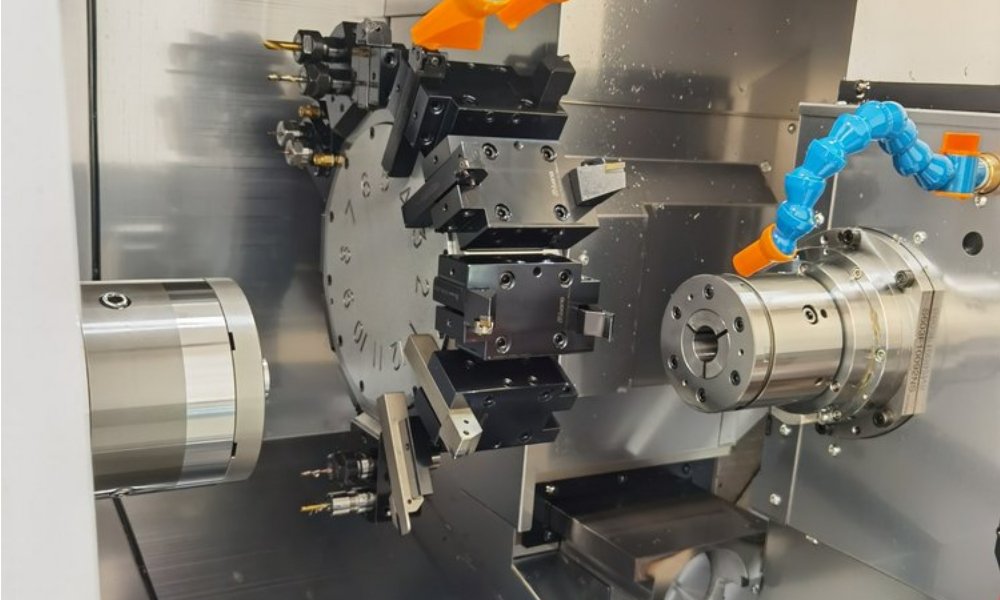
The vacuum casting vs CNC machining question reduces to one core difference. Casting replicates parts from a silicone mold using urethane resin. Machining cuts parts from solid stock with rotating tools. From that difference, everything else follows:
- Materials: casting uses polyurethane simulants, while machining uses real metals and engineering plastics.
- Quantity: casting favors batches of 10 to 50, while machining works from one part to thousands.
- Precision: machining holds tighter tolerances and controls geometry better.
- Cost at low volume: casting wins on part price once the master pattern exists.
Materials: Urethane Simulants vs Real Engineering Materials
In vacuum casting vs CNC machining decisions, materials settle most arguments. Casting works with polyurethane resins that mimic ABS, polypropylene, polycarbonate, rubber, and clear plastics. ABS-like resins give rigid housings, PP-like resins add flex, rubber-like resins span a range of Shore hardness, and clear resins polish toward optical quality. These simulants reproduce appearance, hardness, and general feel convincingly, which makes them excellent for visual models and light functional tests. In addition, urethane resins accept fillers for extra stiffness or flame-retardant behavior.
However, simulants are not the real thing. They fall short on temperature resistance, fatigue life, and exact mechanical values. CNC machining, meanwhile, processes the grade you will actually ship: 6061 aluminum, 316 stainless steel, brass, titanium, PEEK, PTFE, and dozens more. If your part must survive load, heat, or chemicals, machined samples give you truthful data. For help choosing grades, see our material selection guide for custom CNC machined parts.
Precision and Surface Finish: Machining Holds the Edge
On precision, vacuum casting vs CNC machining is not a close contest. Standard milling holds about plus or minus 0.05 mm, and finishing passes go tighter. Casting typically holds plus or minus 0.15 mm to 0.25 mm, and every part shrinks 0.2 to 0.4 percent as the resin cures. Fine features such as thin ribs and small holes also cast less reliably than they machine. As a result, cast parts suit appearance and ergonomic validation, while machined parts suit functional testing.
Surface finish flips the story. Cast parts inherit the master pattern’s finish, including gloss, texture, and soft-touch effects. Machined parts show tool marks unless you add finishing operations. So for appearance models, casting often looks better out of the gate, while machined parts measure better.
Quantity Sweet Spots, Cost Curves, and Lead Time
Cost behavior shapes the vacuum casting vs CNC machining decision more than any other factor. Casting carries low fixed costs. The master pattern and silicone mold are inexpensive, and each additional copy costs little. As a result, batches of 10 to 25 parts are very economical. Beyond that range, molds wear out after roughly 10 to 25 copies, and new molds add cost. In practice, many buyers split the difference. They cast appearance parts and machine structural ones in the same order, then compare results side by side before committing.
Machining shows the opposite curve. Each part consumes machine time, so the per-part price stays flat. There is no mold to amortize, but no volume discount either. One machined part often costs less than one cast part. Twenty cast parts usually beat twenty machined parts on total price. The crossover depends on geometry, but within the low-volume range, casting generally takes the lead as quantity rises.
Lead time shifts the vacuum casting vs CNC machining balance too. A single CNC part can ship in one to three days. Casting needs a pattern first, then a mold, so first parts typically take three to seven days. After the mold exists, though, copies come quickly, and adding ten parts costs little extra time. Machining is faster for one or two parts. For a batch delivered together, however, casting usually wins.
The Common Combo: CNC Master Pattern, Then Cast Copies
The smartest answer to vacuum casting vs CNC machining is often both. A proven approach is to machine the master pattern, or the critical functional components, and then cast copies from it. Machining gives you a dimensionally exact master with the real surface finish. Casting then multiplies it cheaply. You get machining’s accuracy on the reference part and casting’s economics on the copies. For appearance parts that never see load, the cast copies can go straight into service. Learn more about the casting side on our vacuum casting service page.
Decision Checklist by Use Case
Work through the vacuum casting vs CNC machining question item by item:
- Need the exact production material for testing? Choose CNC machining.
- Validating only looks, feel, or ergonomics? Choose casting.
- Quantity of one to five? Machining usually wins on price and speed.
- Quantity of ten to fifty? Casting usually wins on price.
- Tolerances tighter than plus or minus 0.1 mm? Machine the part.
- Need gloss, texture, or soft-touch finish directly from the process? Cast it.
And when requirements shift mid-program, switch processes without switching suppliers. XAP Precision runs vacuum casting and 3-, 4-, and 5-axis CNC machining under one roof, so moving from cast prototypes to machined production parts stays painless.
Frequently Asked Questions About Vacuum Casting vs CNC Machining
Which process is cheaper for a batch of 20 prototype parts?
In a vacuum casting vs CNC machining cost comparison, casting usually wins at this quantity once the master pattern exists. Each cast copy is inexpensive, while machining charges machine time per part. If those parts must carry structural load or high heat, though, machine them in the real material regardless of price.
Can cast parts replace machined parts in final products?
Sometimes. Urethane castings work well for covers, housings, grips, and cosmetic components. Structural, sealed, or high-temperature parts are safer in machined metal or engineering plastic. In the vacuum casting vs CNC machining debate, end-use demands settle the argument, not price alone.
Which process gives a better surface finish?
Casting usually wins on appearance. Parts inherit the master pattern’s gloss, texture, and color directly. Machined parts show tool paths and typically need secondary finishing to match that level. That said, machining achieves tighter dimensions, so pick based on what your application values more.
Get a Quote for Either Process, or Both
Still weighing your options? Send the drawings and let the numbers decide. XAP Precision provides free quotes and free DFM feedback for casting and machining projects alike, and we will recommend the process that fits your quantity, material, and tolerance targets. Contact us today and receive a detailed proposal within one business day.