Every reliable electrical connection starts with a well-made contact. CNC machined connectors are produced by turning and milling bar stock into pins, sockets, and connector bodies, one precise cut at a time. Compared with stamped and formed alternatives, machining delivers tighter tolerances, far tougher materials, and the freedom to change designs without retooling a die.
This article explains where machined connectors earn their cost, how Swiss-type lathes produce them, which materials fit which application, and the tolerances that actually decide contact performance.
Machined vs Stamped Connectors: When Precision Wins
Stamped connectors start life as strip metal fed through progressive dies. The process is fast and cheap at high volume, which is why it dominates commodity electronics. Limits arrive quickly, however. Stamped contacts carry the forming stresses of bent metal, their geometry is constrained by the strip, and design changes mean new die sections.
Machined contacts behave differently. Because they are cut from solid bar, they hold roundness and concentricity that formed parts cannot match. Wall thicknesses can be tuned feature by feature, and exotic alloys that would crack during stamping machine without complaint.
CNC machined connectors win in four situations. First, extreme precision, where bore size controls contact force. Second, robustness in harsh environments, where thick-walled contacts survive vibration and repeated mating. Third, small batches and prototypes, where a CAD file replaces a five-figure die investment. Fourth, difficult materials such as stainless, titanium, or specialty copper alloys.
If you need ten million commodity contacts, stamping probably stays king, while CNC machined connectors rule whenever ten thousand reliable contacts matter more.
The Tolerances That Decide Connector Performance
Contact performance in CNC machined connectors starts at the bore. On a socket, the bore diameter sets the interference with the pin, and interference sets contact force. Force that is too low causes intermittent contact and rising resistance; force that is too high makes mating difficult and accelerates wear. Holding the bore within a few microns of target is what keeps the design intent real.
Concentricity is the next critical relationship. The bore, the outer diameter, and the mounting features must share a common axis. Runout between them causes uneven engagement, intermittent contact, and in RF connectors, shifting impedance from one mating cycle to the next.
Surface finish deserves attention too. Contact surfaces generally need Ra 0.8 or better so plating lays down evenly and fretting wear stays low. On RF designs, consistent geometry along the signal path keeps impedance stable, which matters more at higher frequencies.
Spec all of these on the drawing. A bore diameter, its concentricity to the outside surface, and a finish callout on contact faces cover most of the functional picture. Everything else can run to standard tolerances, which keeps cost down.
Swiss-Type Lathes: The Engine Behind Pins and Sockets
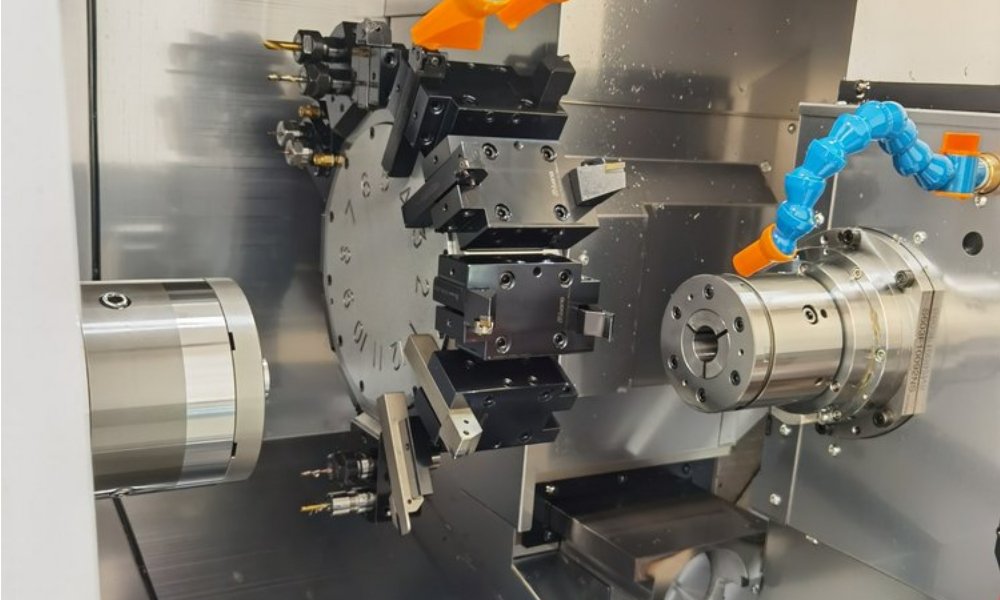
Pins and sockets are small, slender, and numerous, which is exactly the territory where Swiss-type CNC lathe machining excels. The machine supports the bar stock with a guide bushing millimeters from the cutting edge, so long thin parts do not deflect under cutting forces.
For CNC machined connectors, that support changes what is possible. Pins under 2 mm in diameter can be turned with tight tolerance instead of bending and chattering. In addition, live tooling adds cross-holes, flats, and drive slots in the same setup, so secondary operations disappear.
Bar feeding ties the economics together. A Swiss machine runs bar stock continuously, producing thousands of identical contacts with consistent size from the first part to the last. For connector programs that need repeatability across batches, this is the production model that scales.
Larger connector bodies follow a different route. They typically move to turning centers and milling machines, where bore patterns, keyways, and threads are completed to the same tolerance discipline as the contacts themselves.
Materials for Machined Connectors
Brass is the default material for CNC machined connectors. It conducts well, machines beautifully, and accepts plating systems such as gold or tin over nickel. Most machined pins and sockets ship as plated brass, with the plating handling corrosion and contact resistance while the brass provides the structure. Our guide to brass CNC machining covers the alloys we run most often.
Stainless steel serves harsh environments. It sacrifices some conductivity for strength and corrosion resistance, so it suits connectors exposed to fluids, sterilization, or salt air. Medical and downhole connectors are typical examples.
Beryllium copper deserves mention where spring properties matter. Its spring behavior suits contact fingers that must recover after deflection, and machining handles the alloy with proper dust controls in place. Titanium rounds out the specialty list for aerospace weight savings.
Whatever the alloy, state the plating requirement clearly at quote time. Machined geometry and plating thickness interact, and the bore diameter must account for the coating that will eventually cover it.
Where CNC Machined Connectors Work Hardest
RF and telecom hardware demand controlled impedance, and impedance follows geometry. Machined connectors hold the concentricity and consistent diameters that keep signal paths predictable at microwave frequencies, which is why they dominate test equipment and base station interfaces.
Automotive applications lean on robustness instead. High-current connectors for battery systems carry thick machined contacts that tolerate vibration and thermal cycling without loosening. Stamped contacts struggle to match that combination of current capacity and retention.
Medical devices need both precision and documentation. Tiny machined contacts fit handheld probes and implantable-adjacent equipment, and suppliers must back every batch with traceability. Aerospace follows similar logic, favoring machined contacts wherever a failure is not an option.
Across all of these industries, the pattern repeats. CNC machined connectors cost more per piece, yet they remove failures that cost far more downstream.
Managing Cost Without Giving Up Precision
CNC machined connectors can run several times the price of stamped ones, so cost control matters. Start with tolerances. Apply micron-level callouts only to functional features, and let everything else run standard. Each unnecessary tight tolerance adds cycle time and inspection effort.
Next, look at geometry. Standard tool sizes, generous relief grooves, and avoiding deep small bores all shorten cycles. Finally, plan batch sizes honestly. Swiss-type setups reward batch quantities, so consolidating monthly demand into fewer runs usually beats frequent small lots.
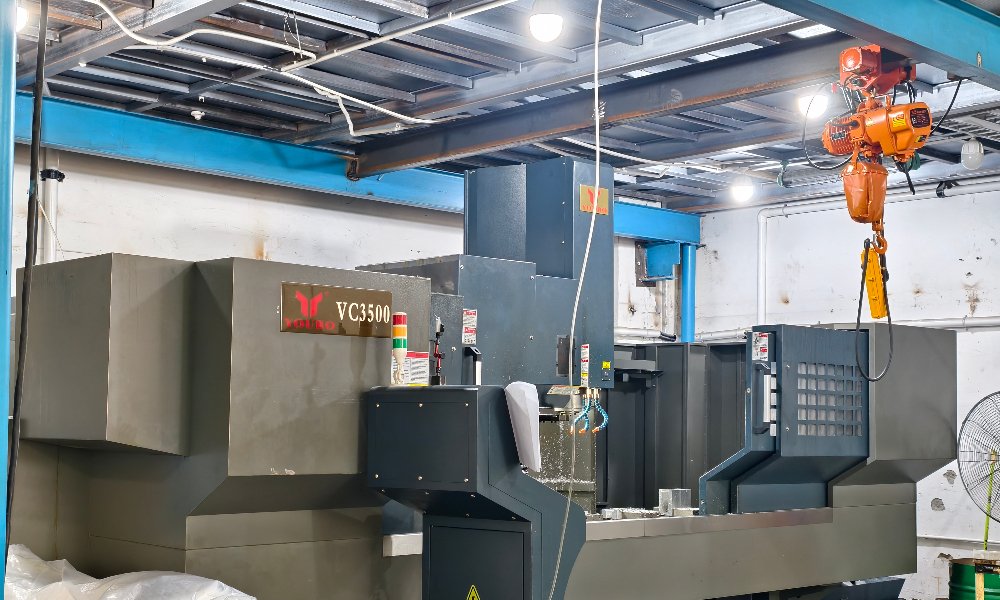
XAP Precision runs Swiss-type lathes alongside 3, 4, and 5-axis machining centers under an ISO 9001 quality system, with full dimensional reports available on request. We will quote both prototype and production quantities from the same drawing.
Frequently Asked Questions About CNC Machined Connectors
When should I choose machined connectors instead of stamped?
Choose CNC machined connectors when you need tight bore tolerances, robust contacts, exotic materials, or volumes too low to justify stamping dies. Machining also suits iterative designs, since changes happen in software rather than in hardened tooling. Stamping remains cheaper for high-volume commodity parts.
What tolerances can Swiss-type machining hold on pins?
Diameters within a few microns are routine on Swiss-type machines, even for slender pins under 2 mm. The guide bushing support is what makes that possible, because it eliminates deflection at the cutting edge. Concentricity between features typically holds within 0.01 mm on well-designed parts.
Which material should I pick for a custom connector?
Brass with gold or tin plating covers most electrical needs. Choose stainless for corrosion resistance or sterilization exposure, and specialty copper alloys where spring behavior matters. Share your mating cycle count and environment with us, and we will recommend an alloy during DFM.
Get a Quote on Your Connector Program
From single prototype pins to recurring batches of CNC machined connectors, the right manufacturing partner holds tolerance and paperwork to the same standard. XAP Precision is an ISO 9001 certified CNC machining manufacturer in China offering Swiss-type turning, CNC milling, and rapid prototyping across brass, stainless steel, aluminum, and specialty alloys.
Upload your connector drawings for free DFM feedback and a detailed quote. Contact us today.