Choosing the right CNC machining supplier can make or break a product launch. A weak shop misses tolerances, delays shipments, and creates quality disputes. The right one, meanwhile, acts like an extension of your engineering team. This guide walks through a practical evaluation checklist. You will learn how to judge capabilities, quality systems, communication, and pricing before you place an order. In addition, we will highlight the questions that separate strong shops from trading companies.
Why your CNC machining supplier choice matters
Custom machined parts carry real risk. A bracket that misses its tolerance can stop an assembly line. One corroded batch can trigger a field recall. Therefore, sourcing is never just a price comparison. In fact, the right CNC machining supplier protects your schedule, your quality, and your reputation.
Moreover, switching suppliers mid-program is expensive. You lose process knowledge, and requalification takes weeks. That is why a structured evaluation up front pays for itself quickly. Treat the checklist below as your scoring sheet.
Meanwhile, poor communication compounds every other problem. A misread tolerance note can scrap an entire batch. One missed email can delay a vessel booking by a week. Therefore, treat responsiveness as a hard requirement, not a nice-to-have.
Capability checklist: what a CNC machining supplier should run
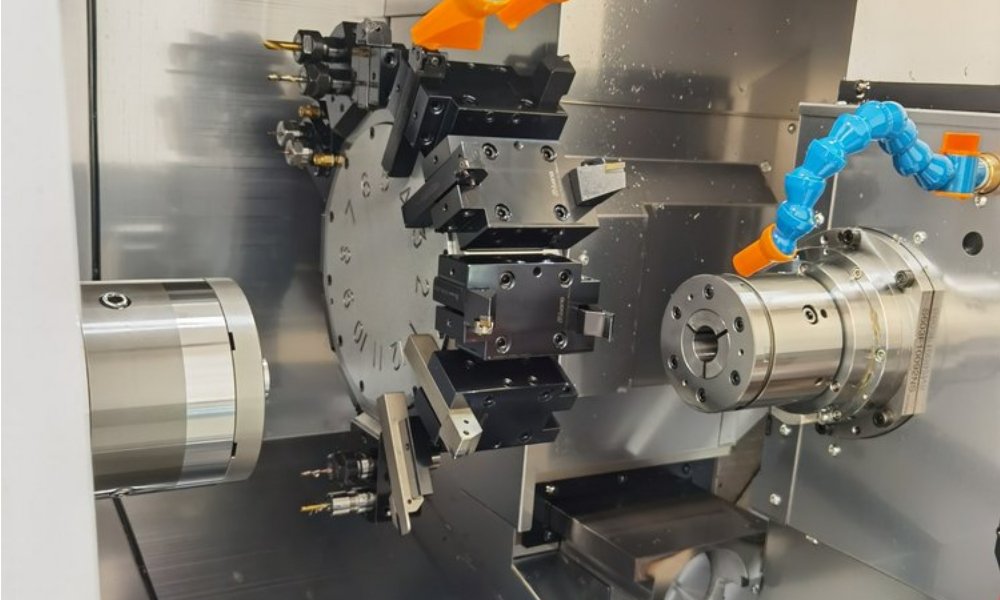
First, start with the equipment list. A capable CNC machining supplier runs 3-axis and 4-axis mills at minimum. For complex parts with angled features, look for 5-axis machining. As a result, it finishes in one setup what otherwise takes three. For turned parts, ask about CNC turning centers and Swiss-type lathes. Swiss machines excel at small, precise parts, typically under 32 mm in diameter. Also confirm spindle capability for your materials. Titanium, for example, needs rigid machines and patient cutting parameters.
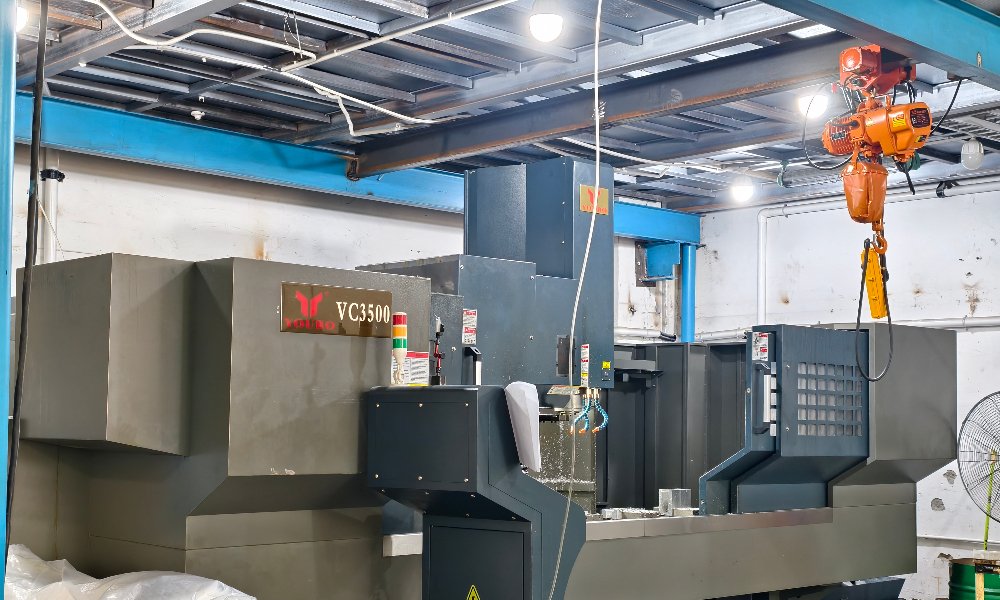
In addition, check the machine envelope. Gantry machines handle large panels and frames that standard mills cannot reach. Finally, ask about secondary operations such as grinding, anodizing, and assembly. As a result, these services save you from coordinating several vendors and keep accountability in one place.
Service breadth matters just as much as machines. For example, rapid prototyping demands fast programming and flexible scheduling. Low-volume high-mix production demands quick changeovers and disciplined documentation. Vacuum casting can bridge the gap before you invest in tooling. Ultimately, a shop that offers all three helps you scale without requalifying a new vendor.
Quality system, material certificates, and traceability
Next, examine quality. A reliable CNC machining supplier holds ISO 9001, the international standard for quality management systems. The ISO website explains what the standard requires. Certification alone is not enough, though. Ask how the shop actually inspects parts.
Specifically, look for a CMM, or coordinate measuring machine. It verifies critical dimensions to micron-level resolution. In addition, request first article inspection reports and in-process check records. A disciplined shop measures during the job, not just at the end. Consequently, the team catches defects while parts are still cheap to fix. For cosmetic parts, ask about surface finish standards and how the shop measures roughness.
Similarly, ask how the shop handles nonconforming parts. A mature quality system quarantines bad parts, documents the cause, and ships corrective actions. If a vendor cannot describe this process, look elsewhere. Ultimately, your CNC machining supplier should treat quality as a system, not a sorting step.
Finally, insist on material certificates for metal parts. These documents tie each batch to its alloy grade and heat number. Traceability matters for medical, aerospace, and automotive programs. Moreover, it protects you if a quality dispute arises later. A transparent CNC machining supplier provides certificates without prompting. They also label raw stock clearly, because mixed-up materials cause silent failures.
DFM support and clear communication
First, great suppliers review drawings before cutting begins. They flag thin walls, deep pockets, and impractical threads early. This DFM feedback saves both money and lead time. Ask your CNC machining supplier for examples of design improvements they have proposed to past customers.
File handling is part of this step, too. Confirm the shop reads STEP and IGES files and works from toleranced drawings. If they only accept PDFs with no tolerance callouts, expect fit problems later. In addition, confirm revision control. Your CNC machining supplier should machine from the latest drawing revision and confirm it in writing.
Communication matters just as much. Confirm that the shop works in English and replies within one business day. Ask who owns your project day to day: an engineer or a salesperson. Then check documentation quality, including inspection reports, material certs, and packing lists. As a result, clear paperwork makes customs clearance and receiving painless.
Similarly, test responsiveness during quoting. Send two or three clarifying questions. A professional CNC machining supplier answers them precisely and quickly. Vague or slow replies at the quote stage rarely improve after the order.
If the order is large, consider a video factory tour or a third-party audit. Reputable shops welcome both. They also provide references from current customers in your region.
Samples, logistics, and pricing transparency
Before committing to volume, order samples. Evaluate them against your drawing, not against photos. Measure critical features, test the fit, and inspect the finish. A confident CNC machining supplier welcomes this step and quotes samples at a fair cost. If a shop refuses samples, treat that as a warning sign. Similarly, compare at least two bidders on the same drawing. That test reveals differences in interpretation, finish, and price.
In addition, review logistics carefully. Ask about packaging methods, rust protection, and export experience. Sea and air shipments each demand proper defense against moisture and impact. Ask about trade terms as well, such as EXW, FOB, or DDP. Each option shifts risk and cost differently. Finally, compare quotes line by line. A transparent quote breaks out material, machining, finishing, and freight. In fact, suspiciously low bids often hide thin stock, skipped inspections, or surprise charges later.
Red flags to watch for
- A CNC machining supplier with no equipment list, or vague answers about machine types.
- No ISO 9001 certificate and no inspection reports on request.
- Unwillingness to provide material certificates or pre-production samples.
- Quotes with no cost breakdown and no lead-time commitment.
Where XAP Precision fits
XAP Precision is an ISO 9001 certified CNC machining manufacturer in China. We run 3-axis, 4-axis, and 5-axis mills, CNC turning centers, Swiss-type lathes, and gantry machines. You can review the full machine list on our equipment page. Our company background covers our quality system and service scope in more detail.
Every project starts with free DFM feedback, and our engineers communicate in English throughout. Materials cover aluminum, stainless steel, carbon steel, brass, titanium, and engineering plastics such as POM, ABS, PEEK, and PTFE. Notably, we support single prototypes, low-volume high-mix production, and vacuum casting for bridge batches. In addition, we offer common surface finishes such as anodizing, bead blasting, and polishing.
Use the checklist above to benchmark any CNC machining supplier, including us. In fact, we welcome the scrutiny because we built our shop to pass it.
Frequently Asked Questions About Choosing a CNC Machining Supplier
What certifications should a CNC machining supplier hold?
ISO 9001 is the baseline, because it proves documented processes and traceability. Industry-specific standards like ISO 13485 or AS9100 matter for medical and aerospace work.
How can I test a CNC machining supplier before a big order?
Order a sample batch first. Then check the dimensions with your own gauges, review the inspection reports, and judge communication speed. A reliable supplier welcomes all of these checks.
What does a CNC machining supplier need for a quote?
Send 2D drawings plus a STEP or IGES file. Specify material, quantity, tolerances, surface finishes, and your deadline. Complete information brings a faster and more accurate quote.
Get your free quote and DFM feedback
Ready to evaluate a new CNC machining supplier? Send your drawings or STEP files, and we will reply with DFM feedback and a detailed, line-item quote. Visit our contact page to request your free quote today. Moreover, there is no commitment, and you keep full control of your files.
ISO 9001 is the baseline, because it proves documented processes and traceability. Industry-specific standards like ISO 13485 or AS9100 matter for medical and aerospace work.
Order a sample batch first. Then check the dimensions with your own gauges, review the inspection reports, and judge communication speed. A reliable supplier welcomes all of these checks.
Send 2D drawings plus a STEP or IGES file. Specify material, quantity, tolerances, surface finishes, and your deadline. Complete information brings a faster and more accurate quote.