Choosing between CNC machining vs 3D printing is one of the first decisions engineers face on a new part. Both methods turn a CAD file into a physical component. However, they differ sharply in precision, materials, cost, and lead time. In this guide, we compare the two processes side by side. You will see where each method shines, how pricing shifts with quantity, and why many teams ultimately combine both.
CNC machining vs 3D printing: a quick overview of both processes
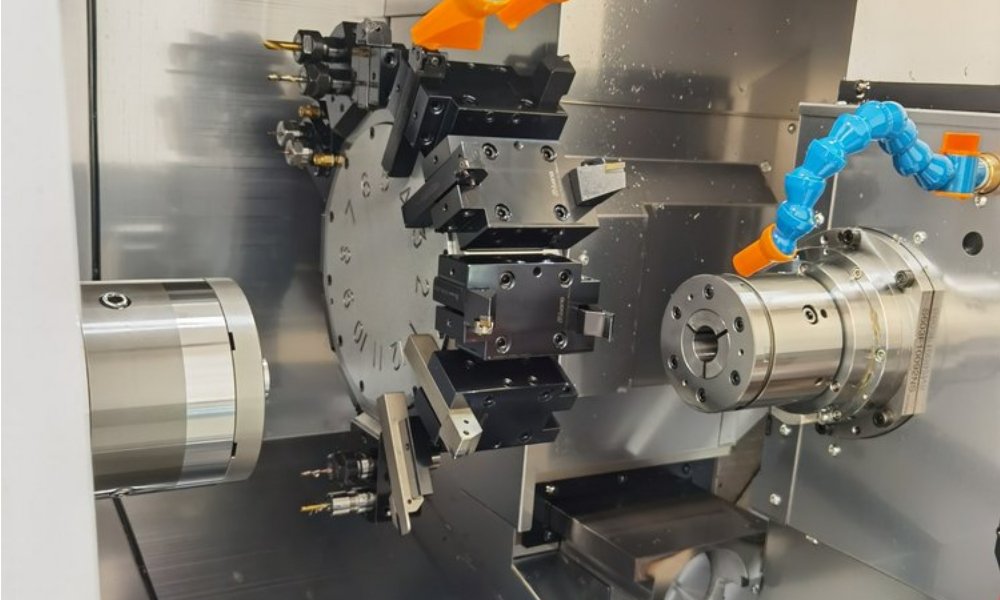
CNC machining is a subtractive process. A cutting tool removes material from a solid blank. Mills, lathes, and Swiss-type machines shape metals and plastics with high accuracy. As a result, the finished part keeps the full strength of the original stock.
3D printing, in contrast, is an additive process. A printer builds the part layer by layer from digital data. Common methods include FDM, SLA, SLS, and metal powder bed fusion. Each method suits different goals, from concept models to lightweight brackets. In addition, printing excels at internal channels and organic shapes that no cutting tool can reach.
Simply put, one process carves parts from solid material while the other grows them from powder or resin. That core difference frames the CNC machining vs 3D printing comparison below. It also drives every trade-off you will see.
Precision and tolerances in CNC machining vs 3D printing
In the CNC machining vs 3D printing debate, tolerance is usually the deciding factor. CNC machines routinely hold ±0.05 mm, and critical features can go tighter. For example, a turned shaft can reach a pressed fit after grinding. Printers, meanwhile, typically hold ±0.1 to ±0.5 mm depending on the technology. Skilled programmers can push even further with grinding or wire EDM.
Layer-based parts also show stair-stepping on angled surfaces. That effect limits fine details, thin walls, and small holes. Hole size matters just as much. A reamed or bored hole holds position and diameter that no printed hole can match. Therefore, parts that must mate with bearings, seals, or threads usually favor machining. If your assembly depends on repeatable fits, define tolerances early and review them with your machine shop.
Threads deserve special attention. Printed threads often strip or deform under torque. Machined threads, in contrast, pass standard gauges and hold clamp load. Consequently, any part that fastens, seals, or rotates is a natural fit for the mill or the lathe.
Materials, mechanical properties, and surface finish
Real alloys versus printed polymers
Material choice is another major split in CNC machining vs 3D printing. Machining works with real engineering alloys: aluminum, stainless steel, carbon steel, brass, and titanium. It also handles plastics such as POM, ABS, PEEK, PTFE, and acrylic. Consequently, a machined part matches the exact grade you will use in production.
Standards bodies such as ASTM International define these grades, so datasheets cover strength, hardness, and corrosion resistance. Printed materials keep improving, yet the range stays narrower. Photopolymers and nylon serve many concept models well. Metal printing exists as well, yet it remains costly and limited to relatively few alloys. However, printed parts are often anisotropic because layers bond more weakly in the build direction.
Machined parts, in contrast, are isotropic. Their strength stays consistent in every direction. That is why load-bearing, fatigue-critical, and pressure-containing parts usually go to machining. Heat resistance favors machining as well. PEEK and PTFE, for example, keep working where most printed resins soften.
Surface finish and appearance
Surface finish shifts the CNC machining vs 3D printing balance further. Out of the mill, CNC parts show fine tool paths and crisp edges. With bead blasting, anodizing, or polishing, they reach a true production look. Printed parts, meanwhile, carry visible layer lines right off the build plate.
Post-processing can hide those lines. However, it adds labor and cost. For cosmetic enclosures or customer-facing models, that effort may pay off. On jigs, fixtures, and internal parts, it rarely does.
CNC machining vs 3D printing cost at different quantities
Notably, there is no single winner in CNC machining vs 3D printing pricing. In fact, quantity changes the math. For 1 to 10 concept models, printing often wins. There is no fixturing, and parts run unattended overnight. However, the per-part cost of printing stays flat or drops only slowly.
CNC machining carries setup costs, specifically programming and fixturing. Once the first part passes inspection, though, each additional unit is inexpensive. For functional prototypes and end-use parts, machining is usually the smarter buy at ten units and up. Moreover, machined parts avoid redesigns caused by weak printed layers.
Cost per part tells only half the story. In addition, consider the cost of a failed test. A printed prototype that cracks under load wastes the whole test cycle. Machined parts, in contrast, give you trustworthy data on the first run. Ultimately, the cheapest part is the one that validates your design.
Lead time and when to choose each process
Both methods deliver parts quickly. However, they shine in different ways. Printing delivers simple shapes in one to two days. Machining, meanwhile, needs a few days for programming and setup. Then it scales. Lead time alone rarely settles CNC machining vs 3D printing, yet it shapes urgent programs. For low-volume production, a machine shop repeats identical parts week after week with consistent quality.
Choose 3D printing when
- You need 1 to 10 concept models for form and ergonomics checks.
- The geometry is highly organic, and the part carries no structural load.
- Your design still changes every few days.
Choose CNC machining when
- Parts must hold tight tolerances or carry structural loads.
- You need production-grade materials, threads, and surface finishes.
- Quantities range from a few prototypes to thousands of units.
A combined strategy: print for form, machine for function
Experienced teams rarely treat CNC machining vs 3D printing as an either/or choice. First, they print a cheap concept model to check fit and feel. Second, they machine functional prototypes in the real alloy or plastic. Finally, they move to production machining, or to vacuum casting for bridge batches of urethane parts.
XAP Precision supports this exact workflow. Our rapid prototyping and low-volume production services carry projects from a printed form study to load-tested parts without restarting. Notably, the same CAD file can drive both steps, so design intent survives the whole program.
For most programs, then, CNC machining vs 3D printing becomes a sequence rather than a contest. Print early to explore ideas quickly. Machine later to prove function and ship real parts. Vacuum casting suits market testing before you commit to steel tooling. That approach captures the speed of printing and the precision of machining.
Frequently Asked Questions: CNC Machining vs 3D Printing
Is CNC machining more accurate than 3D printing?
Yes. CNC typically holds ±0.05 mm or better, while most printing processes sit between ±0.1 and ±0.5 mm. That is why CNC machining wins on mating features and functional parts.
When should I pick 3D printing over CNC machining?
Printing fits concept models, form checks, and geometries with internal lattices that cutting tools cannot reach. It needs no fixturing and suits one to ten pieces. For strength and precision, CNC machining stays better.
Can CNC machining and 3D printing work together?
Yes. Many teams print concept models first, then CNC machine functional prototypes. This combines fast iteration with real material properties. Vacuum casting can also bridge the gap for small batches.
Ready to move from CAD to finished parts?
Still weighing CNC machining vs 3D printing for your project? XAP Precision is an ISO 9001 certified CNC machine shop in China. Our shop supports 3-axis, 4-axis, and 5-axis milling, turning, and Swiss-type machining under one roof. We mill, turn, and finish parts in metals and engineering plastics. Send us your CAD file for free DFM feedback and a clear, no-obligation quote. Visit our contact page to request your free quote today.
Yes. CNC typically holds ±0.05 mm or better, while most printing processes sit between ±0.1 and ±0.5 mm. That is why CNC machining wins on mating features and functional parts.
Printing fits concept models, form checks, and geometries with internal lattices that cutting tools cannot reach. It needs no fixturing and suits one to ten pieces. For strength and precision, CNC machining stays better.
Yes. Many teams print concept models first, then CNC machine functional prototypes. This combines fast iteration with real material properties. Vacuum casting can also bridge the gap for small batches.