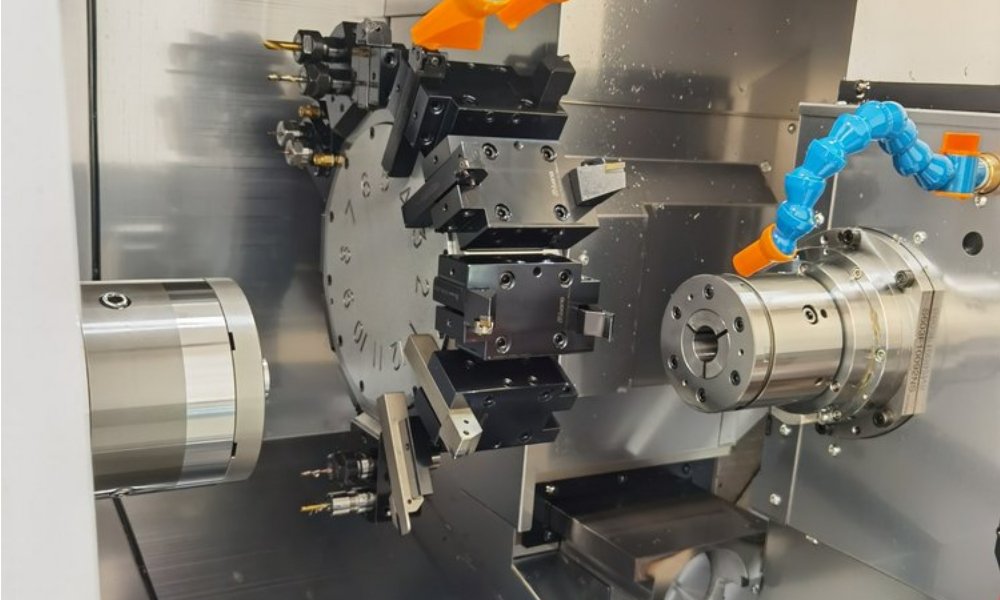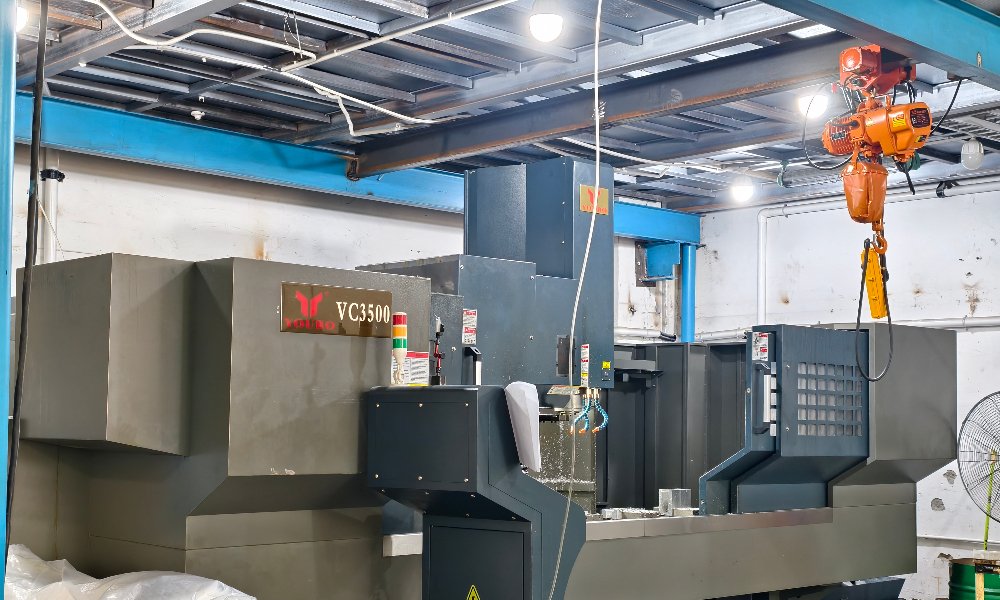
1. Core Definition of 3‑Axis CNC Machining
3‑axis CNC machining refers to a numerically controlled machining method that operates via three linear axes: X, Y, and Z. It is the most fundamental and widely used form of CNC machining today. In our equipment list, 3‑axis machining centers are the most numerous and have the most complete range of models, covering machining envelopes from 600 × 400 mm to 1300 × 700 mm, forming the foundation of our precision manufacturing capabilities.
2. Technical Matrix of Our 3‑Axis Machining Equipment
Equipment Features:
- Comprehensive Precision Coverage: Accuracy from 0.003 mm to 0.005 mm, meeting diverse tolerance requirements.
- Diverse Machining Range: Full coverage from small parts to medium‑sized structural components.
- Wide Material Compatibility: Supports eight major material categories including plastics, aluminum alloys, stainless steel, and titanium alloys.
3. Five Core Advantages of 3‑Axis CNC Machining
3.1 High Precision Stability
• Haas 4SS model achieves 0.003 mm positioning accuracy.
• Repeat positioning accuracy reaches ±0.002 mm.
• Especially suitable for batch production of precision parts.
3.2 Outstanding Machining Efficiency
• High‑speed spindle (up to 24,000 rpm).
• Rapid tool‑change system (1.5 s tool‑to‑tool).
• Capability for multi‑workpiece parallel processing.
3.3 Optimal Cost‑Effectiveness
• Short equipment payback period (8–12 months).
• Per‑part machining cost is 30–50% lower than with 4‑axis/5‑axis machines.
• Suitable for medium‑ to large‑batch production.
3.4 Mature and Reliable Processes
• 30‑year accumulated process database.
• Optimized cutting parameters for 300+ materials.
• Comprehensive tool‑wear compensation system.
3.5 Wide Applicability
• Planar parts: panels, brackets, bases.
• Cavity‑type parts: mold cavities, housings.
• Hole‑system parts: perforated plates, heat sinks.
4. Application Value of 3‑Axis Machining in Typical Industries
Consumer Electronics – Mobile phone frames, laptop housings: High surface quality (Ra 0.8 µm), batch consistency.
Medical Devices – Surgical instrument bases, equipment panels: Biocompatible material machining, cleanliness control.
Automotive Components – Sensor brackets, connectors: Dimensional stability ±0.01 mm, high yield rate.
Industrial Equipment – Equipment frames, mounting plates: Flatness 0.02 mm/300 mm, high rigidity.
5. 3‑Axis vs. Multi‑Axis Machining Selection Guide
Scenarios for choosing 3‑axis machining:
✅ Part features primarily lie in the XY‑plane
✅ No complex angular machining required
✅ Batch size > 100 pieces
✅ Sensitive to machining cost
✅ Strict delivery‑time requirements
Scenarios suggesting an upgrade to multi‑axis machining:
⚠️ Requires machining inclined or curved surfaces
⚠️ Features include deep cavities or undercuts
⚠️ High single‑part value, extremely high precision requirements
⚠️ Small‑batch, multi‑variety production
6. Technical Characteristics of Our 3‑Axis Machining
6.1 Intelligent Process System
• Adaptive cutting‑parameter optimization
• Smart tool‑life management
• Real‑time thermal‑deformation compensation
6.2 Quality Assurance System
• First‑article full inspection + process sampling
• 100% inspection of critical dimensions
• Traceable quality data
6.3 Rapid Response Capability
• 24‑hour prototype fabrication
• Small‑batch delivery in 3–5 days
• Emergency‑order green channel
7. Actual Machining Case Data
Case: Medical equipment panel machining
• Material: Aluminum alloy 6061
• Dimensions: 400 × 300 × 20 mm
• Requirements: Flatness 0.05 mm, hole‑position accuracy ±0.02 mm
• Result: Single‑part machining time 25 minutes, yield rate 99.8%
Cost Analysis:
• Traditional process: 4 hours/part, cost 280 yuan
• 3‑axis optimized process: 25 minutes/part, cost 85 yuan
• Efficiency improvement: 84%, cost reduction: 70%
8. Future Technology Development Trends
8.1 Intelligent Upgrades
• Machine‑learning optimization of machining parameters
• Predictive maintenance systems
• Cloud‑based process‑data sharing
8.2 Hybrid Development
• 3D printing + 3‑axis finish‑machining combination
• Laser processing + mechanical machining integration
• On‑line measurement + real‑time compensation
8.3 Green Manufacturing
• Energy‑efficient spindle technology
• Minimal‑quantity lubrication systems
• Intelligent scrap‑recycling
Conclusion
As the foundational process of numerical control manufacturing, 3‑axis CNC machining—with its characteristics of high precision, high efficiency, and high cost‑effectiveness—still occupies an irreplaceable position in modern manufacturing. The equipment matrix formed by our 12 3‑axis machining centers provides customers with a complete solution from prototype verification to batch production.
Whether for simple planar parts or complex cavity structures, 3‑axis machining can deliver the optimal techno‑economic solution. When your project requires stable, efficient, and economical machining services, 3‑axis CNC machining will always be a priority choice worth considering.
Technical Consultation:
If you would like to know whether your part is suitable for 3‑axis machining, please provide your drawings. We will deliver a Process Feasibility Analysis Report and a detailed quotation within 4 hours.