Why Choose 5‑Axis CNC Machining? – An In‑Depth Analysis Based on Our Equipment List
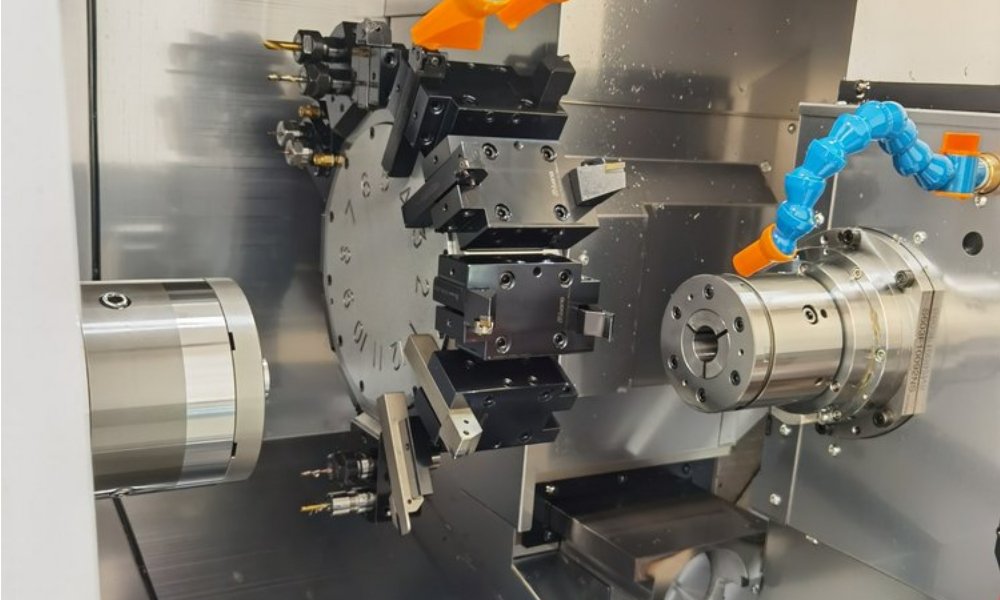
In today’s manufacturing landscape, the complexity of manufacturing processes and the functional requirements of parts are constantly increasing. Traditional machining methods are no longer sufficient to meet the demands for high‑efficiency, high‑precision, and complex‑geometry parts. In our production equipment list, the 5‑Axis Machining Center (DAKA‑U300‑S) stands out as the core equipment with the highest technological content and strongest process capability. This article provides an in‑depth analysis based on our equipment list, explaining why 5‑Axis CNC machining is an essential choice for manufacturing upgrades and the significant advantages it brings to actual production.
1. Equipment Fundamentals: Understanding the Technical Position of 5‑Axis CNC from the List
In our equipment matrix, the 5‑Axis Machining Center is listed as item No. 8, with the following specifications:
Parameter Value / Description
Model DAKA‑U300‑S
Machining Range 800 × 500 mm
Machining Accuracy 0.005 mm
Supported Materials Plastics, Aluminum, Stainless Steel, Titanium Alloy, Copper & Copper Alloy, Magnesium Alloy, etc.
Compared to other equipment in the list:
- 3‑Axis / 4‑Axis machines are primarily used for planar or multi‑angle positioning machining.
- Small‑gantry machines are suitable for medium‑to‑large structural components.
- Turn‑mill centers focus on complex features of rotary parts.
The unique positioning of the 5‑Axis equipment lies in: It not only possesses most of the capabilities of the above equipment, but more importantly, it enables multi‑axis simultaneous motion, continuous machining of complex curved surfaces, and multi‑face feature completion in a single setup – a level of process capability that is difficult for other equipment to achieve.
2. Why 5‑Axis? – Five Core Advantages Explained
2.1 Single Setup, Multiple Faces, Higher Accuracy
In traditional machining, complex parts require multiple setups and repositioning; each additional setup introduces cumulative errors. The 5‑axis machine, through the combined motion of its rotary table and tilting head, can machine five faces in a single setup, fundamentally avoiding repeated positioning errors. Based on our equipment’s 0.005 mm accuracy, the 5‑axis process can improve overall part accuracy consistency by 2‑3 times.
2.2 Integrated Forming of Complex Surfaces, Greater Design Freedom
For parts with complex surfaces such as impellers, turbine blades, artificial joints, or automotive panel molds, traditional 3‑axis machines require multiple segmented machining passes, leaving visible tool‑path marks and requiring extensive post‑processing polishing. The 5‑axis machine enables continuous‑toolpath machining, resulting in smooth surface transitions and surface roughness as fine as Ra 0.4 µm, significantly reducing post‑processing steps.
2.3 Outstanding Capability for Deep Cavities, Narrow Slots, and Angled Holes
The tool of a 5‑axis machine can feed in any direction, making it especially suitable for machining deep cavities, sidewalls with draft angles, and parts with undercuts at the bottom. Examples include porous structures in medical devices and cooling channels in aero‑engines – features that are difficult to achieve on 3‑axis machines, but which 5‑axis handles easily while ensuring uniform wall thickness and dimensional stability.
2.4 Suitable for Difficult‑to‑Machine Materials and Composite Structures
Our 5‑axis equipment supports a wide range of materials, particularly excelling with difficult‑to‑cut materials such as titanium alloys, high‑temperature alloys, and composites. By optimizing tool paths and cutting parameters, low‑temperature cutting and deformation suppression can be achieved, meeting the material and process standards of demanding industries like aerospace and medical devices.
2.5 High Efficiency and Flexibility, Ideal for Small‑Batch, Multi‑Variety Production
5‑axis machining can dramatically shorten the manufacturing cycle for complex parts. Taking an impeller as an example:
- Traditional process: 12 hours (3 setups)
- 5‑axis process: 4 hours (single setup)
Efficiency improvement exceeds 60%. Additionally, the equipment supports quick changeovers and programming, making it particularly suitable for R&D prototyping, small‑batch customization, and multi‑variety batch production.
3. In Which Industries Does 5‑Axis Machining Offer Greater Advantages?
Based on the materials and accuracy our equipment can process, 5‑axis CNC is especially prominent in the following industries:
Industry Typical Parts Value of 5‑Axis Machining
Aerospace Engine blades, fairings, cabin structures Lightweighting, integrated forming, improved fatigue strength
Medical Devices Joint prostheses, dental implants, surgical guides Personalized customization, biocompatible surfaces
Automotive New‑energy vehicle battery enclosures, chassis parts, lamp molds Lightweighting, structural optimization, shortened mold lead times
Energy Equipment Turbine blades, nuclear valve bodies, hydraulic components High‑temperature resistance, corrosion resistance, long‑life design
Precision Molds Injection molds, die‑casting molds, blow molds High‑gloss surfaces, conformal cooling, shortened delivery times
4. How to Determine Whether Your Part Is Suitable for 5‑Axis Machining?
If the part you are handling has at least one of the following characteristics, 5‑axis machining is likely the better choice:
✅ Has complex three‑dimensional surfaces (non‑planar features)
✅ Requires machining features at multiple angles (non‑perpendicular directions)
✅ Belongs to thin‑wall, deep‑cavity, or easily deformable structures
✅ Is made of expensive or difficult‑to‑machine material (e.g., titanium alloy, composites)
✅ Requires small‑batch, multi‑variety, and fast‑delivery production
5. What 5‑Axis Machining Services Do We Offer Based on Our Equipment?
Built on the DAKA‑U300‑S 5‑Axis Machining Center, we provide:
- Process Development & Optimization: Free DFM analysis, manufacturability recommendations
- High‑Precision Machining: Ensuring dimensional accuracy of ±0.005 mm and surface quality of Ra 0.4 µm
- Multi‑Material Support: Covering metals, plastics, composites, etc.
- Rapid Response: Supporting orders starting from 1 piece, prototype delivery within 7 days
- Full‑Process Quality Control: Equipped with CMM, surface roughness testers, etc., providing complete inspection reports
Conclusion
5‑Axis CNC machining is not merely a simple equipment upgrade; it represents a holistic leap in manufacturing thinking and process capability. It stands for advanced manufacturing with greater design freedom, higher precision control, and higher efficiency realization. In our equipment list, the 5‑Axis Machining Center is a symbol of our technical strength and the core guarantee for providing our customers with high‑value‑added manufacturing services.
If your project is constrained by traditional machining methods, please upload your drawings or contact us. We will provide a professional 5‑axis machining feasibility analysis and process solution, working together to transform complex designs into precise reality.
This article is based on our production equipment list and actual machining data, intended to provide customers with selection and process guidance. For further technical exchange, please feel free to contact us at any time.