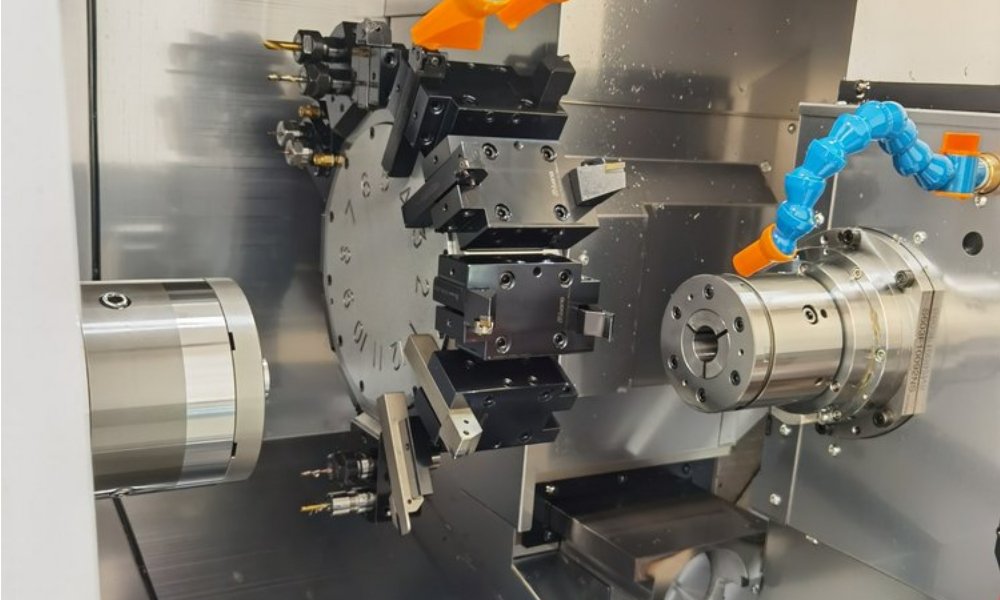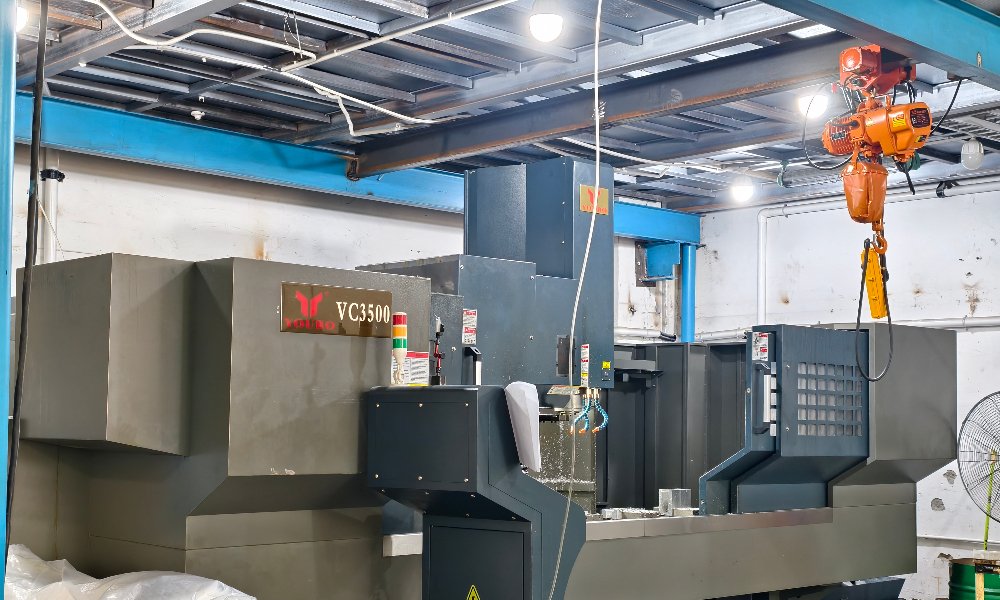
Tool steel machining sits in a different league from everyday CNC work. These alloys exist to cut, form, and wear against other metals, so they carry heavy carbide loads and high hardness potential. As a result, tool steel machining rewards careful planning: the right grade, a sensible cutting strategy, and a heat-treat sequence written into the drawing. This guide walks through the common grades, explains why these steels punish cutting tools, and lays out the workflow shops use to finish critical faces accurately.
A Quick Menu of Tool Steel Grades
Most tool steel machining in a CNC shop centers on four cold-work and shock-resistant grades. Each fills a distinct niche.
- D2 is the high-carbon, high-chromium workhorse, with roughly 12 percent chromium and 1.5 percent carbon. It delivers outstanding wear resistance and holds a keen edge, which suits long-run blanking and forming dies. However, its primary chromium carbides are hard on cutting tools.
- A2 is an air-hardening grade with about 5 percent chromium. It offers excellent dimensional stability during heat treatment, plus a good balance of wear resistance and toughness. Consequently, many shops make it the default for punches, dies, and fixtures that must stay true.
- O1 is an oil-hardening grade and the easiest of the four to cut. It suits gauges, knives, and prototype tooling, although oil quenching brings more distortion than air hardening.
- S7 is a shock-resistant grade built for impact. Its high toughness makes it the pick for chisels, shear blades, and punches that see hammering loads.
Selecting among them is always a trade-off. Wear resistance, toughness, distortion control, and machinability rarely peak in one chemistry. When in doubt, rank those four properties for your part, and let the ranking choose the grade.
Working hardness matters as much as grade selection. Most cold-work tooling lands between 58 and 62 HRC after tempering, and specifying a lower temper trades wear resistance for toughness. Therefore, match hardness to the failure mode you expect: chipping calls for a softer temper, and abrasion calls for a harder one.
Why Tool Steel Machining Eats Cutting Tools
Even annealed tool steel is abrasive. D2, for example, contains hard primary chromium carbides that never dissolve, and they score flute edges pass after pass. Meanwhile, tougher grades work-harden under light, rubbing cuts. Together, these traits explain why tool steel machining consumes inserts far faster than plain carbon steel or aluminum work.
The countermeasures are straightforward. Use sharp, coated carbide tooling and dedicate it to the job. Keep setups rigid, since chatter multiplies edge chipping. Avoid dwell marks and tiny finishing passes that rub instead of cut. In addition, moderate speeds with reliable chip evacuation beat aggressive parameters that overheat the edge. For deep holes, peck drilling prevents work-hardened plugs from seizing the drill.
Expect tool life to vary with carbide volume. Roughing O1 can feel almost like cutting alloy steel, while the same program in D2 may crater an insert in a single afternoon. Budget tooling accordingly, and tell your shop the exact grade before quoting.
Standard Workflow for Tool Steel Machining: Machine Soft, Treat, Grind
Almost no precision tool steel part reaches final dimensions in a single setup. The proven sequence in tool steel machining starts with annealed stock, which cuts much like any alloy steel. Shops rough and semi-finish every feature, leaving a small grind allowance on critical faces. After that, the part goes out for hardening and tempering to the drawing hardness. Finally, a grinder finishes the critical faces, because hardened tool steel above 50 HRC will not mill economically.
This sequence should shape the drawing. Tolerances that only grinding can hold belong on the ground faces, not milled ones. Leave relief for distortion, and avoid sharp internal corners that concentrate stress and can crack during heat treatment. If a hardened feature cannot be reached by grinding, ask about EDM, which erodes hardened tool steel without cutting forces.
Distortion is the quiet variable. Air-hardening grades like A2 move very little, so shops can leave a modest allowance and predict results confidently. Oil-hardening O1 moves more, and long thin parts deserve extra stock or a straightening step. Discuss the expected movement with your shop before cutting starts.
Before you lock tolerances on a tool steel part, send the drawing to XAP Precision for free DFM feedback, since sequencing advice now costs nothing and rework after heat treatment never does.
Typical Parts Made Through Tool Steel Machining
The parts list reads like the inside of a press shop.
- Blanking, forming, and drawing dies for sheet metal work
- Mold inserts, cores, and wear plates for plastic and rubber tooling
- Industrial blades and shear knives for slitting and cutting lines
- Punches, pierce pins, and ejector components that take repeated impact
- Fixtures, gauges, and master tools that must resist wear for years
Across all of these, tool steel machining follows the same logic. Design for heat treatment, machine in the soft state, and finish the faces that actually contact the work.
Material choice follows the same pattern. Long-run dies lean on D2 or A2, impact tools favor S7, and O1 fills in for gauges and short-run work.
DFM Details That Save Tool Steel Projects
A few design habits prevent most headaches in tool steel machining. Keep wall thickness even where possible, so heat-treat distortion stays predictable. Specify hardness and the condition of each tolerance, such as “after heat treat,” so the shop knows which features to grind. Add grinding relief, and avoid deep, narrow slots that trap residual stress. Our DFM guidelines for outsourced CNC machining projects cover these rules in more depth.
Material sourcing matters just as much. Buy annealed, certified stock from reputable mills, and agree on the heat-treat routing before the first chip flies. Finally, expect tool steel machining to cost more than plain carbon steel work, and budget the heat-treat and grinding operations explicitly. For a broader view of how these alloys cut, see our steel CNC machining overview.
Frequently Asked Questions About Tool Steel Machining
Should tool steel parts be machined before or after heat treatment?
Machine nearly everything before heat treatment, while the steel is annealed and soft. Leave a small allowance on critical faces, send the part for hardening and tempering, then finish those faces by grinding. This staged approach defines tool steel machining, since milling hardened stock directly is slow, expensive, and hard on machines.
Which tool steel grade is easiest to CNC?
O1 is generally the friendliest grade in tool steel machining, because its lower alloy level keeps carbide volume modest. A2 follows, offering better dimensional stability with slightly more abrasion. D2 is the hardest to cut due to its heavy chromium carbides, while S7 sits between the two.
Can hardened tool steel be machined at all?
Yes, but the methods change. Grinding is the standard route for flat and round faces. Wire and sinker EDM handle hardened profiles and cavities without cutting forces. Hard milling with CBN or ceramic inserts works on some geometries, though it rarely beats grinding on cost.
Send Your Tool Steel Drawings for a Quote
XAP Precision runs tool steel machining jobs alongside stainless, alloy steels, and engineering plastics, all under ISO 9001 control. We machine annealed stock accurately, leave proper grind allowance, and hold the tolerances your tooling depends on. Share your drawings on our contact page to receive a free quote and free DFM feedback.