CNC undercuts are the features that quietly double a part’s price. An undercut is any surface a standard tool cannot reach from a straight direction. Internal grooves, snap-fit lips, and recessed threads are typical examples. Because end mills cut only where they can physically travel, these features force special tools, extra setups, or a full redesign. This guide explains where CNC undercuts hide, what they cost, and how to design them out.
Most undercuts are not intentional. They appear when a designer focuses on function and forgets the toolpath. Catching them in CAD, rather than on the machine, is one of the cheapest habits in CNC design. With that in mind, let us define the problem precisely.
What Exactly Counts as a CNC Undercut?
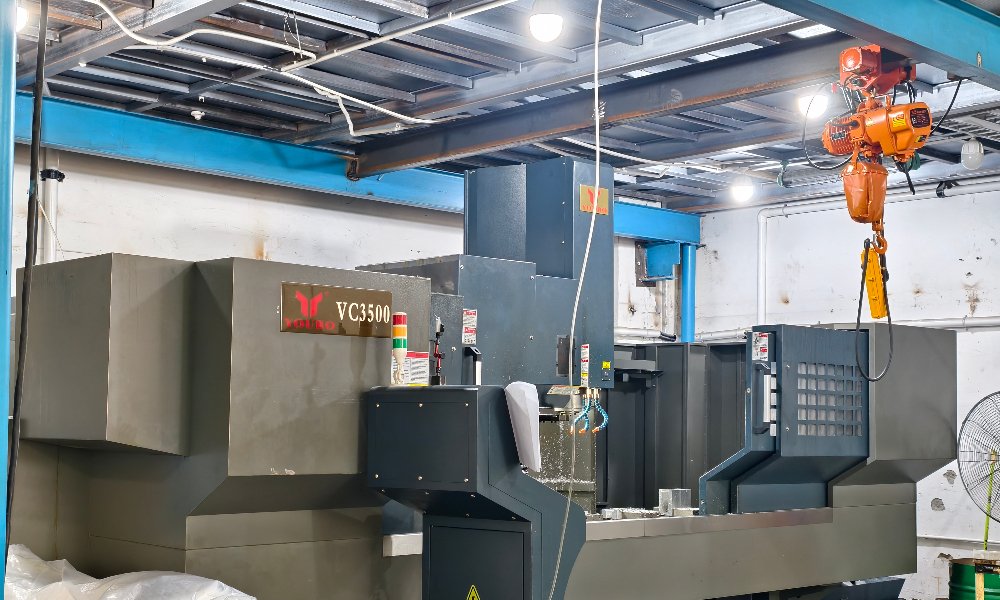
Picture a standard vertical mill. The spindle approaches from above, so any surface facing sideways or inward, with material overhanging it, sits out of reach. That unreachable geometry is a CNC undercut. A horizontal groove inside a bore, a lip under a flange, and a dovetail way are classic examples.
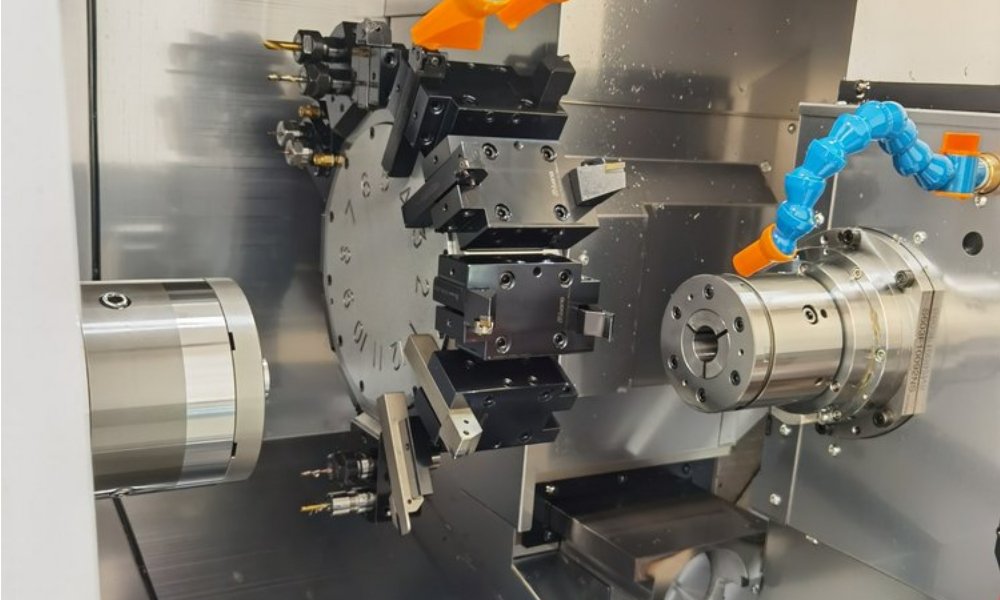
Undercuts show up in turning too. An internal groove deeper than the tool’s relief, or a recessed face behind a shoulder, can trap a lathe tool just as easily. The common thread is the same in every process: the tool needs clearance to enter, cut, and withdraw.
A quick CAD check finds most of them. Look at every vertical internal corner, every groove, and every feature on a side wall, and ask whether a straight tool can reach it. If the answer depends on a tool bending around a corner, you have found one of the CNC undercuts on your drawing.
Undercuts are easy to mistake for ordinary features in a rendering. A groove looks like a groove until you ask how the tool gets in and out. That entry-and-exit question is the whole game in CNC machining, and it is exactly where CNC undercuts fail.
Why CNC Undercuts Cost More
Every undercut asks the shop to do something beyond standard milling, and each workaround carries a price:
- Special tooling. Lollipop cutters and T-slot cutters reach under shoulders, but their thin necks deflect, run at low feed rates, and wear quickly.
- Extra setups. Reaching a side feature often means a second or third setup, with new work offsets each time.
- Slower cutting. Reduced rigidity forces conservative speeds, which stretches cycle time across the whole batch.
- EDM in extreme cases. Sharp internal corners that no rotating tool can form may need sinker EDM, adding an electrode and another operation.
- Harder inspection. Hidden features are difficult to measure, so quality checks take longer.
None of these steps adds function to your part. They only recover access. In short, every CNC undercut converts cheap standard milling into an expensive special operation. That is why these features are a top target of any design-for-manufacturability review, and why removing even one can visibly shrink a quote.
The Usual Suspects: Features That Hide CNC Undercuts
A few features cause most of the trouble on real drawings:
- Internal grooves in bores, often added for snap rings or seals, where the cutter must work past a shoulder.
- Snap-fit lips on housings, which create an inward-facing ledge the tool cannot reach from outside.
- Recessed threads starting deep in a pocket, leaving no room for a tap or thread mill to align.
- Dovetail and T-slot ways, which are undercuts by definition and demand form cutters.
- Side pockets with narrow openings, where the tool shank, not the cutting edge, becomes the limiting dimension.
Each of these is legitimate design intent. The question is whether the function can survive a different geometry. In many cases it can.
Redesign Strategies That Remove CNC Undercuts
Before accepting the cost, try these moves in order of preference:
- Open the feature. Move a groove so it cuts from an open face, or split the housing so the lip machines flat and the halves bolt together.
- Swap the mechanism. Replace a machined snap-fit with a fastener, a clip, or a pressed-in retaining ring.
- Change the shape. A chamfer or taper often replaces an undercut ledge while still guiding assembly.
- Add access. A relief hole or a widened opening can give a standard tool the clearance it needs.
- Split the part. Two simple pieces bolted together frequently beat one complex piece on both cost and strength.
These options work best when reviewed with your shop early. Our DFM guidelines for outsourced CNC projects walk through the same checklist we apply to every incoming model.
If a design already contains features you suspect are CNC undercuts, send the file to XAP Precision for a free quote with DFM feedback. We will show you exactly which features drive cost and which redesigns remove them.
When 5-Axis Machining or Turning Solves the Problem
Sometimes the undercut must stay, and machine capability becomes the fix. Five-axis machines tilt the part or the spindle to reach sideways features at the right angle. One or two setups replace five, and many would-be EDM jobs turn into standard milling work. Our primer on 5-axis CNC machining shows what becomes possible when the tool can approach from almost any direction.
Rotational parts benefit similarly. On a lathe, internal grooves and recesses that look like hard CNC undercuts in milling often machine normally with the right boring bar or live tool. Swiss-type lathes do the same for tiny, intricate parts. Matching the process to the geometry is half the engineering win, so bring the shop in before the design freezes.
Frequently Asked Questions About CNC Undercuts
What is considered an undercut in CNC machining?
Any feature a standard straight tool cannot reach counts as an undercut: internal grooves, snap-fit lips, recessed threads, dovetails, and T-slots. If material overhangs the cutting path, the feature qualifies, and it will need special tooling, extra setups, or a redesign.
How much more do CNC undercuts add to part cost?
There is no fixed surcharge, but the effect is real. Special lollipop or T-slot tools, slower feeds, and extra setups can add tens of percent to cycle time, feature by feature. Removing even one of the CNC undercuts through redesign often cuts a quote more than any other change.
Can 5-axis machining eliminate every undercut?
No. Five-axis work reaches far more angles and removes many extra setups, but true overhangs like deep internal grooves may still need form tools or EDM. The honest answer depends on the geometry, which is why a DFM review beats guessing.
Get a Free DFM Review and Quote
Undercut cost is invisible in CAD but obvious in a quote. XAP Precision is an ISO 9001 certified CNC machining manufacturer in China, offering 3, 4, and 5-axis milling, turning, Swiss-type machining, and rapid prototyping in metals and engineering plastics.
Send your model through our contact page and get a free quote plus free DFM feedback. We will flag every CNC undercut and show you the cheapest way around it.