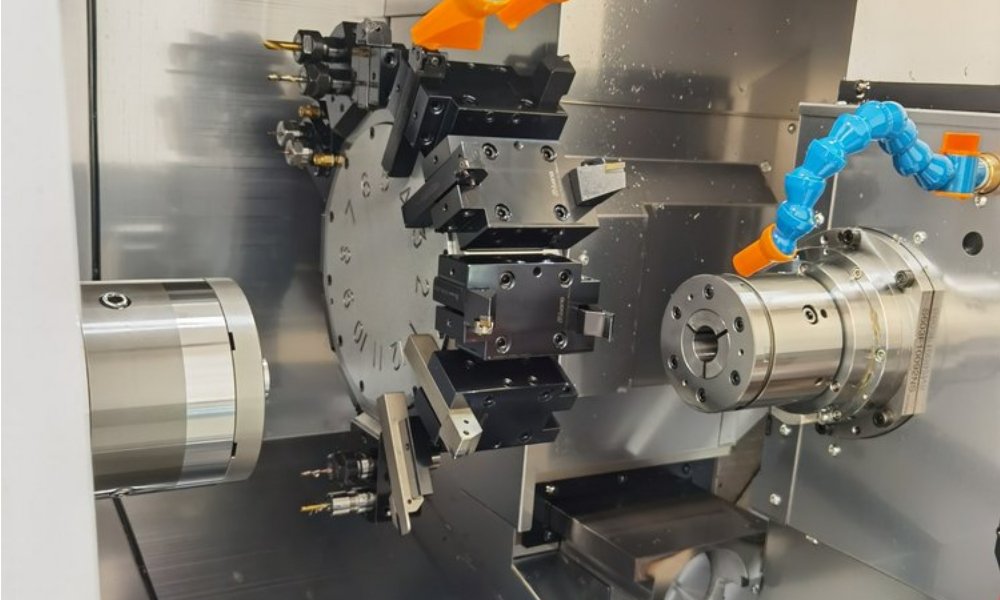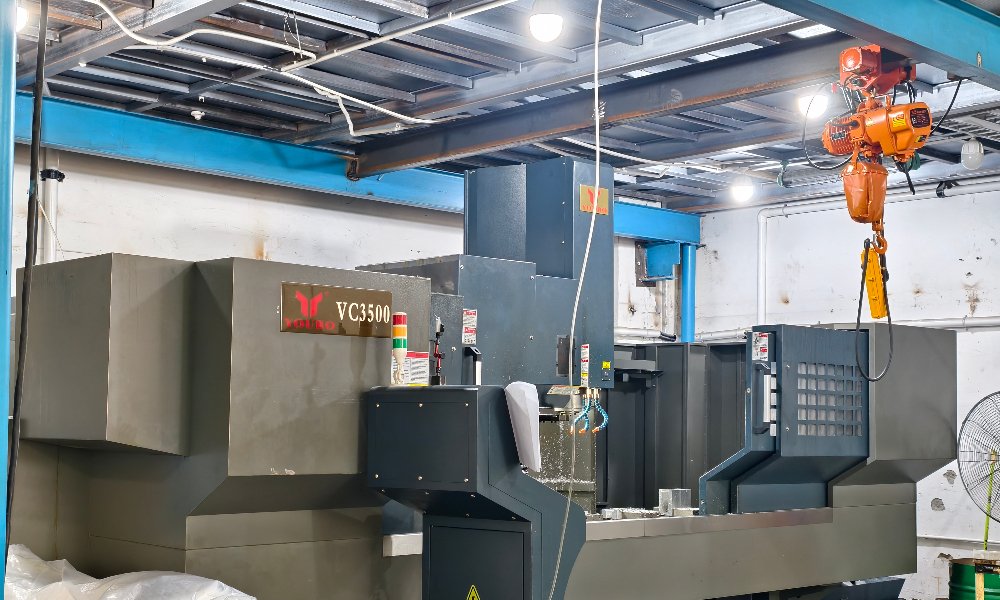
CNC gear machining turns blank discs into the teeth that drive conveyors, actuators, pumps, and robots. Unlike molded gears, machined gears handle real torque, tight backlash, and one-off sizes without any tooling investment. This guide covers the gear types a CNC shop can make, the processes behind the teeth, and how to choose materials and accuracy from prototype through production.
Gears look intimidating on a drawing, but most CNC gear machining projects reduce to a handful of decisions: tooth form, process, material, and tolerance. Get those right and the part becomes straightforward, whether you need one prototype gear or a thousand production pieces.
Gear Types CNC Shops Machine Regularly
- Spur gears: straight teeth on a flat disc, the simplest and most common type. They carry radial loads and suit moderate speeds.
- Helical gears: angled teeth that engage gradually, which runs smoother and quieter, at the cost of extra axial thrust.
- Bevel gears: conical teeth that turn power around corners, usually at 90 degrees.
- Worm gears: a screw-like worm driving a wheel, giving high reduction ratios and often self-locking behavior.
- Racks and internal gears: straight-tooth bars that convert rotation into linear motion, and inside-out gears cut within a ring.
Spur and helical gears dominate CNC gear machining demand because they cover most power transmission needs. Worm sets and bevels follow where the geometry demands them, especially in right-angle drives. You can see finished stainless and aluminum examples on our gear machining product page.
Two Numbers That Define Every Gear
Before choosing a process, two geometry values shape everything: module and pressure angle. Module divides the pitch diameter by the tooth count, so a higher module means bigger, stronger teeth. Pressure angle, commonly 14.5 or 20 degrees, sets the tooth profile and how smoothly the mesh transfers load. Mating gears must share both values, so confirm them before you request a quote. Most CNC gear machining jobs use 20 degree pressure angles today, since they carry more load with less undercut risk.
CNC Gear Machining Processes: Milling, Hobbing, and EDM
The process choice depends on volume, accuracy, and hardness. Each option brings different economics to CNC gear machining:
Form milling cuts each tooth space with a shaped cutter, either an involute form tool or a disc cutter on a machining center. It needs no dedicated gear machine, which makes it the default choice for CNC gear machining of prototypes, one-offs, and repair work. Cycle times run longer, though, because the machine cuts one gap at a time and indexes the blank between passes.
Hobbing generates teeth with a rotating hob that meshes with the blank, and it is the volume champion. A dedicated hobbing machine cuts spur and helical gears fast and consistently. Because the hob and its setup carry fixed costs, hobbing shines once batch sizes grow. Skiving deserves a mention as well. Power skiving cuts teeth on a machining center or lathe, and it bridges the gap between slow shaping and dedicated hobbing.
For internal gears, gear shaping with a reciprocating pinion cutter reaches what a hob cannot. And for hardened parts or razor-thin teeth, wire EDM burns the profile with zero cutting force. Five-axis machining centers also cut larger gears with disc cutters in a single setup. Many shops turn the gear blank first on a lathe, since the bore and faces must run true before any tooth cutting begins. Our CNC turning service covers that blank preparation step.
Material Choices for Prototype and Functional Gears
Material follows the duty cycle:
- Aluminum 6061 and 7075: fast to machine and light, ideal for prototypes and low-load mechanisms.
- Steel 4140 and 8620: the functional workhorses, and 8620 can be carburized for a hard tooth surface over a tough core.
- Stainless steel: the choice for food, medical, and corrosive environments where rust is not an option.
- Brass: quiet, corrosion resistant, and easy to cut for instrument and marine hardware.
- POM and other plastics: lubrication-free and silent for light loads, from actuators to consumer devices.
Aluminum lets you validate geometry cheaply, then switch to steel or POM for the production run without changing the drawing. That staged approach keeps CNC gear machining affordable across an entire program. The expensive decisions happen once, and the validated tooth geometry carries straight into the final material.
Planning a gear project? Send your drawing to XAP Precision for a free quote with DFM feedback. We machine one-off prototype gears and low-volume production runs in-house, and the same setup serves pilot builds and bridge production too.
How Accurate Are CNC Machined Gears?
Gear accuracy is graded rather than binary. Standards such as AGMA and ISO 1328 rank gears by tooth tolerance, where lower class numbers mean tighter work. Commercial CNC gear machining typically serves general power transmission well. High-speed or servo applications ask for tighter classes, finer surface finish on the tooth flanks, and controlled backlash. Most buyers never need the top classes, so buy accuracy to the application, not to the spec sheet.
Backlash, the small gap between meshing teeth, deserves special attention. Zero backlash sounds ideal, but gears need some clearance to avoid binding. Precision applications control it through tighter tooth tolerances, split gears, or anti-backlash designs.
Heat treatment complicates accuracy, because hardening moves metal. Precision gears are often finished after heat treatment by grinding or honing, or cut with allowance so the hardened part lands on size. Inspection follows the same grading logic, with tooth profile and lead checks confirming the class. Tell your shop the full lifecycle of the part, and browse our product cases for examples of finished gear work.
Frequently Asked Questions About CNC Gear Machining
What is the cheapest way to machine a gear?
For one-offs and prototypes, CNC gear machining by form milling usually wins, since it avoids dedicated gear machines and hobs. Aluminum 6061 cuts fastest and keeps cycle time down. Costs drop further at batch volumes, when hobbing becomes economical for the full run.
Can CNC machining hold tight backlash requirements?
Yes, within reason. Machined gears can meet commercial and fine-backlash needs through tighter tooth tolerances and careful setup. For servo-grade zero backlash, shops add grinding or anti-backlash gear designs. Sharing the application with your shop early sets the right accuracy class and cost.
Do I need hobbing, or is milling enough?
Milling is enough for prototypes, repairs, and low volumes. Hobbing pays off when batch size amortizes the hob and setup, because it cuts faster and more consistently. If your annual volume stays modest, CNC gear machining by milling is usually the smarter buy.
Start Your Gear Project With a Free Quote
From blank to finished teeth, gears reward a shop with turning and milling under one roof. XAP Precision is an ISO 9001 certified CNC machining manufacturer in China, offering CNC turning, 3, 4, and 5-axis milling, rapid prototyping, and vacuum casting in metals and engineering plastics.
Upload your gear drawing through our contact page to receive a free CNC gear machining quote plus free DFM feedback on tooth form, material, and accuracy.