Aerospace parts face extreme loads, temperatures, and consequences. A failed bracket or fitting can ground an aircraft. That is why aerospace CNC machining holds the industry’s highest bar for quality and precision. In this guide, you will learn what aerospace CNC machining involves and which materials dominate. You will also see the documentation buyers expect and how to qualify the right shop.
Why Aerospace CNC Machining Demands the Highest Standards
Aerospace components must survive vibration, pressure swings, and wide temperature ranges. They also carry strict safety margins. As a result, aerospace CNC machining tolerates almost no defects. Every feature needs verification, and every batch needs records. In contrast to consumer goods, a single scrapped part can stall an entire assembly line.
Reliability drives everything in this field. Aircraft parts often fly for decades with minimal maintenance. Therefore, shops must control their processes tightly and prove that control with hard data. That discipline is the defining trait of aerospace CNC machining. In the end, it separates qualified suppliers from everyone else.
Regulation adds another layer. Aircraft parts often need approval from bodies such as the FAA or EASA. Therefore, manufacturers must show that each part meets its approved design. Aerospace CNC machining supports that goal by producing consistent, measurable results. In short, the paperwork matters as much as the part itself.
Common Materials in Aerospace CNC Machining
Three materials dominate the field. First, 7075 aluminum offers high strength at low weight. It machines cleanly, which makes it a favorite for brackets and housings. Second, titanium Ti-6Al-4V combines strength with heat resistance. However, it conducts heat poorly and wears tools faster. Third, Inconel superalloys handle the hottest zones near engines. In fact, Inconel work-hardens and is famously hard to cut. Each of these shapes how a shop plans aerospace CNC machining jobs.
Because these alloys are expensive, shops must minimize waste. Good nesting and near-net-shape strategies help reduce scrap. In addition, many aerospace parts start as certified billet or bar stock. That material pedigree matters for traceability, which we cover in the quality section below.
Other materials appear too. Some brackets and ducts use 6061 aluminum for easier machining and lower cost. Certain housings and shafts call for stainless steels such as 17-4PH or 15-5PH. Meanwhile, high-performance plastics like PEEK and Ultem serve interior and insulation parts. Each choice balances weight, strength, and price.
Choosing between these options is not always obvious. A part’s loads, temperature, and environment all steer the decision. Therefore, share your operating conditions with your supplier early. Good material selection prevents costly redesigns later, and it sets the stage for smooth machining.
Tight Tolerances, Thin Walls, and Complex Geometry
Aerospace parts often combine thin walls, deep pockets, and compound curves. These features save weight but resist conventional machining. Thin walls flex under cutting forces, so they need light passes and smart fixturing. Therefore, 5-axis machines shine in aerospace CNC machining. They reach five sides of a part in one setup and cut at optimal angles. As a result, they hold tighter tolerances and leave better surface finishes. Learn more in our 5-axis CNC machining service overview.
Five-axis work also reduces setups. Fewer setups mean fewer chances for error and faster lead times. Moreover, complex impellers, housings, and manifolds simply need multi-axis toolpaths. In other words, this capability is not optional for serious aerospace CNC machining suppliers.
Tolerances in this space are unforgiving. Fits and bores may hold just a few microns, and surface calls can demand fine finishes. Therefore, shops pair rigid machines with sharp tooling and in-process measurement. They also slow down when a feature is critical. Speed matters, but never at the cost of accuracy.
Programming matters just as much as the machine. Skilled CAM engineers choose toolpaths that avoid collisions and keep loads steady. In addition, simulation software checks each program before cutting any metal. This virtual proving step protects both the part and the equipment.
Quality and Documentation in Aerospace CNC Machining
Buyers expect proof at every step. That starts with material certificates that verify the alloy, heat, and condition. Next comes first article inspection, where a shop measures and records every dimension on the first part. Finally, ongoing lots ship with inspection reports. In this industry, AS9100 is the common quality standard. It builds on ISO 9001 and adds aerospace-specific controls for risk and traceability. You can read about ISO 9001 on the ISO website.
At XAP Precision, we operate an ISO 9001 quality system. We document each inspection and keep full records for every order. Therefore, you receive material certs and inspection data with your parts. These documents are a core deliverable of aerospace CNC machining, not an afterthought.
Special processes also come into play. Heat treating, surface coating, and non-destructive testing often happen outside the machine shop. Therefore, a strong supplier coordinates these steps and keeps the records together. That gives you one clear paper trail from billet to finished part.
Behind these records stand calibrated instruments. CMMs, gauges, and testers need regular calibration to stay trustworthy. Therefore, ask how a shop maintains and verifies its measurement tools. Well-kept instruments are a quiet sign of a disciplined aerospace CNC machining operation.
Typical Aerospace Machined Parts
The category covers many parts. Common examples include structural brackets, sensor and electronics housings, fluid and hydraulic fittings, and actuator components. Landing gear pins, fuel system parts, and drone frames also appear often. Many are small batches with tight specs. In addition, prototype and test parts are frequent, since design cycles move quickly. That mix suits low-volume, high-mix aerospace CNC machining.
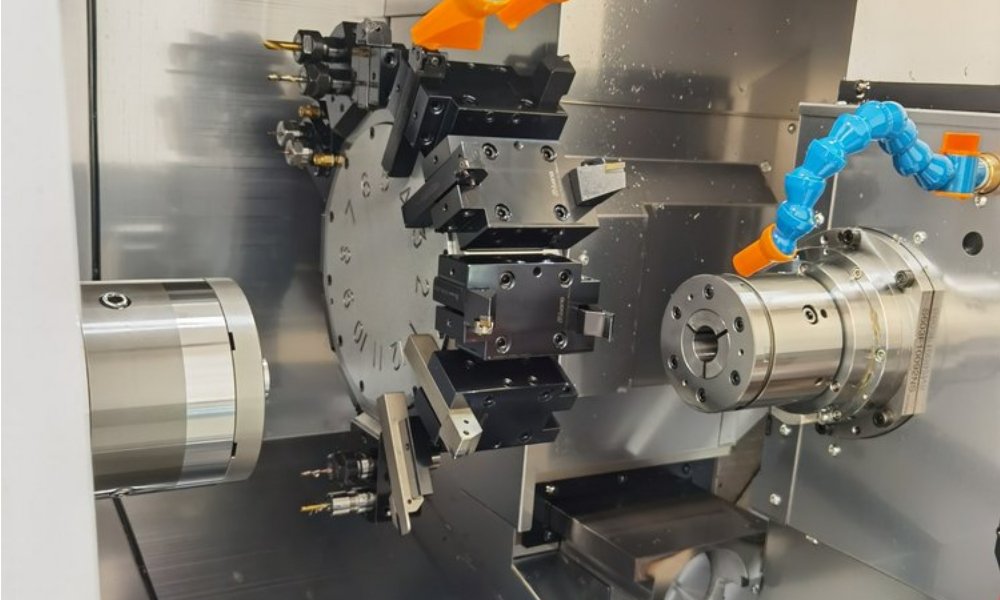
Many aerospace parts also blend milling and turning. A fitting might start on a lathe and finish on a mill. That is why versatile shops with both capabilities win more of this work. They can route each part to the best machine and hold quality across steps.
Some of these parts need secondary finishing too. Anodizing, passivation, and plating add corrosion protection and improve appearance. A machine shop that coordinates finishing saves you time and keeps quality under one roof.
Uncrewed aircraft are adding new demand too. Drone and UAV programs move fast and need lightweight, precise parts. As a result, many buyers now seek shops that can iterate quickly. This trend keeps shops busy well beyond traditional programs.
Frequently Asked Questions About Aerospace CNC Machining
Which materials dominate aerospace CNC machining?
7075 aluminum, titanium Ti-6Al-4V, and Inconel superalloys cover most airframe and engine parts. Each offers high strength, low weight, or heat resistance. Each also demands specific tooling and cutting strategies.
Why does aerospace CNC machining rely on 5-axis machines?
Aerospace brackets and housings carry compound angles and thin walls. 5-axis machines reach these features in a single setup. Consequently, they protect accuracy and cut handling time.
What documentation should aerospace CNC machining include?
Expect material certificates, first article inspection reports, and dimensional records. Traceability from raw stock to finished part is standard practice. Agree on the paperwork before production starts.
How to Qualify a Machine Shop for Aerospace CNC Machining
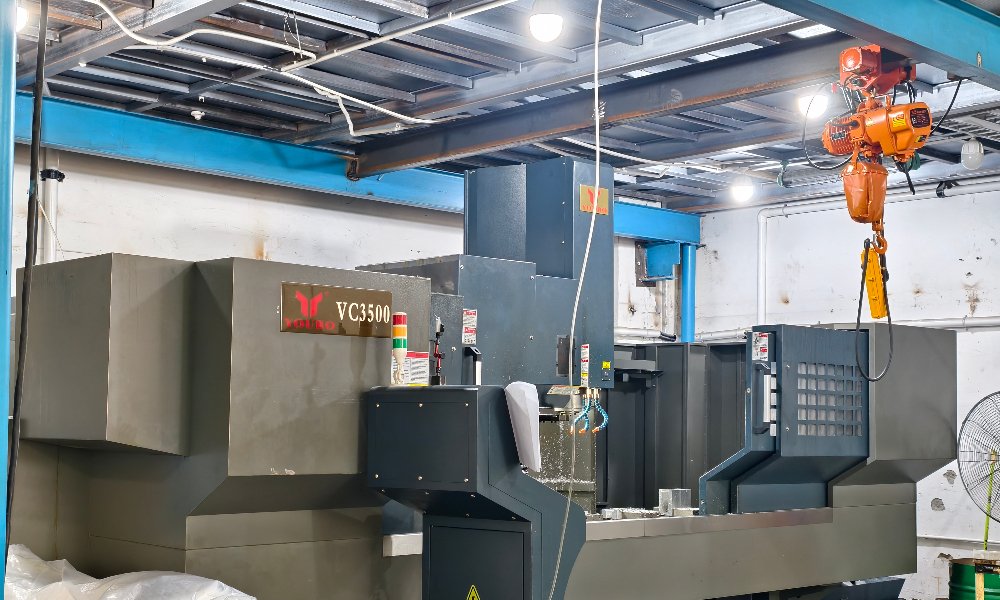
Start with the shop’s quality system and records. Ask for material certs, first article reports, and inspection logs. Then check their equipment and experience with your exact alloy. A shop that cuts Inconel daily differs from one that mainly machines aluminum. Strong aerospace CNC machining partners answer these questions quickly and openly. You can see our machine list on our equipment page.
Watch for red flags too. Vague answers about material sources, missing inspection records, or reluctance to share first article data are warning signs. In contrast, a transparent shop will walk you through its process. Shops earn trust through clear evidence, not empty promises.
XAP Precision machines aerospace-grade aluminum, titanium, and stainless steel on multi-axis mills, along with turning and Swiss-type lathes. We back every part with documented inspection. If you have an aerospace component to quote, contact us for a free quote and free DFM feedback.
7075 aluminum, titanium Ti-6Al-4V, and Inconel superalloys cover most airframe and engine parts. Each offers high strength, low weight, or heat resistance. Each also demands specific tooling and cutting strategies.
Aerospace brackets and housings carry compound angles and thin walls. 5-axis machines reach these features in a single setup. Consequently, they protect accuracy and cut handling time.
Expect material certificates, first article inspection reports, and dimensional records. Traceability from raw stock to finished part is standard practice. Agree on the paperwork before production starts.