For complex parts, 5-axis CNC machining often beats every other production method. The process moves a cutting tool along five directions at once, so it reaches features a 3-axis machine cannot touch. As a result, engineers use it for impellers, turbine blades, implants and deep mold cavities. This guide explains how the technology works, who benefits most and when simpler machines make sense.
What Is 5-Axis CNC Machining?
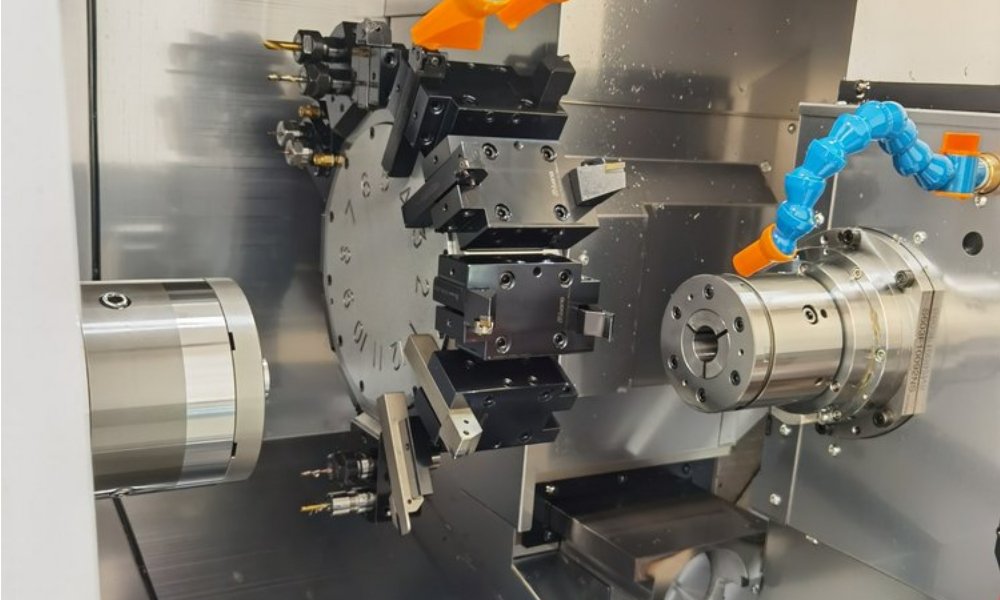
A standard 3-axis mill moves the tool along three linear axes, namely X, Y and Z. Meanwhile, 5-axis CNC machining adds two rotary axes, usually called A and B. In practice, the spindle or the table tilts the workpiece while the tool cuts. Therefore, one setup can reach five faces of a part without re-clamping. In other words, the machine wraps the tool around complex shapes instead of attacking them from above.
You will also hear the term 3+2 machining. This approach locks the rotary axes in a fixed position, then runs a normal 3-axis toolpath. It suits angled holes and inclined planes quite well. However, only simultaneous five-axis motion produces smooth continuous surfaces. For impellers, blades and organic contours, that difference decides everything.
Key Benefits of 5-Axis CNC Machining
Complex parts reward the extra capability in four concrete ways. First, setups get faster. Second, accuracy improves. Third, geometry limits disappear. Finally, surfaces come out cleaner. Here is what each one means in practice for your budget, schedule and part quality.
Single-Setup Production
Every re-clamping costs time and introduces small errors. With five axes, one fixture holds the part while the machine approaches it from nearly every direction. Consequently, setup time drops and parts spend more minutes cutting. In addition, operators handle each piece less often, which lowers the chance of scratches or drops.
Tighter Tolerances
Repeated fixturing stacks small errors on top of each other. Since 5-axis CNC machining completes most features in one setup, datum references stay constant throughout the job. As a result, position tolerances between features improve noticeably. For critical mounting interfaces, that consistency often decides whether an assembly fits at all. Our guide to CNC machining tolerances explains how shops define and measure them.
Complex Geometry Made Practical
Undercuts, compound curves and deep channels defeat ordinary mills. Meanwhile, a tilting spindle reaches those features with a short, rigid tool. Therefore, geometries that once needed casting or EDM now come straight off the machining center. In short, five axes turn previously impossible designs into practical, affordable parts.
Better Surface Finish
Tilting the tool lets the cutter work with its side rather than its tip. That choice keeps cutting speed high and leaves a cleaner surface. Moreover, shorter tools vibrate less, which reduces chatter marks on steep walls. Consequently, parts need less hand polishing before anodizing or plating.
Industries That Rely on 5-Axis CNC Machining
Several industries depend on this process every day. Their parts combine tight tolerances with demanding geometry. Here are the three biggest users of five-axis capability, and the reasons they rely on it. Together, these three sectors drive most of the demand for simultaneous multi-axis work.
Aerospace
Turbine blades, impellers and structural brackets define modern aircraft. These parts use tough materials like titanium and demand flawless surfaces. Since one setup preserves accuracy, 5-axis CNC machining fits aerospace requirements naturally. In addition, lightweight designs with thin walls and deep pockets depend on the same reach.
Medical
Implants and surgical instruments carry organic, body-friendly shapes. Hip joints and spinal cages, for example, feature compound curves that only simultaneous motion can produce. In addition, medical parts need full traceability and repeatable quality. Therefore, manufacturers validate five-axis processes carefully before production starts.
Automotive
Racing teams and EV developers push lightweight designs with complex internal channels. Five-axis machines cut intake manifolds, housings and mold inserts in one clamping. Therefore, development cycles shorten while prototypes match production intent. On top of that, faster iteration helps teams respond to new regulations and competitors.
When 3-Axis Machining Is Enough
More capability always costs more, so match the machine to the part. Simple brackets, plates and housings with features on the top and sides suit 3-axis milling perfectly. In fact, a 3-axis job often costs far less than the same geometry on a five-axis center. Therefore, ask your supplier which machine truly fits your design before you commit. For deeper process comparisons, industry resources like Modern Machine Shop publish helpful machining guides too.
3+2 machining offers a smart middle ground for angled holes and inclined faces. Meanwhile, high-volume simple parts may favor dedicated fixtures over 5-axis CNC machining entirely. When in doubt, share your model with an experienced shop and compare both quotes side by side. If you source overseas, our guide to CNC machining services China explains how to pick a partner.
Design Tips for 5-Axis Parts
Good design habits make 5-axis CNC machining cheaper and more reliable. First, keep walls thick enough to resist vibration during deep cuts. Second, use generous internal corner radii so standard tools reach every surface. Third, define one clear datum, since the machine references it across all five directions. These small choices compound into big savings.
Material choice matters just as much. Titanium rewards rigid setups and patient feed rates, while aluminum 7075 machines fast yet needs care around thin walls. Review our overview of CNC machining materials before you lock the design. Finally, talk to your machine shop early. At XAP Precision, engineers review drawings for exactly these issues before cutting begins, because small tweaks save large costs.
Frequently Asked Questions
What is the main advantage of 5-axis CNC machining?
The biggest win is single-setup production. Because one fixture handles nearly every feature, you save labor and eliminate stacking errors. As a result, complex parts arrive faster and tighter. On top of that, fewer handlings lower the risk of scratches and other cosmetic damage.
Is five-axis machining more expensive than 3-axis work?
Hourly machine rates run higher, yet total part cost often drops. Single setups remove repeated fixturing, and better surface finish reduces hand work. Therefore, complex geometry frequently costs less overall on five axes. For simple parts, however, 3-axis milling remains the cheaper route.
Which parts really need five-axis capability?
Look for features on multiple faces, compound curves or deep cavities. Impellers, turbine components, molds and implants are classic examples. Meanwhile, flat brackets rarely justify the extra axes. In short, always match the process to the geometry rather than assuming more axes mean better parts.
How does 3+2 machining differ from full five-axis work?
In 3+2 mode, the machine locks its rotary axes. It then cuts at a fixed angle like a 3-axis mill. Simultaneous five-axis work moves all five axes together during the cut. Consequently, only the simultaneous version produces smooth continuous surfaces such as blades and impellers.
What materials work on five-axis machines?
All common machinable materials work, from aluminum and stainless steel to brass, titanium and plastics like PEEK. However, harder alloys demand rigid machines and skilled programming. In other words, check your supplier’s experience with your specific material before you award the order.
How accurate is 5-axis CNC machining in practice?
Well-run five-axis centers hold +/-0.005mm on critical features. That matches the best 3-axis work. Since one setup preserves datums, position accuracy between faces often improves. Therefore, aerospace and medical engineers trust the process for their tightest assemblies. You can treat these figures as a reliable baseline for design reviews and quotes.
Conclusion
5-axis CNC machining turns ambitious designs into real parts. It compresses setups, protects tolerances and finishes surfaces that other machines cannot reach. Still, the smartest choice always matches the process to the geometry. If you would like a second opinion on your design, the engineers at XAP Precision are happy to review it. Send us your model and discover what five axes can do for your next project.