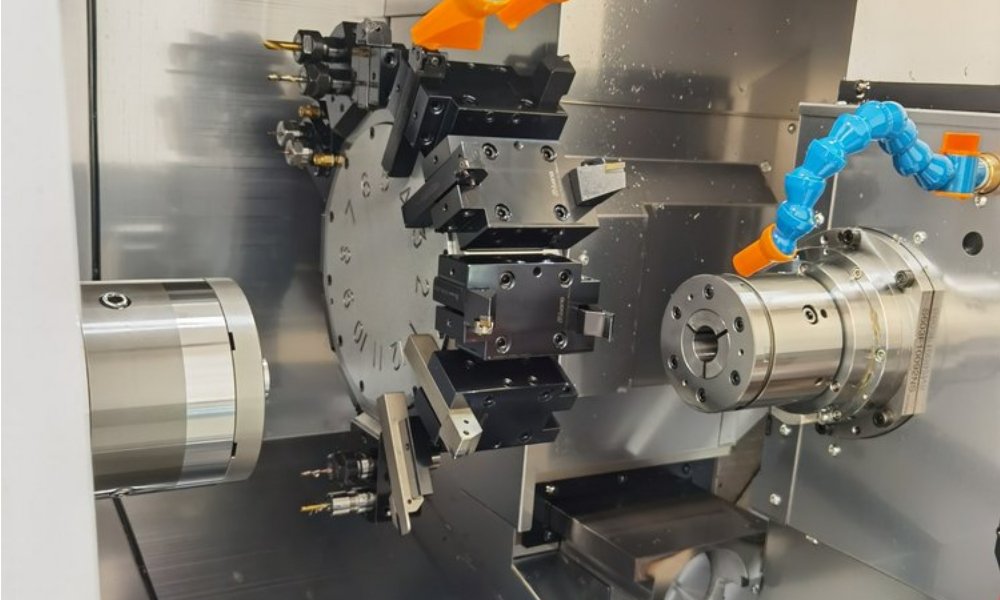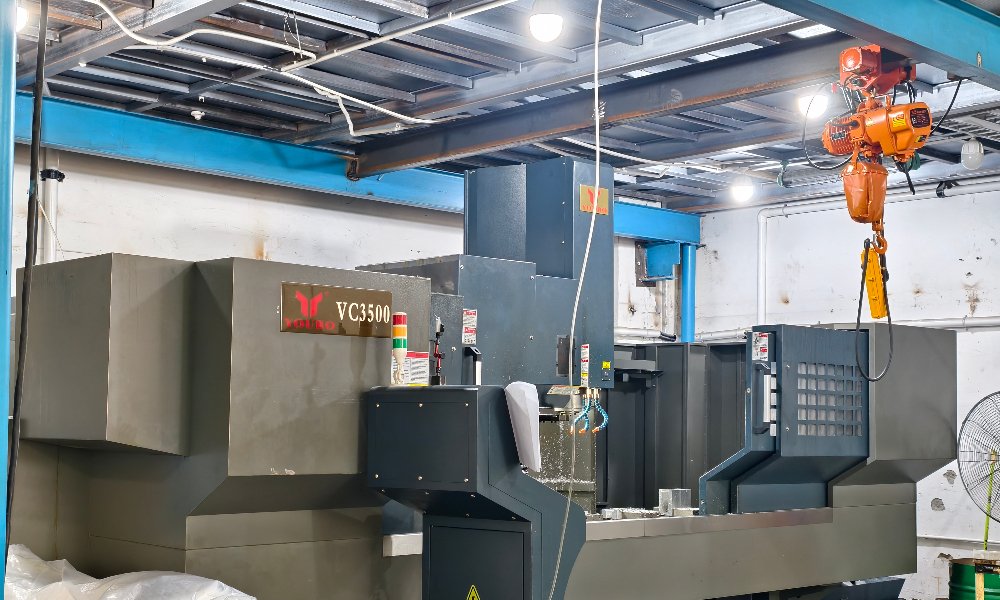
Semiconductor equipment is a precision machine built from precision parts. Vacuum chambers, wafer handling fixtures, gas panels, and chiller blocks all start as blocks of metal that must be machined to tight tolerance and finished for clean service. Semiconductor CNC machining covers exactly that work, and it carries expectations that go beyond ordinary machining, from material choices to surface quality and documentation.
This guide walks through what semiconductor CNC machining delivers, the materials that fit, the precision and cleanliness standards buyers should expect, and how to structure a project so the paperwork matches the parts.
The Parts That Semiconductor CNC Machining Delivers
Chamber bodies are a classic semiconductor CNC machining job. They are deep-pocketed blocks or plates with flanged openings, through-holes, and machined grooves for seals. Flatness on mating faces decides vacuum integrity, and pocket surfaces typically carry a Ra 1.6 finish or better. In addition, good chamber designs avoid sharp internal corners and blind slots that trap particles.
Wafer handling fixtures and end effectors position discs with micron-level accuracy. Hole position and pin heights run tight, and every edge is broken so no particle can scratch a wafer surface. Lightweighting pockets are common, yet they must stay clean and burr-free because debris becomes yield loss downstream.
Semiconductor CNC machining also produces gas panels and manifolds that route process gases through drilled and milled passages. Clean internal surfaces matter as much as dimensions here, since rough bores hold residue. Ports are often finished for welded or compression fittings, which requires square faces and controlled groove geometry.
Chiller blocks and thermal plates carry fluid channels for temperature control. Machined blocks use drilled and plugged passages, while plate designs may include grooved channels sealed by lids. Flatness against the mating surface governs thermal contact, and O-ring glands must hold groove tolerances to seal reliably. Because drilled passages are often plugged with pressed-in fittings, hole straightness and surface quality also matter for long-term sealing.
Materials That Fit Semiconductor Service
Aluminum dominates the list in semiconductor CNC machining. Alloy 6061-T6 machines cleanly, anodizes uniformly, and serves chambers, plates, and brackets across every tool platform. Where formability matters more than cutting, 5052 handles bent and welded sheet structures. For a deeper look at alloys and design considerations, see our guide to aluminum CNC machining.
Stainless steel takes over where corrosion or strength rules. 316L is the standard for gas panels, wet process parts, and any component touching aggressive chemistry. It machines slower than aluminum, and buyers should expect passivation after machining so the surface resists attack. In addition, many programs specify electropolishing to raise surface quality further.
Engineering plastics fill insulation and seal roles. PTFE offers unmatched chemical inertness for seals and insulating standoffs, and our PTFE CNC machining guide explains what to expect when cutting it. PEEK adds strength and handles repeated cleaning cycles, which suits fixture components near process zones. In addition, acrylic and polycarbonate serve as visual covers and guards where transparency matters.
Precision, Surface Finish, and Cleanliness Expectations
Semiconductor CNC machining holds standard precision work to a higher standard. Critical features commonly run within 5 to 25 microns, with the tightest callouts reserved for wafer positioning and sealing faces. Flatness on flange and mating faces deserves its own callout because a warped flange leaks no matter how good the bolt pattern is.
Surface finish follows function. Ra 0.8 to 1.6 is typical in chambers, and smoother values appear on sealing lands. Finishes also serve contamination control, since smooth surfaces shed fewer particles and clean more easily than rough ones. Specify the value on the drawing rather than relying on a shop default.
Cleanliness itself is handled by industry practice. Parts are washed and degreased after machining, dried, and packed in bagged packaging suited to their destination. Some programs add passivation for stainless or anodize for aluminum, both of which seal the surface and reduce outgassing. State your cleanliness expectation at quote time, because the packaging and handling steps differ by class.
Documentation and Quality Discipline
Every semiconductor CNC machining project ships with paperwork. Dimensional reports against your drawing callouts, material certificates, and finish records are normal requests, and a supplier should treat them as standard rather than exceptional. Under an ISO 9001 quality system, those records come from the process instead of after-the-fact effort. XAP Precision operates under ISO 9001 certification and supplies inspection documentation with every project.
Tolerance strategy also belongs in this conversation. Hold critical features tight and leave non-critical dimensions to standard tolerance, because blanket tightness inflates cost without improving function. During design review, ask which callouts actually drive performance, and which ones you can relax.
In addition, version control matters on iterative tools. Keep part numbers and revision levels on the drawing itself, so the machined parts and the documentation never drift apart between builds.
DFM Tips for Semiconductor Machined Parts
Good DFM for semiconductor CNC machining starts with tool access. Generous fillet radii at pocket floors let standard end mills run fast, while sharp corners force tiny tools and slow passes. Keep bores at standard depths where possible, since deep small holes multiply cycle time.
Next, think about fixturing. Self-locating datums and accessible clamp areas let the shop hold tight relationships between faces without custom fixtures. If a part has five critical features, arrange them so most can be completed in one or two setups.
Finally, specify only what the tool needs. A Ra 0.4 finish on a non-functional face costs money and adds nothing to performance. Share your 3D model early, and a thorough DFM review will help you spot cost drivers before quoting.
Frequently Asked Questions About Semiconductor CNC Machining
Which material is best for vacuum chamber parts?
For semiconductor CNC machining, 6061 aluminum is the default for most chamber bodies and plates, thanks to clean machining and uniform anodize. Choose 316L stainless when the chamber sees corrosive gases or needs higher strength. Surface finish and passivation choices matter as much as the base alloy.
What tolerances are typical for wafer handling fixtures?
Critical features generally hold within 5 to 25 microns, with positioning holes and pin heights at the tighter end. Surface finishes of Ra 0.8 to 1.6 are common. Share your alignment budget so we can match tolerances to function instead of guessing.
Can you machine plastics for semiconductor insulators?
Yes. PTFE, PEEK, and polycarbonate are all machinable and widely used for insulators, seals, and covers. The first gives the best chemical inertness, while PEEK adds mechanical strength and cleans well. We will recommend the right grade for your thermal and chemical environment.
Start Your Semiconductor Hardware Project
From chamber blocks to chiller plates, semiconductor CNC machining follows the same winning formula: tight machining, controlled finishes, and documentation that lets your team approve parts with confidence. XAP Precision is an ISO 9001 certified manufacturer in China offering 3, 4, and 5-axis CNC machining, turning, and rapid prototyping in aluminum, stainless steel, and engineering plastics.
Upload your drawings for free DFM feedback and a fast quote. Contact us today.